
Quick answer: a standard 4 oz pot of Activia is roughly 100 to 150 calories with 4 to 6 g protein, and the flavoured versions carry 12 to 19 g of sugar — most of it added rather than from the milk. The probiotic strain is real, but the marketing around it was not: in 2010 Dannon settled with the US Federal Trade Commission and 39 state attorneys general over digestive-health claims regulators found unsubstantiated. Activia is a perfectly reasonable yogurt. It is not a functional medicine, and plain yogurt with live cultures does much the same job with less sugar.
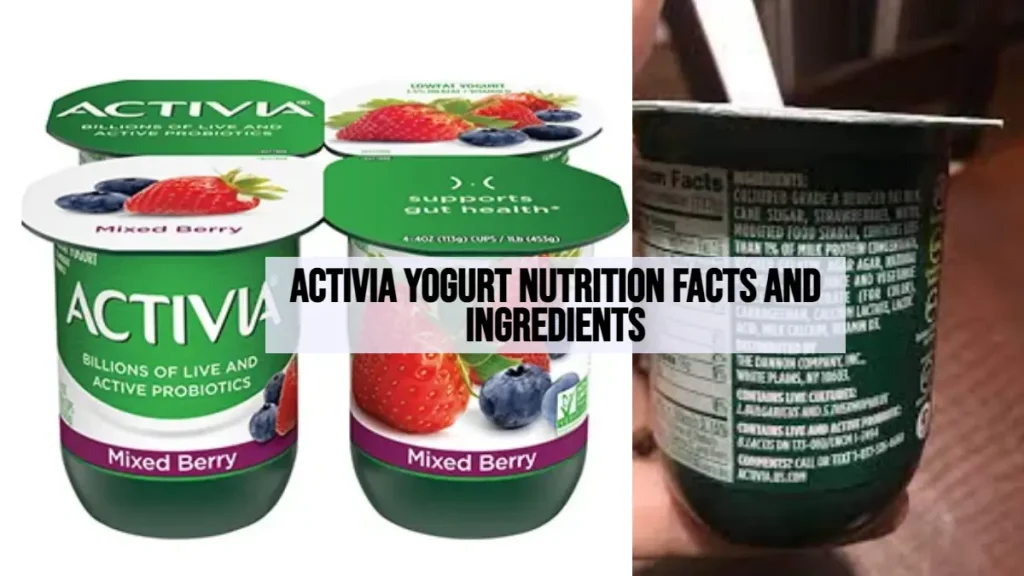
Figures below are approximate. Activia sells many varieties across the US, UK, Europe and elsewhere with different sizes, sugar levels and fortification, and recipes change. Check the pot in front of you, or the manufacturer’s current product information, for exact values.
The Claims Regulators Took Action Over
This is the context missing from almost every Activia nutrition page, and it is the reason to read the pot rather than the advertising.
In December 2010, the Dannon Company agreed to settle Federal Trade Commission charges of deceptive advertising and to drop claims that exaggerated the health benefits of Activia and DanActive. A parallel investigation by 39 state attorneys general concluded at the same time, with Dannon paying $21 million to the states. Including a related class action, total payouts were reported at around $56 million.
The specific findings are worth knowing:
- The one-serving-a-day claim did not hold up. Advertising said Activia eaten every day was clinically proven to regulate your digestive system in two weeks. The states’ investigation found that the majority of studies showed a benefit only at three servings per day for two weeks, not one.
- “Bifidus Regularis” is a marketing name, not a scientific one. It was a trade name created by Dannon. The actual organism is a strain of Bifidobacterium animalis. Connecticut’s attorney general described the name as entirely concocted by the company.
- The companion product’s immunity claims went too. Dannon was barred from claiming any of its yogurts or probiotic drinks reduce the likelihood of catching a cold or flu without FDA approval.
None of this means Activia is bad for you, and none of it means probiotics do nothing. It means the specific promises made about this specific product at one serving a day were not supported, and claims you may still encounter online — that a daily pot reduces bloating by a set percentage, or breaks down fat — should be treated as marketing rather than fact.
Activia Nutrition Facts
Typical values for a standard 4 oz (113 g) pot. Larger pots and Greek varieties differ substantially.
| Nutrient | Typical amount |
|---|---|
| Calories | ~100 to 150 |
| Total fat | ~1.5 to 3 g |
| Saturated fat | ~1 to 2 g |
| Protein | ~4 to 6 g (higher in Greek versions) |
| Total carbohydrate | ~15 to 20 g |
| Sugars | ~12 to 19 g |
| Fibre | 0 g |
| Sodium | ~50 to 80 mg |
| Calcium | ~10 to 15% of the daily value |
| Potassium | ~150 to 200 mg |
The sugar point
The most useful thing to understand on the label. Yogurt naturally contains lactose, so some sugar is inherent — around 6 to 8 g per pot in unsweetened yogurt. Anything above that in a flavoured Activia is added sugar.
At the higher end, a flavoured pot can carry close to 10 g of added sugar, which is a meaningful share of the recommended daily maximum, particularly for children. On newer labels this is broken out as “includes X g added sugars”, which is the line to look at rather than total sugars.
Activia does sell lower-sugar and zero-added-sugar lines, and those are a straightforwardly better choice if you eat it daily.
Does the Probiotic Do Anything?
A fair reading of the evidence, without the marketing or the backlash.
- Probiotics are strain-specific. Evidence for one strain does not transfer to another, and effects that appear in trials are usually modest and specific to a defined condition rather than general “digestive health”.
- Dose matters, which is exactly what the regulatory finding turned on. A benefit demonstrated at three servings a day is not evidence for one.
- Effects are generally transient. Most probiotic strains do not permanently colonise the gut; they pass through, so any effect tends to depend on continued intake.
- All live yogurt contains bacteria. Any yogurt labelled with live and active cultures contains Lactobacillus bulgaricus and Streptococcus thermophilus. Activia adds a further strain; it is not the difference between bacteria and no bacteria.
The practical conclusion: if you like it, eat it. If you are buying it specifically to fix constipation or bloating, the evidence for that at one pot a day is weak, and dietary fibre and fluid have far better support for regularity. Our guide to high-fibre foods covers what actually moves that needle.
How Activia Compares
| Option | Protein | Sugar | Notes |
|---|---|---|---|
| Activia, flavoured | ~4 to 6 g | ~12 to 19 g | Convenient, portion-controlled, added probiotic strain |
| Plain low-fat yogurt | ~6 to 8 g | ~7 g (all lactose) | No added sugar. Add your own fruit |
| Plain Greek yogurt | ~15 to 20 g | ~5 to 7 g | Roughly triple the protein. The best choice for satiety |
| Kefir | ~8 to 10 g | ~8 to 12 g | Contains a wider range of microbial strains than most yogurts |
| Flavoured “diet” yogurt | ~5 g | ~5 g | Lower sugar, usually via sweeteners |
If your goal is protein and fullness, plain Greek yogurt beats Activia comfortably — roughly three times the protein for less sugar. If your goal is convenience and you enjoy the taste, Activia is fine. If your goal is specifically digestive regularity, neither is the strongest tool.
Who Should Take Care
- Milk allergy. Activia is a dairy product and is not suitable. This is distinct from lactose intolerance.
- Lactose intolerance. Live yogurt is often better tolerated than milk because the cultures break down some lactose, but tolerance varies. Some Activia lines are lactose-free.
- Severely immunocompromised people, including those on chemotherapy, transplant recipients or anyone with a central line. Probiotic products are generally advised against in this group because of a small risk of infection from live organisms. Ask your medical team.
- Diabetes. The added sugar in flavoured varieties matters. Plain or zero-added-sugar versions are the better fit.
- Anyone with a persistent change in bowel habit, blood in the stool or unexplained weight loss should see a doctor rather than trying a probiotic yogurt.
Frequently Asked Questions
A standard 4 oz pot is roughly 100 to 150 calories, with about 4 to 6 g protein, 1.5 to 3 g fat and 12 to 19 g sugar. Greek, larger and zero-sugar varieties differ considerably, and formulations vary by country, so check the pot rather than relying on a single figure.
Yes. In December 2010 Dannon settled Federal Trade Commission charges of deceptive advertising and agreed to drop claims exaggerating the health benefits of Activia and DanActive. A simultaneous investigation by 39 state attorneys general resulted in a $21 million payment to the states, with total payouts including a class action reported at around $56 million. The states found that the majority of studies showed a digestive benefit only at three servings a day for two weeks, not the one serving advertised.
A trade name Dannon created for a strain of Bifidobacterium animalis used in Activia. It is a marketing name rather than a scientific one — Connecticut’s attorney general described it as entirely concocted by the company during the 2010 investigation. The bacterium itself is real; the name simply is not a species or strain designation you would find in the scientific literature.
Flavoured varieties carry roughly 12 to 19 g per pot. Some of that is natural lactose, around 6 to 8 g, so anything above that is added sugar — often close to 10 g, which is a meaningful share of the daily maximum, especially for children. Look for the added sugars line on the label rather than total sugars. Activia’s lower-sugar and zero-added-sugar lines avoid the issue.
Not straightforwardly. All yogurt labelled with live and active cultures already contains bacteria; Activia adds one further strain. Plain Greek yogurt typically has around three times the protein for less sugar, which makes it the better choice for fullness and for most nutritional purposes. Activia’s advantages are convenience, portion control and taste rather than nutritional superiority.
The evidence for that at one pot a day is weak, which is precisely what regulators objected to in 2010. Probiotic effects are strain-specific, dose-dependent and generally transient, since most strains pass through rather than colonising the gut. For regularity, dietary fibre and adequate fluid have considerably better support. See a doctor for any persistent change in bowel habit rather than treating it with a yogurt.
It is not a weight loss product and is not marketed as one. Yogurt can fit well into a weight management plan as a portion-controlled source of protein and calcium, but a flavoured pot carrying up to 19 g of sugar is a modest contributor at best. Plain Greek yogurt, with roughly triple the protein and less sugar, is the better option if satiety is your goal.
Anyone with a milk allergy, since it is a dairy product. Severely immunocompromised people — including those on chemotherapy, transplant recipients and anyone with a central line — are generally advised against live probiotic products because of a small infection risk, so ask your medical team. People with lactose intolerance often tolerate live yogurt better than milk, but this varies, and some lactose-free lines exist.
Sources
- Federal Trade Commission — Dannon agrees to drop exaggerated health claims for Activia yogurt and DanActive dairy drink, December 2010.
- New Jersey Office of the Attorney General — Multi-state settlement with Dannon, on the three-servings-per-day finding.
- FTC business guidance blog — FTC challenges Dannon’s claims for Activia yogurt and DanActive.
- National Center for Complementary and Integrative Health — Probiotics: what you need to know.
- USDA FoodData Central, for yogurt comparison values.
- Activia official product information, for current label values.
Last updated: August 2026. Nutrition figures are approximate and vary by variety, size and country — check the label on the product you are buying. This article is general information rather than dietary advice, and is not affiliated with or endorsed by the manufacturer. Speak to your doctor before using probiotic products if you are immunocompromised, and see a doctor about any persistent change in bowel habit.

