
Does Zoloft Cause Weight Gain? Effects of Zoloft Explained

0

Weight Gain Due To Zoloft

Zoloft is the most popular antidepressant which cures depression. If your doctor or physician prescribed this medication to you, you could experience a better improvement in your mood, energy levels, and good sleep. 

Also, it boosts your appetite, apart from this you also feel that you gain a little amount of weight in your body. 

This drug will have a severe effect on your body. Weight gain is the top most adverse effect of any antidepressant medication.

Weight Gain Due To Zoloft

But you must manage some symptoms after taking this medication for a healthy lifestyle. 

In this article, we are here to explain everything related to why you gain weight from taking antidepressants like Zoloft medication.

We will discuss adverse effects and provide some precautions to manage your weight while taking Zoloft medication.

What is Zoloft?

Zoloft is an antidepressant medication that is used to cure depression. It is a brand name for sertraline hydrochloride and is also known as a selective serotonin reuptake inhibitor or SSRI. 

It will boost the serotonin level of the brain.

Serotonin is like a neurotransmitter, the nervous system’s molecule for carrying the message between the neurons and the brain. 

Serotonin conveys the message to the cell receptor. The body absorbs serotonin, and it is recycled later. 

When anyone consumes this medication to boost the brain’s serotonin level, they get more opportunities to communicate.

It will increase the learning, thinking, and memory power of a human being. It also cures the mood, sleep cycle, and appetite and balances the emotions of human beings.

However, the clinicians are not sure whether the serotonin level decreases, causing major depression or mental illness.

After using this medication, you can boost your serotonin level and balance your mental health. It will be so impactful on the patient’s lifestyle. Zoloft was approved in 1991 for medical use. 

Even the US Food and Drug Administration approved it. 

You can take this medication by prescription from a doctor. Individuals can take this medication orally in the form of pills and liquid concentration. 

You can take the dosages of serotonin in the morning and evening time. 

Why Does Zoloft Cause Weight Gain?

It is the best medication for the treatment of depression and anxiety. But it also controls the regular appetite of human beings. 

Taking Zoloft can increase the cravings for carbs rich in food such as pasta, bread, or desserts. If this is not monitored, it will be turned into heavy weight gain. 

And it will be impactful on the daily lifestyle of humans. Experts have not confirmed what substance added to Zoloft causes weight gain. 

Does Zoloft Cause Weight Gain

It will also strengthen the metabolism due to the heavy fluctuations in serotonin. When you are in depression, you should eat less when you take the medication and start feeling better. 

It will return the appetite, but not everyone gains weight by taking the Zoloft medication. Zoloft can affect the patients differently, some people gain weight, and some lose their appetite.

Other Antidepressants That Cause Weight Gain 

Most antidepressants are associated with weight loss when you take them in a specific and short manner. But if you take this for the long term, you can cause weight gain from this medication. 

Other common antidepressants that cause weight gain:

  • Fluoxetine 
  • Paroxetine 
  • Citalopram

These are the common antidepressants that can cause weight gain, and the studies of experts prove it. In most cases, this medication will work differently.

Adverse Effects Of Zoloft

When you are used to Zoloft, it will affect your body differently. So, there are common side effects that are very dangerous for humans.

Zoloft Side Effects
Zoloft Side Effects
  • Headache
  • Diarrhea
  • Excessive sweating
  • Insomnia
  • Dizziness
  • Dryness in mouth
  • Appetite loss
  • Upset stomach
  • Nausea 
  • Restlessness
  • Constipation
  • Decreases sex life
  • Nervousness

Apart from that, there are also some serious adverse effects if you take this Zoloft medication for the long term. 

You cannot take this medication without any prescription; otherwise, you have to suffer from serious medical issues.

Some Serious Adverse Effects :

  • Shaking
  • Unusually weight loss
  • Vomiting
  • Difficulty in breathing
  • Quickness in a heartbeat
  • Some symptoms of serotonin syndrome
  • Bloody stools 
  • Blurred vision
  • Changes in vision 
  • Swelling on the face and lips 
  • Skin rashes
  • Convulsions
  • Suicidal thoughts
  • Seizures

How To Manage The Weight Gain? 

After taking Zoloft, you must manage your weight gain. You must check and monitor your diet daily, and you must also increase your physical activities. 

  • Watching and monitoring what you eat 
  • Increase physical activities
  • Intermittent fasting
  • Improves Quality of sleep

Warnings and Precautions 

If you facing some serious health issues or allergies, first consult with your doctor for the prescription of Zoloft. If you take any other medications then consume Zoloft after the doctor’s prescription. 

Drug interactions are dangerous for your health. Various antidepressants are working efficiently. You have to tell your physician your medical history before taking Zoloft. 

What To Avoid During The Consumption of Zoloft?

When taking the medication of Zoloft, you have to avoid drinking alcohol. If you consume alcohol, the serotonin level gets spiked temporarily. 

It can cause the worst effect of anxiety and depression in the very long term. It will also increase the risk of suicidal behavior.

Final Words

This article gives complete information related to Zoloft’s weight gain. Most people want to take the medication of antidepressants like Zoloft, but they don’t know about the side effects, warnings, and precautions of consuming antidepressants.

We are reviewing complete information regarding Zoloft. 

Frequently Asked Questions(FAQs) about Zoloft weight gain

Q. Why is Zoloft making me gain weight?

Ans. The effects of Zoloft are blocking the hormones that control fluid and sodium in the body. The fluid retention starts in the body, which is responsible for gaining weight.

Q. How much weight did you gain on Zoloft?

Ans. From consuming Zoloft, you can gain 1 to 1.6% weight in your body when taking this medication for around six months to 1 year.

Q. Does Zoloft make it harder to lose weight?

Ans. Yes, when you take antidepressants like Zoloft for the long term, you gain weight efficiently. And it’s harder to lose weight for those people who are taking medication for the long term.
Eczema on Lips: Causes of Allergic Reactions Explained

0

Are you anxious because your soft & smooth lips are turning cracked, itchy & painful daily? Are you craving a lot to gather knowledge about the underlying skin ailment that stimulates your lips to become dry, itchy & red? Ok! Then, know that you might right now be suffering from Eczema on your lips. Are you frightened to hear that? Well! We are substantiating that there is nothing to be frightened about.

Eczema on Lips _ Why Allergic Reactions on Lips Happen

Lip eczema is a widespread skin ailment that numerous people experience. With adequate treatment, it will heal in no time! But how will you ensure that what your lips are going through right now is the outcome of lips eczema? And what is the process of curing it? Just keep on reading

this write-up. We assure you that you will know everything about Eczema on the lips.

What Is Eczema On Lips?

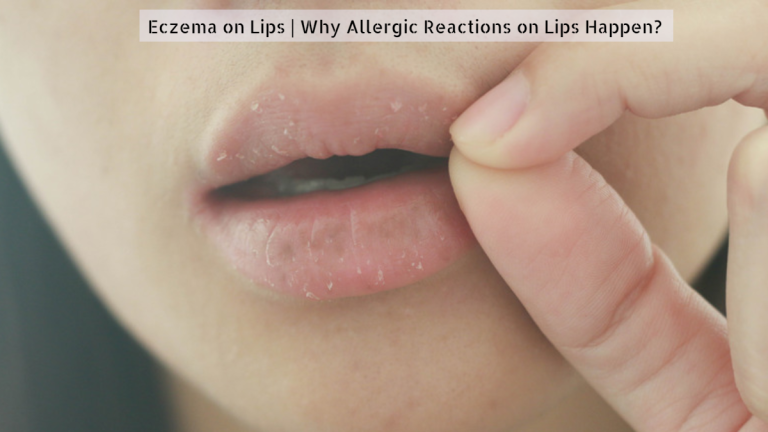
Lips eczema, also known as lip dermatitis and eczematous cheilitis, is a skin condition of your lips, in which your lips turn red & dry. This, in turn, results in the scaling of your lips. The dry patch on the lip is the main sign that your lips caught the eczema skin ailment. 

Also, in the case of lip eczema, your lips will develop rashes that are very itchy. Besides, you will also experience cracked skin and painful blisters in this disease. Those people who suffer from Eczema generally experience periods of flare-ups or remission throughout their lives.

Genetics also plays an important factor in developing Eczema around the lips and mouth. Apart from this, different environmental factors, like the presence of irritating substances in the products of lips or the lips’ habitual licking, are also causes.

3 Lip Eczema Types

Allergic Reaction on Lips

Various types of lip eczemas do exist in reality. They include:

  1. Irritant Contact Cheilitis: This sort of lip eczema happens due to external irritation (like licking lips, wearing cosmetics on lips, or other environmental factors).
  2. Allergic Lip Dermatitis Or Allergic Contact Cheilitis: This sort of lip eczema happens due to an allergic reaction on lips from lip products, toothpaste, medication, or dental materials.
  3. Angular Cheilitis: This sort of lip eczema happens because of a fungal infection (like Candida) or an infection caused by bacteria. In this case, the infection develops in your lips because of lip licking, braces, dentures, or other factors. All these factors make your saliva build up in your mouth’s corners. Those people who have diabetes are more prone to this ailment.

Lip Eczema Indications Or Symptoms

The lip eczema indications or symptoms include:

  • Red rashes over or surrounding your lips
  • Split & scaly skin of lips
  • Burning sensation on lips
  • Inflammation of lips
  • Dryness & flakiness of lips
  • Itching of lips
  • Paining of lips

Also, there are numerous factors that trigger lip eczema:

  • Some specific lip products have chemicals (lipsticks or chapsticks).
  • Fabrics, soaps, cleaners, fragrances & household.
  • Dry skin that exacerbates cold & dry climate.
  • Some specific triggering foods
  • Allergy-causing pollens.
  • Smoking cigarette
  • Respiratory Infections
  • Intense sweating
  • Transformation in hormone levels

What Are The Causes Of Lips Eczema

If you are suffering from atopic dermatitis, you may develop Eczema on the enclosing areas of your lips. In several cases, eczema develops in the lips because of contact with irritating/allergic substances. Generally, Eczema is not a contagious condition. Nonetheless, Angular Cheilitis is caused by infection and is contagious.

You must fix an appointment with your specialist in case you encounter the above warnings of lip eczema. Your dermatologist will diagnose, treat & help you by identifying the possible allergens. Lip eczema’s risk factors are the following:

  • A household history of eczema/allergies
  • Those jobs and activities involve irritating substances.
  • Becoming sensitive to the climates(hot /cold).
  • Hormone changing level, especially in women
  • Stress
  • Utilizing mouth-related products like toothpaste, lipstick, etc.
  • Catching a cold or flu

Eczema On Lips Treatment

Eczema Around Lips and Mouth

Lip Eczema can be treated through home remedies or medications. Eczema On Lip treatment:

  • Applying medicated creams such as corticosteroids
  • Applying lip balms.
  • Moisturizing the skin of your lips or around it regularly
  • Applying antifungal creams that cure angular cheilitis.

NEA (National Eczema Association) recommends some natural remedies for relieving the symptoms of Eczema as written below. Just remember that topical application-based natural remedies for your lips are edible.

  • Sunflower seed oil
  • Probiotics
  • Acupressure
  • Apple cider vinegar
  • Coconut oil
  • Vitamin D
  • Acupuncture &
  • Hypnosis

Apple cider vinegar can burn & so it must be applied to your lips after only testing skin sensitivity with it (by using a small quantity of it on the lips). Sometimes, people believe that an assortment of natural remedies can cure their skin eczema. However, the best part is consulting with your doctor & doing a test named the skin-patch test. 

This test must be done before utilizing any new products, and it will avoid further skin irritation. Though the lip eczema symptoms are relieved with these treatments, they can’t cure or prevent the condition. For curing lip Eczema, the best method is to identify the causes or main triggers that are causing it & avoid them if possible. 

An allergy may also be lips Eczema’s underlying cause & can be identified by an allergist. The doctor will then advise you of the treatment options & preventive measures for Eczema on the lips.

How To Reduce The Risk Of Acquiring Eczema On Lip?

  • Analyzing the specific allergies & averting the allergens. The allergens may include various foods or cosmetics
  • Going for one skin patch examination before making use of any different topical products
  • Shifting to natural products that comprise lesser fragrances or chemicals
  • Lessening the level of your stress, which is very much a trigger for lips eczema or other eczemas
  • Resisting yourself from smoking cigarettes
  • Eliminating your skin’s bacteria through proper & regular hand & face washing
  • Going for treatment that cures the underlying health issues
  • Following your doctor’s or dermatologist’s recommendations

Am I Really Having Eczema On Lips?

Sometimes we have some skin conditions whose symptoms look similar to the symptoms of lip Eczema. For example, the skin issues of cold sores, pimples, canker sores & chapped lips have symptoms similar to that of Eczema on lips. In such a case, only a doctor or healthcare professional can identify or diagnose the actual skin issue & recommend necessary treatments for it.

The Final Words

Eczema on the lips is indeed quite painful as it makes a dry patch on the lips & makes your lips red & cracked. The itchy lips due to lip eczema are really uneasy. But, visiting a good dermatologist & undergoing proper treatment for this skin condition will cure this skin ailment within no time. So, nothing is disappointing if you have lips Eczema. Just undergo a proper test & then have the necessary treatments for it. That’s all.

Frequently Asked Questions (FAQs) about Eczema On Lips

Q1. Can you get Eczema on your lips?

Answer: Yes, you can have Eczema on your lips. Lip eczema, also known as lip dermatitis and eczematous cheilitis, is a skin condition in which your lips turn red and dry. This, in turn, results in the scaling of your lips. The dry patch on the lip is the main sign that your lips caught the eczema skin ailment.
Also, in the case of lip eczema, your lips will develop very itchy rashes. Besides, you will also experience cracked skin and painful blisters in this disease. Those people who suffer from Eczema generally experience periods of flare-ups or remission throughout their lives.

Q2. How to get rid of a red ring around your lips?

Answer: You can get rid of it by:
1. Applying medicated creams such as corticosteroids
2. Applying lip balms.
3. Averting the irritants that cause Eczema on lips.
4. Moisturizing the skin of your lips or around it regularly.
5. Using antifungal creams that cure angular cheilitis.

Q3. How to get rid of allergic reactions on lips?

Answer: Allergic Lip Dermatitis Or Allergic Contact Cheilitis is a type of lip eczema caused by an allergic reaction to lip products, toothpaste, medication, or dental materials. Avoiding these allergens or products will eliminate allergic reactions to your lips.

7 Key Features of Ancillary Health Insurance Explained

0

Ancillary Health Insurance 

The peril of the COVID-19 pandemic has ameliorated for now, but its effect on people is really painful. The employees of various companies, even in their post-COVID situation, can’t get out of their concern about what will happen to them if they are again gripped by any hazardous ailment like COVID-19 that doesn’t come under their health insurance plan coverage. 

If they or their family need treatment for such diseases and have to pay a huge amount of money for that, how will they arrange for all of it without any coverage?

Unlocking the Power of Ancillary Health Insurance

Dear employees! We assure you that you don’t have to worry about it because ancillary health insurance has come to take your headache. Yes, you are hearing exactly what we’re saying! 

Though this health insurance company will not bear the expenses of the normal health problems that other companies bear, it bears those ailments’ expenses that other companies refuse to cover. 

I am curious to know more about ancillary health insurance. What is ancillary insurance? And What are ancillary benefits? What are the ancillary employee benefits? Etc. Well! Read this write-up, and you will know every detail about it!

Ancillary Insurance Definition

You can use supplemental or additional health coverage to complement your prevailing health plan. With it, you can make payments for treatments or other health-related expenditures that don’t come under traditional health insurance coverage.

You can purchase this type of insurance either separately from a private firm or obtain it with the consent of your employer by enlisting yourself in a group agenda. 

Whichever of the two is the case, you should know that ancillary health insurance plans can’t be used as a substitute for traditional health insurance plans. Now, let’s discuss the ancillary benefits.

Ancillary Benefits

Auxiliary health insurance offers coverage for these benefits. Companies offer these benefits to their employees, including them in their benefits packages. Two schemes offer these benefits.

Ancillary benefits can be offered in the form of voluntary benefits. This means that the employee of a company has to pay a one hundred percent premium for the insurance plan. They will benefit from spending on lower premium purchases (as a group plan).

It will help them save money that would otherwise have been expended in an attempt to buy a separate or individual insurance policy. 

Ancillary Benefits
Ancillary Benefits

Also, instead of voluntary benefits, one can choose employer-contributory benefits (another benefit scheme similar to Ancillary health insurance). 

In this scheme, your employer will pay anywhere between half of the total cost for the premium. In return, you will get a deducted amount of the ancillary benefits to share in your paychecks.

Regarding health insurance, workers have to pay their share of ancillary benefits premiums through payroll deductions. 

When the employee decides to use these benefits, a claim for the benefit amount is presented, which is then disbursed to the provider. In the case of Life Insurance, the policy beneficiary directly gets the claims.

Ancillary Insurance Products

Today, the employers or bosses of any company offer their employees some of the most familiar or popular ancillary health insurance benefits, and they are:

1. Critical illness insurance

This ancillary health insurance provides employees with a lump sum capital benefit if they’re diagnosed with any covered illness. 

With this insurance, the employees of various companies are saved from the burden of paying huge amounts of money for the treatment of their expensive ailments (heart attacks, cancer, strokes, etc.). 

This insurance covers treatments not covered by traditional health insurance. It covers various extra costs, such as deductibles, out-of-pocket costs, etc. The employees can use the funds for their travel expenses or other regular bill payments.

2. Wellness Benefits

The wellness benefits of Ancillary health insurance provided by an employer to his employees give each employee an incentive to stay healthy. 

This incentive can help them with their productivity and reduce their health risks and expenses. With the help of these benefits, you can pay a portion of your exercise classes or gymnasium membership fee.

3. Disability Insurance

Some employees may be ill or injured and ridden to bed for a long period. Here’s where disability insurance comes in. This insurance offers the employees both short—and long-term benefits and thus replaces the amount the workers lose at the time of their disability.

The Bureau of Labor Statistics declares that about forty-two percent of workers in private industries have associated themselves with short-term disability insurance plans (according to a survey done in 2018). 

Also, the 2018 survey demonstrates that nearly thirty-four percent of private employees access long-term disability plans sponsored by their employers.

In the case of this insurance, the employers of different companies usually pay the entire cost, even if you are not entitled to group disability coverage. 

Be smart by owning the coverage of individual disability insurance (of Ancillary health insurance) as these schemes are portable. And, you don’t have to bother even if you switch your employer.

4. Accident insurance

This ancillary health insurance, like critical illness insurance, also provides employees with a lump sum capital benefit in case they undergo any serious injury due to an accident. 

Injuries for Ancillary products insurance accident benefits include dislocations, traumas, burns, lacerations, or other severe damages.  This type of supplementary insurance pays your medical bills for injuries not covered by your normal health insurance.  

5. Life insurance

Ancillary health insurance also comprises a life insurance scheme that provides financial security and support to the employees’ families, business associates, and loved ones so they don’t get financially distressed after their demise. 

Life insurance provides valuable benefits to every employee, regardless of their background, financial situation, coverage situation, or current family.

If your priority is to get guaranteed coverage without passing through the process of health underwriting, choose the group life insurance scheme. It also gives coverage to individuals who are not getting coverage elsewhere because of their pre-existing health ailments or any other problems. 

6. Vision Or Dental Coverage

Any contemporary employee benefits package usually comprises vision or dental coverage. Vision ancillary health insurance offers benefits to those who have eye exams, get contact lenses or fittings, get eyeglass lenses or frames, and undergo LASIK procedures and other corrective surgeries.

Dental ancillary health insurance benefits dental care, such as preventive care, crowns, and oral surgeries, such as tooth extractions, fillings, and root canals. 

Some insurance providers also offer dental plans for prosthodontics, orthodontics, and periodontics, such as dentures. Veneers or implants are also covered under dental plans.

7. Pet insurance

For some people, pets are even more than their family, and they always try to keep them healthy and safe. During the pandemic period, pet insurance coverage increased as pet purchases increased. 

People bought pets a lot at that time for their own comfort and companionship. Some employers offer their employees pet insurance. 

This type of ancillary health insurance covers a certain percentage of pet medical expenses. Thus, pet owners can treat their pets and keep them healthy and active at a very low cost.

The pet insurance scheme covers the pets’ sudden injuries, emergency care, illnesses, surgeries, accidents, medications, exam fees, tests, and diagnostics.

Importance Of Ancillary Employee Benefits

Providing ancillary health insurance benefits to your employees is important as doing so indirectly gives your company many benefits. Here are the reasons why you should offer your employees Ancillary health insurance benefits:

Importance Of Ancillary Employee Benefits
  • Ancillary health insurance benefits cost less than those offered by traditional health insurance companies. They have multiple options and schemes, and employees can choose the ones that fit their needs.
  • Your employees can work in peace, without any stress, for the expenses of their own ailments and also those of their close ones. They can focus more on their work.
  • It results in increased retention and decreased turnover. Employees would love to stay at the same job where their employers are offering them these benefits.
  • It will increase your competitiveness.
  • As per the section 125 plan (the cafeteria plan), employers and their company’s employees can curtail their tax obligation, resulting in several tax savings.

What Does Ancillary Mean In Healthcare?

Ancillary means working in a corroboratory or subordinate role.

Ancillary services in healthcare (ancillary healthcare) imply an extensive range of healthcare-related services that support the primary clinician’s work. 

What Does Ancillary Mean In Healthcare
What Does Ancillary Mean In Healthcare_

Some examples of Ancillary services are ambulance services, audiology services, cardiac monitoring, durable medical equipment or DME, ASC (Ambulatory surgery center) services, behavioral health services, dialysis services, and hearing services.

Wrapping Up

Thus, Ancillary benefits for employees are available for all-sized businesses and budgets. They are of great importance to both employers and employees in various companies. So, discuss with your employees which kind of Ancillary health insurance benefits they would like to avail themselves of. If you are an employee of a company, you should suggest to your employer that you include the benefits of health insurance within their package.

FAQs on ancillary health insurance

Q.1. What is an ancillary insurance premium?

Answer: Ancillary insurance allows you to submit its premium at the chosen time, just like other health insurance. The benefits of ancillary health insurance are secondary health insurance coverage that covers varied medical expenses.

Q.2. What are examples of ancillary benefits?

Answer: Coverage for transporting Ambulances, drugs, bandages (medical supplies), and blood are some examples of ancillary health insurance benefits.

Q.3. What are examples of ancillary products?

Answer: Some examples of ancillary products are Wellness Benefits, Critical illness insurance, Disability insurance, accidental insurance, life insurance, Vision Or Dental Coverage, and pet insurance.

Q.4. What are the ancillary benefits of Medicare?

Answer: Ancillary benefits in Medicare include coverage for patient care, laboratory investigations, USG (Ultra Sonography), etc.

What is Dermal Piercing: How Do Dermal Piercings Work?

0

After researching piercings for my latest article, my feed was filled with related articles. And here I am, with another article related to dermal piercing; this topic is highly in demand.

What is a Dermal Piercing?

It is different from traditional piercing types, and unlike an earring or a nose piercing, it does not have an exit point.

But what is done is the skin holds the piercing, and the pierced jewelry anchors the skin. So, would it be painful? Damn yes! But we will talk about it briefly later.

What is a Dermal Piercing_

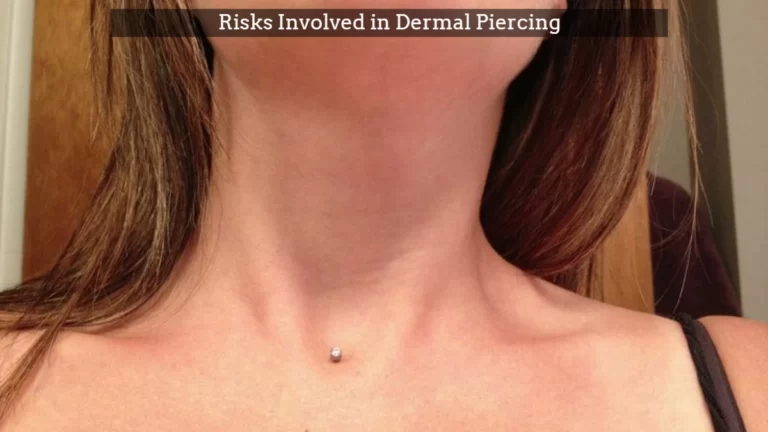
The jewelry looks like a bead on your skin and looks really pretty. It might seem that dermal piercings are surface piercings, but they are not.

Surface piercings are barbell-shaped, have entry and exit points, and go through the skin, whereas dermal piercings stay on top of the skin.

How Do Dermal Piercings Work?

The artist or piercer will make a hole in your skin so the jewelry can be anchored into your skin’s middle layer. The jewelry base is around 7mm long, enough to secure the spot.

How do dermal piercings work

Now, where can you get pierced? 

ANYWHERE… but the place should have flat skin to hold the anchor and jewelry. 

The very famous places people get dermal piercings done are:

  • Cheekbones,
  • Chest,
  • Neck,
  • Forehead,
  • Back,
  • Abdomen.

3 stages in the Dermal Piercings process

There are different stages in this process, and the body artist will use different tools for each. Let’s examine it closely.

  1. First, the artist sterilizes the area that will be pierced.
  2. Then, a dermal punching machine will make an ‘L’ shaped hole in your skin where the anchor will stay, or he/she will do it manually.
  3. Forceps will be used to plant the anchor inside the skin to hold the jewelry.

Available Materials To Get

The body artist will give you a choice of materials through which your piercing will be done. These options vary from suitability to cost; you can talk to this about your piercer. They will let you know more. 

Here are a few of them:

  • Surgical titanium: Like I said last time, do you have sensitive skin? This is a go-to option for you. It is safe because it is used to create surgical implants, so obviously, you can get a piercing with this.
  • Surgical stainless steel: This is a perfect option for those who do not wish to spend too much money, but it may irritate a little bit and can’t give you surety.
  • Niobium: Now, this material will not corrode, and it is important; really, it is not that costly, either.
  • Gold: Do not go for 24 carat or any other carat. It is not durable, and it will get really painful if it breaks inside your skin. If you have extra money, go for 14-carat white, rose, or pink gold. Do not opt for gold-plated stuff. It is not healthy.

Oh, and before we move on, I want to clarify that micro-dermal piercing is another word for dermal piercings. It is the same thing.

So don’t get fooled and pay extra, okay? Yeah good.

How Much Will You Be Charged?

Well, it depends on your artist, the kinds of materials you are choosing, and the jewelry you are choosing. 

It can cost you up to 100$, and for Indians? Anywhere under 5k INR

And it can increase; as I said, it totally depends.

Does Dermal Piercing Hurt?

Well, yes, But not that much.

Does dermal piercings hurt

There are a few factors, though, 

  • The area of piercing, the fleshier, the less pain,
  • The type of piercing and dermal punching is better. It is like taking a vaccine shot,
  • Your ability to take the pain,
  • Artist’s experience and technique.

Risks Involved in Dermal Piercing

Here they come, what everyone fears, the dark side, side effects may be.

Risks Involved in Dermal Piercing

Well, let’s dive straight into it:

  • Getting infected: Well, if the piercing is not done in a clean environment, if the material does not suit the body, and if the aftercare is neglected, boy, you are getting infected.
  • Rejection by the body: If the body rejects the material, it will create issues. It can also happen if the skin tissues expand until the jewelry is pushed out. This is common if the anchor is misplaced, so get it right because the body will reject it.
  • Tissue level damage: This can and will occur if your body artist is inexperienced; if the anchor is inserted too deep, it will damage essential tissues.
  • Hypergranulation on the skin: Is there a red bump around your skin? See a doctor; by skin, I mean the pierced area. It is caused by the jewelry being too tight or the piercing getting irritated because of skin sensitivity. Putting too much makeup around that area or improper cleaning can lead to these things.
  • Scarring: If you plan to get the piercing removed, it will leave a scar, and it may not look good.

Time To Heal

At first, the piercing site may seem swollen for a few weeks, but it will heal with time. The typical time it takes for the piercing to heal is 1-3 months. However, this time can and will increase if you do not take care of it properly.

It is very important to watch out for signs of infection. For example, if you see pus coming out, go to a doctor.

DOs and DON’Ts

Apart from some obvious things like staying in touch with your doctor and giving your piercing spot enough sunlight, here are a few things to ensure you don’t make any mistakes that might lead to bad things.

  1. To prevent the healing area from becoming infected, keep it covered with a bandage for a few days. Once the piercing starts to dry, you can remove it.
  2. Wash your hands with non-alcoholic soap and solutions so the wound does not get infected.
  3. Use antibacterial paper towels for cleaning. 
  4. Clean your wound using a sea salt solution twice a day.
  5. Clean away any crust forming using paper towels.
  6. Try to keep the piercing wound away from water and cover it during showers.
  7. Pat it dry clean after each showering session. 
  8. Do not wear tight clothing; let it breathe for it to heal.
  9. Keep your hair away so it does not get tangled.
  10. Please avoid hyperactivity, such as playing a rough sport. It will ruin the piercing, at least in the healing days. 
  11. Do not use soaps or solutions directly on the wound. Clean it with a paper towel and leave the rest to your doctor.
  12. Do you have a terrible habit of picking apart crusts that form around a wound when it starts to heal, like me? Don’t do that here. Use a paper towel instead.
  13. Please do not change jewelry until the wound has completely healed. 
  14. And for god’s sake, do not play with your jewelry.

How long do dermal piercings last?

You must be confused about why it should stay in forever, right? Sorry to burst your bubble, but no. Slowly, the skin will grow, and it will push the anchor out.

It can take from 3-5 years for that to happen. 

So, if you want to get that thing again? Well, back to square one, mate.

Dermal Piercing Removal

If you wish not to get it again once the skin inside grows back, or if you don’t like it.

You can get it removed, but please do not do that yourself. You will critically injure yourself.

Hence, contact your body artist when it is time to get it out and seal the place. 

Yes, a doctor can also do this; you can contact your body artist regarding this, and they will give you a better opinion.

That’s it, people, before moving on to the FAQs section. Thank you for reading up to this point; please let me know your thoughts in the comment section.

Frequently Asked Questions (FAQs)

Q.1. Is a dermal piercing painful?

Ans. Yes, it is, but there are a lot of factors, such as your pain-taking ability and the technique you use.

Q.2. How long do dermal piercings last?

Ans. 3 to 5 years. It also depends on how properly you clean it.

Q.3. How do dermal piercings stay in place?

Ans. Inside the dermal layer of your skin, an L-shaped anchor is fitted, holding your jewelry in place.

Q.4. Is Dermal permanent?

Ans. No, they are not. Eventually, the skin grows back, pushing out the anchor and jewelry.

Buccal Fat Pad Removal: Cost, Benefits & Transformation

0

Buccal Fat Removal: Are you the person who always craves looking like celebrities & imitates them, especially their sky-high cheekbones that dwindle into a jawline? Do you want to get that look permanently without satisfying yourself temporarily with any cheek-thinning makeup? Well! Then, in that case, you have to know the truth behind their permanent, thin-cheeked look.

But what can be the secret behind such a look? We would love to reveal that the secret behind it is the buccal fat removal surgery. Scared to hear that, right? Yeah, it’s very normal; who doesn’t fear surgery? But believe me! There’s nothing to fear, such as buccal lipectomy, as this is unlike the other major surgeries one goes through. It is just a small face fat removal surgery (cosmetic surgery) that is painless (or less painful for some people).

Relieved from your tension? Great! Now, think of the faces of some famous inspiring faces like Bella Hadid, Angelina Jolie, etc. & you will get more & more hungry to do this surgery. But what is the procedure of this surgery & what is the buccal fat removal cost? Come! Let us make you aware of all these things & impart you with all the knowledge about this bichectomy:

What Is Buccal Fat Removal?

It is nothing but one of the most famous and most-requested facial cosmetic processes that emerged over the past years. In simple words, it is a kind of plastic surgery that is also famous as face fat removal surgery or cheek fat removal surgery. 

What Is Buccal Fat Removal_

In this surgery, your cheek’s buccal fat pads (which are situated inside your cheeks) are removed. As a result, your cheeks become thin and nicely define your facial angles. This fat removal surgery can be done individually or with any other type of plastic surgery, such as a facelift, chin implant, botox injection, rhinoplasty, or lip augmentation.

Are You Perfect For Buccal Fat Pad Removal Surgery?

Yes, you are perfect for buccal fat pad removal surgery if all of the following or any of them apply to you:

  1. Your physical health is good
  2. Your weight is healthy
  3. You are an aged person (because an aged or older person automatically loses their face’s fat & this surgery may accentuate jowls or other facial aging signs)
  4. Your face is fuller & rounder
  5. Your cheeks’ fullness saddens you
  6. You have pseudoherniation; that is, your cheek possesses a tiny rounded fat mass because of a fragile buccal fat pad.
  7. Your soul wants facial feminization surgery
  8. Your expectations are realistic
  9. You are not a smoker
  10. Everyone should not go for a bichectomy, as this surgery is not for everyone. You should avoid if:
  11. Your face is narrow and naturally thin. The surgery will cause your cheeks to sink inwards as you age.
  12. You have Parry-Romberg syndrome, that is, you are suffering from progressive hemifacial atrophy (In this disorder, your face’s one side’s skin shrinks, thus affecting the buccal pad (of fats).

The plastic surgeon is the best person to decide whether you are ideal for a buccal lipectomy. So, before undergoing this surgery, it is best to go for a discussion with your plastic surgeon on your expectations & goals, current medications, drug allergies, medical conditions, alcohol, tobacco, or other drug usage & past surgeries.

Your plastic surgeon may advise you to stop taking some medications or undergo some blood tests before proceeding with this surgery. They will also examine your face & click pictures to plan the surgery.

Is The Surgery Of Buccal Lipectomy Permanent Or Temporary?

The outcome of buccal fat extraction is usually permanent. But if you gain a significant amount of weight in the future, this surgery will have no value, and your cheeks will become fuller again. So, to maintain the result of this surgery, you have to keep an eye on your weight.

The Process Of Buccal Fat Pad Removal

The process for this surgery (if done alone) involves:

Giving Anesthesia

Your plastic surgeon will give you local anesthesia on your face so that you won’t experience any pain but stay awake at the time of the surgery. If buccal fat removal surgery is done with any other surgery, general anesthesia is given to the patient.

Incision Inside The Cheek

Your plastic surgeon will open your mouth and tear inside your cheek. Pressure will be applied on the outer side of your cheeks to further expose the buccal pad (fats).

Buccal Fat Pad Removal

The fat pad within your cheeks will be cut & removed by your plastic surgeon.

Closing The Operated Area

They will then close the operated area with dissolvable stitches.

Post Buccal Fat Pad Removal Procedure

Before you retire from your home, your plastic surgeon will give you a special mouthwash to prevent infection. They will also explain the process of caring for your incision. They will also prescribe you a liquid diet for many days and then gradually progress towards soft foods.

Post Buccal Fat Pad Removal Procedure

Then, slowly, you can return to a normal diet. Post-surgery, your swollen face, and slight bruising pain will quickly diminish once you heal. Generally, it takes nearly three weeks for a full recovery. You must attend all your doctor’s follow-up appointments during the healing process. However, your cheeks will take time to gain their new shape.

Possible Complications Of Cheek Fat Removal

  • Infection
  • Hematoma
  • Seroma
  • Facial nerve damage
  • Cardiac side effects
  • Facial asymmetry
  • Excessive bleeding
  • A negative response to anesthesia
  • Lockjaw
  • Damage to the salivary gland
  • Deep vein thrombosis
  • Excess fat removal
  • Poor results

Other surgeries may be needed to correct these issues. You must contact your doctor immediately if you see any strong symptoms, such as shortness of breath, abnormal heartbeat, severe pain, chest pain, excessive bleeding, or any sign of infection.

Buccal Fat Removal Cost

The cost of this surgery ranges from $2000 to $5000. It depends on the surgeon’s experience level, anesthesia type & prescribed medications. Health Insurance Companies never cover the cost of this surgery as it is cosmetic surgery.

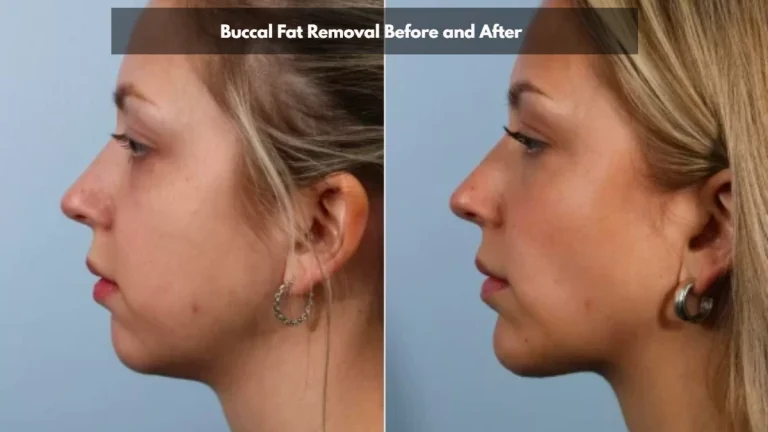
Buccal Fat Removal Before and After

Buccal Fat Removal Before and After

How To Choose A Good Plastic Surgeon Who Does Buccal Lipectomy?

Finding a good plastic surgeon who can perform a buccal lipectomy is important for this surgery. You may visit the American Society of Plastic Surgeons website to find a qualified surgeon. From there, you will find a good surgeon residing in your city, state, or country. 

How To Choose A Good Plastic Surgeon Who Does Buccal Lipectomy

The surgeon certified by the ABPS (American Board of Plastic Surgery) is considered good for this kind of surgery. On your first consultation with the doctor, never forget to ask him some important questions like:

  • Is he particularly trained in cosmetic/plastic surgery?
  • What are his years of experience?
  • If he has done buccal fat removal recently?
  • If he has any previous patient’s buccal fat removal before and after photos
  • How you should make yourself ready for the process
  • How will he perform your surgery & where?
  • Is there any risk of complications for you & how will he handle it?
  • What can you expect at the time of the healing process?

Wrapping Up

So, I hope our information on buccal fat removal surgery helped you. Now, don’t just glance at the highlighted cheekbones of your favorite celebs & feel jealous of them. You can be like one of them with the help of this fat pad removal surgery. Just begin your first step towards it by searching ABPS (American Board of Plastic Surgery) on the internet & selecting a surgeon for this cosmetic surgery who resides near you. And you will get a beautiful celeb-like face within a few days.

FAQs on Buccal Fat Removal

Q1. Is buccal fat removal worth it?

Answer: Yes, buccal fat removal is worth it. It is also considered a safe method of fat removal from your cheeks. Also, it is one of the most famous and most-requested facial cosmetic processes (buccal fat pad removal surgery) that emerged over the past years. Simply put, it is a kind of plastic surgery that is also famous as face fat or cheek fat removal surgery.

In this surgery, the buccal fat pads (situated inside your cheeks) are removed, resulting in thin cheeks that nicely define your facial angles. This buccal fat removal surgery can be done individually or with any other type of plastic surgery, such as a facelift, chin implant, botox injection, rhinoplasty, or lip augmentation.

With this surgery, your facial features will improve, and your highlighted cheekbones will make you look more attractive and beautiful.

Q2. Is buccal fat removal permanent?

Answer: Yes, the outcome of buccal fat extraction is usually permanent. But if you gain a significant amount of weight in the future, this surgery will have no value, and your cheeks will become fuller again. So, to maintain the result of this surgery, you have to keep an eye on your weight.

Q3. How long does buccal fat removal last?

Answer: Buccal fat removal surgery is a short and painless process that usually takes an hour to complete.

Q4. How is the post-buccal fat removal smile?

Answer: Buccal fat pad removal assists patients in enhancing their smiles.

Q5. Does buccal fat come back after buccal fat removal 10 years later?

Answer: No, buccal fat removal is permanent, and it never comes back even after 10 years from the removal date.

Phasmophobia: Ghost Types, Causes, and Myths Explained

0

Phasmophobia: It’s midnight. You watched a scary movie three days ago, and suddenly, you wake up and feel someone staring at you. Cut to the next day, and you could not sleep the whole night. Now, you can not focus in your class and workplace.

This might be a serious problem, you see.

According to recent research conducted by the United Nations, about four in ten Americans believe in ghosts. In a survey conducted in 2021, 36 percent of respondents from the United States said they believed in ghosts. 

What is Phasmophobia_ Ghost Types, Causes, and Myths Explained

Women are more likely to believe in ghosts, but men generally believe more in UFOs.This tells us that humans are afraid of what they usually don’t understand or do not want to face.

See, I do not deny the existence of spirits; souls do exist. And if there is some good stuff? There is also a bad of it. So, good and bad souls exist, but that does not mean you have to be afraid of them.

So let us look at it scientifically:

Causes

Medical science is not yet sure why Phasmophobia of any kind develops, but what we do know is, that any kind of trait in an individual is genetic to the greatest extent.

But we can not blame everything on genetics, right? An individual’s personality is formed through their experiences.

Phasmophobia causes
Phasmophobia causes

The experiences include growing up hearing scary stories and watching scary movies, which causes the mind to always be thinking about these “scary things.”

Clearing up myths

One of the biggest myths is the fear of death, commonly known as thanatophobia. And phasmophobia is the same; well, it’s a spoiler alert. They are not.

See, being afraid of ghosts, etc., can be the ultimate result of being scared to die, but it is still not technically the same. People would choose death over being scared to their bones by some ghost.

So yeah, not the same. They are interrelated but not the same; that is the conclusion.

Phasmophobia myth
Phasmophobia myth

More phobias related to this one is autophobia or, as famously known, the fear of being alone. Fear of darkness, fear of nights, fear of shadows. The list can go on. The more you dig, the deeper it gets.

Now, enough description, right? Let’s talk about curing this phobia, or, as I like to say, weakness.

The cure

I am not going to suggest you some antidepressants or something like that.

As I said initially, we do not understand it and do not wish to do so.

I have been a victim of this weakness, too. Do not let the Western media fill your head with their, you know, not-so-working medicines and charge you every month for some antidepressants. You might get addicted to, you know, which will make things worse.

We have to understand and accept that we are mortals, and we are all doomed to die.

Everything you and I are or are not aware of will get terminated sooner or later. If everyone and everything has to die, why fear it?

Phasmophobia cure
Phasmophobia cure

It really is the final destination! I would share my own experience, and I read a quote somewhere that said:

“In moments of weakness, you must be strong or at least act like it.”

That is all I did. I would get so scared of simple movies like Annihilation, which had a good plot.

I got out of my house after watching it and was so scared that something would come out of the bushes and beat me brutally,

At that moment, I applied the quote and honestly said?

Even if I am scared, I don’t feel it much because I act or at least make an effort.

I also got into spirituality and read books about life, and the book that changed my life is Srimad Bhagwat Gita, which gives you the conclusion of everything you need and want.

The conclusion

● The best thing I can advise you is to try to be strong in moments of weakness and talk about Phasmophobia with a professional counselor if needed. The more you talk about your thoughts, the clearer you will be about them.

● Read the Gita.

● Consume positive content.

There is a quote on my mind that I feel is the right time to share with you,

Watch your thoughts; they become actions, your actions will become your habits, your habits will become your character, and your character will become your life and your life. It shall form your destiny. 

So focus on what you want to grow, focus on positivity.

That is all for today folks, wishing you strength for fighting life’s challenges.

Keep learning!

Frequently Asked Questions (FAQs) about Phasmophobia

What is Phasmophobia?

Phasmophobia is a popular cooperative horror game developed by Kinetic Games. It involves players taking on the role of paranormal investigators and ghost hunters who must identify and interact with ghosts in various haunted locations.

How do I play Phasmophobia?

To play Phasmophobia, you’ll need to purchase and download the game from a platform like Steam. Then, you can join or create a lobby with friends or other players online. Your goal is to investigate paranormal activity by using equipment and clues to identify the type of ghost haunting the location.

What are the different types of ghosts in Phasmophobia?

Phasmophobia features several types of ghosts, including the Spirit, Wraith, Phantom, Poltergeist, and many more. Each ghost has unique characteristics and behaviors that players need to discover and document to complete their objectives.

What are the common causes of paranormal activity in the game?

In Phasmophobia, paranormal activity can be triggered by various factors, including players’ actions like asking questions with a spirit box, provoking the ghost with their presence, or simply being in the vicinity of the ghost’s haunt. Environmental factors, such as temperature drops and EMF readings, can also indicate paranormal activity.

Are there any myths or misconceptions about Phasmophobia?

One common misconception is that Phasmophobia uses real paranormal activity data. In reality, the game is a fictional simulation designed for entertainment. Another myth is that all ghosts are harmful; while some are dangerous, others are less aggressive and can even help solve investigations.

Avoid Dermaplaning Regret: What Could Go Wrong

0

Dermaplaning Regret: Are you a woman who prefers to remain tip-top & perfect by shaving all the extra hairs that overgrow on the different parts of your body? Then, you must surely have thought about removing the extra hairs that overgrow on your face, too, or about shedding out the dead cells of your face that make your facial skin so rough. This is because these features of your face make you feel embarrassed & insecure amongst so many people in your office or any other public place. 

And, if you are thinking of trying the dermaplaning method, let me tell you that you are taking a big risk on your face. Yes, dermaplaning is indeed said to fix one’s problem of facial hair or dead skin cells, but do you know how horrible your skin can become if the method is not done appropriately? It will become so dreadful that you will regret it later for doing the dermaplaning. 

That doesn’t mean that the method is too hard to do. It’s a very easy method of hair & dead skin removal from your face & smoothening your facial skin. But, you have to do it on your face by someone who is truly an expert in dermaplaning & has to avoid doing it yourself. Otherwise, you will injure yourself & your face will be filled up with scars & bruises. 

Now, the question is, what exactly is this dermaplaning method of facial hair removal? And, how can we avoid undergoing the dermaplaning regret? What is dermablading & does this process work permanently? Does it have any side effects? Well! To know all these things, Come! Let’s move further:

What Is Dermaplaning?

Dermaplaning, also known as Dermablading, is a quick but non-invasive procedure for removing facial dermaplaning hair regrowth by shaving it, thus making your skin smooth, polished, and glowy. The shaving is done using dermaplaning razors with dermal blades, and it also removes dead facial cells simultaneously. 

What Is Dermaplaning

Though this technique of vellus hair removal sounds much easier, it has to be done very carefully & with proper consciousness from appropriate angles. If a slight mistake happens in the cutting angle, you will be left with a cut or bruised skin on your face. So, the dermablading went wrong, & you will be in deep regret for choosing this method. 

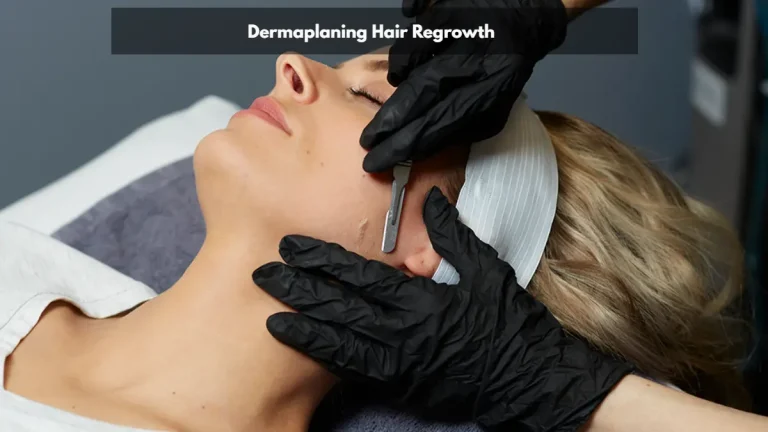
Dermaplaning Hair Regrowth

Now, you may wonder, does dermaplaning make hair grow back thicker? The answer is ‘No’. Dermablading is nothing but shaving facial hair off the skin’s surface, not from the roots. 

Shaving hair never interferes with its original growth. So, if you regularly perform dermablading facial treatments on your face, your facial hair will not grow back darker and thicker.

Dermaplaning Hair Regrowth

However, if you ask us – “does dermaplaning cause stubble?” we will say, ‘Yes’, it’s common to experience a little stubble when your facial hair starts growing on your face again.

Is Dermaplaning Bad?

Dermaplaning is not bad, but from the point of view of effectiveness, various intensive exfoliation treatments are more effective than it. This is because dermablading only affects your skin’s top layers and not beyond that. However, various exfoliators exfoliate and glisten your skin from the inside. 

Besides, Dermaplaning can have side effects like breakouts on your skin, discoloration, redness & risk of infection.  

Does Dermaplaning Work?

Yes, Dermaplaning works if done correctly without any blunder. Once dermablading is done on your face, your face will look smooth, hair-free, bright & youthful. But, this result is not permanent. It will start vanishing away after 3 weeks from the day of Dermaplaning. 

Does Dermaplaning Work_

4 Dermaplaning Side Effects

Though Dermaplaning, if done properly, will not show you any of its big side effects, you may still notice a few temporary side effects after going through this method. They are:

1. Breakouts

A question may arise in your conscious mind: Does dermaplaning cause acne? The answer is ‘No’; it never does. However, if your facial skin is prone to acne, this facial hair and dead cell removal technique may result in fresh breakouts. 

So, you should avoid dermablading if your skin has acne. Besides, you can resist breakouts by dermablading carefully and not touching the razor blade on your face’s active acne. 

Touching the dermal blades over the active facial acne may help the bacteria to spread easily over your face & stimulate another flare-up. Removing a skin layer from your face through dermablading keeps your facial skin more exposed to foreign objects. 

So, if any bacteria remains on the derma blade or your hands, treating dermablading will result in your facial acne breakouts. 

2. Dryness

This exfoliation treatment of dermaplaning initially makes your skin feel dry and slightly flaky. This treatment is expected to improve your facial dryness by removing your face’s dead skin cells. However, you will feel just the opposite during the first few days. Your face will experience tightness and dryness. 

3. Irritation

In dermaplaning, a blade scrapes across your skin & this scraping of the blade irritates your face. Also, after the treatment of dermablading, you will have red, itchy & discolored skin during the 1st one or two days. 

4. Small Cuts

If the dermaplaning session is done more intensively, you may experience a few minor cuts & grazes over your facial skin after it’s over. This happens more often in the case of persons who have rough skin texture. 

However, good treatment from a dermablading specialist will help the cuts heal fast and without any left-out marks.  

Is Dermaplaning Good For Acne?

Dermaplaning is believed to be a good acne treatment. The process of shaving removes the outermost layer of your facial skin, dramatically curtailing the visibility of any scars resulting from acne. 

Is Dermaplaning Good For Acne

This is made possible by peeling the discoloration and uneven texture associated with your face’s scar tissue. 

Products You Should Not Apply Both Before & After This Facial Treatment

  • Avoid retinoids for at least 3-5 days before dermaplaning.
  • Avoid retinoids for at least 2-3 days after dermablading.
  • Do Avoid any makeup for at least twenty-four hours after it.
  • Avoid any physical scrub for at least 2-3 days after it
  • Avoid sun damage or tanning under it. Instead, apply SPF on your face. 

Wrapping Up

“Dermaplaning Regret” is a phrase applied to some people who have faced bad experiences after dermaplaning over their faces. Nevertheless, many people have undergone this facial treatment without regret and are also very happy with its result. 

So, dermaplaning is a matter of regret or not, depending on how minutely and unmistakably it has been performed. It all depends on whether the hands are experienced. 

Dermablading is a bit costly if done under good supervision, so it is wise to avoid this technique if you are not capable of arranging so much money. Inexperienced hands may ruin the procedure and make you suffer long or even for a lifetime. 

Frequently Asked Questions (FAQs)

Q.1. What are the negatives of dermaplaning?

Answer: Dermaplaning is not a bad facial treatment if done carefully & adequately with the help of a professional expert. However, a slight mistake or a change of angle during the shaving may result in deep cuts or bruises on your face. Also, you may notice a few temporary side effects after going through this method. They are:

1. Breakouts:

If the skin of your face is prone to acne, this facial hair & dead cells removal technique may result in fresh breakouts. Touching the dermal blades over the active facial acne may help the bacteria to spread easily over your face & stimulate another flare-up.
 
2. Dryness:

This exfoliation treatment of dermaplaning initially makes your skin feel dry & slightly flaky.

Q.2. Does dermaplaning ruin your face?

Answer: Dermaplaning is not bad & doesn’t ruin your face if done correctly by an expert. However, from the point of view of effectiveness, various intensive exfoliation treatments are more effective than others.

Besides, the result of dermaplaning is not permanent. You have to keep doing this treatment over your face at regular intervals to avoid the further regrowth of facial hair.

Q.3. What happens when hair grows back after dermaplaning?

Answer: Hairs may grow back on your face over time even after you undergo this treatment as the result of dermablading is not permanent. But, if you do dermablading facial treatments over your face regularly, your facial hair will not grow back darker & thicker. 

Q.4. Who should not do dermaplaning?

Answer: People facing active breakouts or severe sunburn & having sensitive skin must not do dermablading. Also, people who have been taking Tretinoin/Accutane for the past six months or are withstanding cancer treatment must avoid this facial treatment.

Fungal Acne: Symptoms, Facts & Best Treatment Options

0

Have you ever faced the skin condition of acne or pimples on your face and body? Are you wondering why, even after going through all the typical acne treatments, your acnes are not improving? Then, know that you suffer from fungal acne, which is totally different from normal skin acne. Startled? What is that, and how can it be cured? Well! Keep on scrolling the page & you will know everything about it.

What Is Fungal Acne?

Fungal acne may be described as a kind of infection in the hair follicles of one’s skin. If you look closely, you will see that they look like small pimples whose sizes are constant or of the same type, and their shapes or sizes don’t vary much. Being caused by fungi, these types of acne need a different kind of treatment from bacterial acne. 

What Is Fungal Acne_

The fungal pimples often look similar to acne vulgaris & so, people get confused while identifying them. Acne vulgaris is generally linked with blackheads or whiteheads, whereas the pimples caused by fungi are blamed for skin irritation & whiteheads. 

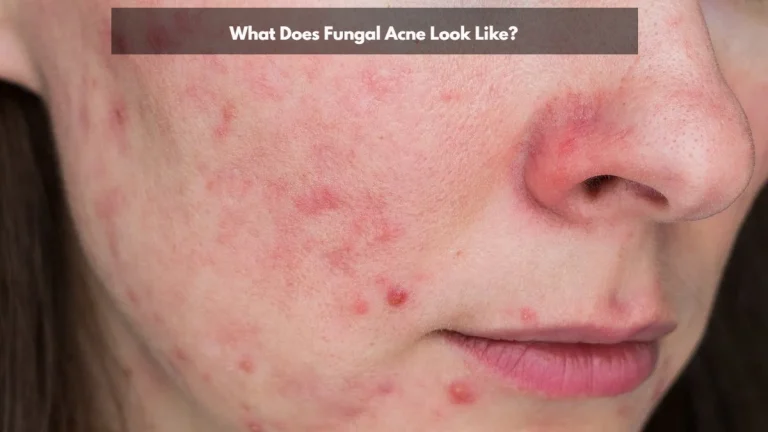
What Does Fungal Acne Look Like?

The breakouts of fungal pimples look like small & uniform red bumps. These pimples rise from your skin’s hair follicles. Also, they occur on your forehead & that too in symmetric rows. You may also find them scattered on your cheeks. However, they may sometimes ensue in your upper back or upper chest. 

Fungal acne never causes blackheads, cysts & deeper unbearable nodules or pustules. So, it is different from bacterial acne. The fungal pimple skin condition is also known as pityrosporum folliculitis. It is because this folliculitis type gives rise to an infection within your skin’s hair follicle. Folliculitis makes your hair follicle inflamed & infected. As a result, pustules are formed on your skin. 

What Does Fungal Acne Look Like_

Any portion of your body that has hair has the chance of developing folliculitis. The pityrosporum folliculitis is affected by none other than the Malassezia species. It generally affects teenagers as their skin produces extra oil. The fungi remain typically hidden on your neck, back & shoulders & sweating causes it. Fungal acne is also known as a yeast infection. 

Other than pityrosporum folliculitis, caused by yeast, the other kinds of folliculitis are Superficial bacterial folliculitis, Viral folliculitis, Gram-negative bacterial folliculitis, Demodex folliculitis, Eosinophilic folliculitis & Pseudofolliculitis barbae. 

Closed Comedones Vs Fungal Acne

Closed Comedones and fungal Pimples are the same in appearance, and both look like little red bumps that develop over your cheeks, forehead, or upper back. However, in reality, they are distinct from each other. The major rationale behind this is that their causes are varied. 

Yeast overgrowth leads to fungal infection, whereas sebum overgrowth underneath your skin’s layer leads to closed comedones. The treatment options for the two are also different. If one thinks fungal pimples to be closed comedones & treated accordingly, the treatment will be ineffective. 

In fact, your fungal pimples may worsen by undergoing closed comedones or other acne treatments. Hence, you must identify the right type of acne before proceeding with its treatment. 

Closed comedonal acne is treated with topical retinoids or other drying agents. These agents stop the overproduction of the natural oils within the skin and, hence, are able to effectively target the comedones. 

Systematic antibiotics help with closed comedones and inflammatory acne. Furthermore, severe cases of bacterial acne are treated with hormonal medication (e.g., contraceptives). 

In contrast to closed comedones, fungal pimples are not generally treated with antibiotics, and this is because antibiotics don’t help much in fungal infections. For the treatment of fungal pimples, you would require antifungal medication. If your fungal pimples are at their primary stages, go for an antifungal cream of topical origin. 

However, if you are suffering from more severe symptoms of fungal infection, you may need something more. Also, in case your skin fails the topical treatment, try oral antifungal medicines as prescribed by a board-certified dermatologist. 

What Causes Fungal Acne?

Fungal acne is mainly caused by yeast. Warm and moist environments are appropriate for yeast multiplication. During summer, the heat, humidity, and perspiration make an ideal environment for the yeasts to grow. So, people mainly catch fungal acne on the face or other parts of their body in the summer. 

Besides, the pimples may also occur after being treated with any antibiotics or steroid/prednisone type of medications. Also, it happens in conjunction with diabetes or other systemic diseases. Many antibacterial treatments for fungal pimples eliminate the normal bacteria of your skin, thus creating an ideal environment for the proliferation of yeast, hence flaring fungal acne.  

What Causes Fungal Acne_

You might be surprised to see hear that the fungal pimples causing yeasts are always present on our skin. Our body balances the yeast, bacteria & other fungi that are a part of all human beings’ skin. However, if this very balance between them becomes upset, it leads to an overgrowth. Exactly then, you will see the infection inside the hair follicles developing with some acne-like symptoms. 

The conditions/events that upset this balance between bacteria & fungi are:

  • Trapped moisture
  • Suppressed immune system
  • Wearing tight clothes
  • Certain medications like antibiotics
  • Diet changes
  • Warm & moist environments  

Fungal Acne Symptoms

We find that fungal pimples usually take time to cure. But what’s the reason? Well, the primary reason is that we failed to identify the fungal acne at our first attempt and mistaken it for bacterial acne. 

So, the treatment for bacterial acne or medications aggravates the fungal pimples, worsening the infection. Thus, naturally, it takes time for these types of pimples to get cured. 

But, if you can identify the fungal pimples on the first attempt & go for the treatments accordingly, your fungal infection will heal within no time. So, it’s very important to identify the acne caused by fungi. But how? Ok! Here are the symptoms of the pimples caused by fungi:

  1. The pus-filled bumps of fungal pimples are nearly the same size. The pimples or whiteheads caused by bacterial infections are of varying sizes.
  2. You will see fungal infections mainly on your arms, chest, or back. In contrast, bacterial acne arises mainly over one’s face. But, it doesn’t mean that your face can’t have fungal acne.
  3. You will have an itchy feeling with fungal pimples, which rarely happens in the case of bacterial acne
  4. Fungal acne mainly comes in clusters of tiny whiteheads, whereas bacterial acne is more sparse than clustered.
  5. Since fungal blotches are the outcome of yeast growth, other yeast-related conditions, such as psoriasis or dandruff, help you to point out the main reason for the breakouts. From these conditions, you can guess if your breakouts result from yeast infection or bacterial infection. 

Diagnosis Of Fungal Pimples

The dermatologist diagnoses fungal acne after hearing about the patient’s skin condition symptoms. If necessary, he may ask you to do a painless skin scraping to examine it under a microscope or undergo a biopsy test. The tests will help detect fungal acne in the patient. 

Fungal Acne Treatment

Fungal acne can be treated at home, but in cases of severe symptoms of fungal pimples, it is better to take the help of a dermatologist. So, how to get rid of fungal pimples?

Fungal Acne Treatment

The fungal acne treatment at home comprises of:

  1. Changing sweaty clothes after exercise right away
  2. Showering every day after a workout or any other strenuous work 
  3. Wearing loose clothes
  4. Trying body wash
  5. Using dandruff shampoo regularly 

If the symptoms show that the fungal infection has become severe, your dermatologist will give you some OTC antifungal creams or ointments like ketoconazole/butenafine/clotrimazole cream. Also, in more severe cases, he/she will specify an oral antifungal medicine like itraconazole/fluconazole, which targets your skin’s hair follicles to eliminate the infection.  

In What Way Can You Prevent Fungal Pimples?

Fungal pimples can be prevented by:

  • Using dandruff shampoo regularly
  • Wearing breathable fabrics
  • Showering & rinsing yourself of sweat after sweating
  • Eating a balanced diet by balancing carbohydrate-rich foods with fruits, vegetables & protein-rich foods.

The Final Words

Fungal acne is a common skin problem in any part of your body. But, with the right treatment, it can be cured very easily. For that, you should know the difference between fungal acne & bacterial acne. Besides, the right knowledge about this ailment and the adaptation of proper precautions will protect you from this disease. 

Frequently Asked Questions(FAQs)

Q.1. What triggers fungal acne?

Answer: Using creams or other treatments for bacterial acne when you have fungal acne only worsens your acne & triggers it.

Q.2. How can I treat fungal acne at home?

Answer: Fungal acne can be treated at home by:
1) Changing the sweaty clothes after exercise right away
2) Showering every day after a workout or any other strenuous work 
3) Wearing loose clothes
4) Trying body wash
5) Using dandruff shampoo regularly

Q.3. How do dermatologists treat fungal acne?

Answer:  Dermatologists usually treat fungal acne by giving you some OTC antifungal creams or ointments like ketoconazole/butenafine/clotrimazole cream. Also, in more severe cases, he/she will specify an oral antifungal medicine like itraconazole/fluconazole, which targets your skin’s hair follicles to eliminate the infection. 

Q.4. Is tree tea oil good for fungal acne?

Answer: Yes, tree tea oil is thought to be good for fungal pimples. It was traditionally applied as an antiseptic for antifungal treatment. It is primarily effective for treating toenail fungus and athlete’s foot, though more exploration is needed.

5 Ways to Overcome Hourglass Syndrome: Effective Solutions

0

Are you fond of an hourglass figure of women? Do the proportionate curves of an hourglass figure attract your eyes? Then, like most people, you might be wrong to think that such a figure of a person is due to hourglass syndrome. But it might not be so.

The truth is that hourglass syndrome can cause lower belly pooch in women, which is unhealthy. However, it’s not always necessary that a person with an hourglass figure is suffering from hourglass syndrome. But what exactly is hourglass syndrome?

Well! This dreaded syndrome is the main culprit of a person’s (especially women’s) lower belly pooch. When your upper abdominal muscles get overdeveloped and your lower abdominal muscles get underdeveloped, you likely suffer from this syndrome.

It was probably your biggest mistake if you have once performed thousands of situps and repetitive trunk flexion workouts to strengthen your upper abdominals. And, due to this mistake of yours, you are now suffering from this syndrome.

Want to know more about hourglass syndrome? Come! We are demonstrating to you everything about it:

What Is Hourglass Syndrome?

It’s a kind of disorder in which a person sucks in his abdomen habitually. The diaphragm’s pulling of your upper abdominal muscles toward the opposing direction inflates your lungs, resulting in the upper abdominal muscles’ activation. Thus, the abdominal sucking pulls your diaphragm inward. As a result, it also tries to pull your lower ribs inward.

Doing this over a long period leads to a smaller waist, a horizontal crease situated across/over the belly button, and an upturned belly button. All these occur due to an imbalance of your abdominal muscles, which leaves the upper abdominal muscles in continual constriction. On the other hand, it also causes your lower back and abdominal muscles to go lax, resulting in the upward pulling of the abdomen.

Hourglass syndrome inflicts fake core strength, and with it, your upper abdomen looks ripped. However, the core musculature remains weak, leaving your lower back and pelvis susceptible to injury.

What Is Hourglass Syndrome

The abdominals are not the only thing included in one’s core musculature. It also encompasses one’s diaphragm, his/her obliques, the musculature of his/her pelvic floor, and last but not least, his or her transversus abdominis. These muscles are responsible for assisting the structure of your body, standing straight against gravity. 

Several patients recognize the significance of their strong core strength. However, the majority of those patients don’t understand that not engaging those muscle groups will cause hourglass syndrome. As a result, they have to deal with postural compromise and injury in their lower back.

Is Sucking In Your Stomach Bad?

Yes, sucking in your stomach can result in pelvic floor issues such as incontinence, pelvic organ prolapse, etc. Contracting the upper abdominal muscles of your body regularly can exert excess force on your pelvic floor muscles, thus making them strained or overworked.

Does Sucking In Your Stomach Help Lose Weight?

No, your stomach sucking will never help you lose weight. While you suck your stomach in, no abdominal muscles are used in the process. The process only involves the use of a vacuum, and you can’t expect the burning of your body’s calories with the creation of a vacuum. 

Also, no strength is generated in the process. You will get LESS TONED as a result of your midsection. So, just stop doing it to lose weight. It will be of no help.

However, though performing stomach vacuums can’t trim your waistline or give you abs, it helps to cultivate some thick internal ab muscles, thus helping with your core strength, posture, and lower back pain. Yoga practitioners or bodybuilders practice the process of stomach vacuuming, which has been going on for many years.

Does Sucking In Your Stomach Help Lose Weight

Research says that the Tra/EO muscle thickness has shown significant improvement in the abdominal drawing-in maneuver. The additional thickness of these muscles helps people who suffer from lower back pain or poor posture.

With stomach gripping, you will get some benefits of a flat stomach by stopping your transverse abdominis from turning slack. Also, with better posture, your body will have a slightly protruding belly. Nevertheless, the exercise will never help you burn fat or train your rectus abdominis (your abs’ visible part).

To burn fat, you must burn several calories through exercise and a less-calorie diet. Exercise, intermittent fasting, and a ketogenic diet will help you reduce your excess calories. Don’t go for yo-yo dieting. It is considered to be an unhealthy way of losing weight. 

3 Hourglass Syndrome Causes

Primarily, there are 3 causes of Hourglass Syndrome, and they are:

1. Poor Habits And Social Anxiety:

Many people desire a flat and polished abdomen. But holding it in for an extended time is not a good idea. If they continue it for an extensive period, their brain can be rewired from the normal habit of adjustment to a transformed form like this. 

2. Non-Ideal Growth During Childhood Times:

Among all infants, nearly thirty percent of them suffer from hourglass syndrome stomach gripping as a typical compensation process in response to their poor muscle development. This problem also continues into their adulthood.

3. Shielding Patterns:

If you are wondering – “does sucking in your stomach help?”, then know that stomach gripping sometimes develops for muscle protection after going through an injury. However, it persists even long after the complete healing of the injury. 

After a person goes through an accident, his injured tissues heal with the help of this stomach gripping but muscles learn. After forming a shielding pattern once, they instantly develop an addiction to protection even after the recovery of the injured area.

Some Consequences Of An Hourglass Syndrome

Lower Back Pain

Your lower back is always critically stabilized by your diaphragm. So, when the diaphragm works inaccurately, your lower back becomes weak. Thus, your other muscles (especially your lower back’s extensors) are required to function more efficiently thus making up for the diaphragm’s dysfunction. As a result, the muscles’ consistent overworking may lead to prompt tightness with pain.

Neck Pain

The abnormal descending of your diaphragm not only affects your stabilization but also your breathing. As a result, your neck will have to bear a huge strain. 

In our body (in a normal person), the diaphragm’s central part ought to descend in the downward direction, with an extension of your abdomen as well as an expansion of your lungs.

However, a person suffering from Hourglass syndrome experiences a disturbance in this normal contour of motion. Besides, this syndrome makes his chest and shoulders raise instead of compensating, while he inhales. 

As a result, your neck’s muscles have to bear a great quantity of stress, and you may suffer from migraines or neck pain.

Acid Reflux

The diaphragm, other than its functions of breathing as well as balancing, further functions as a sphincter. It helps prevent your stomach’s contents from moving back upwards into the throat. Your damaged diaphragm may result in an increased chance of acid reflux.

How To Fix Hourglass Syndrome?

Hourglass Syndrome treatment is mainly done through physiotherapy. The physiotherapists’ main objective, in this case, must be to induce the proper diaphragm activation and strain release in your overloaded abdominal and back muscles. 

How To Fix Hourglass Syndrome

When an individual stretches his abdomen, he has to inhale in the cobra/seal position for not less than 15 seconds. Besides, for stretching your back muscles, the ideal posture is the child’s posture.

To fix Hour Glass Syndrome, you can also follow the below exercise:

First, relax your muscles in the upper abdomen. It will be very difficult to do it initially in a seated or standing position, especially when performing the exercise for an extended period. Thus, all four positions are a good place to start. Adopt this position by relaxing your stomach. Now, think about dropping the stomach of your body to the floor.

Now, have a soothed and relaxed breath as you expand your stomach and your ribs’ sides. Feel your stomach moving into your thighs as you keep the shoulder lifted upwards. Now, breathe out and again focus on loosening up your stomach. Try repeating the breathing cycle for at least three to five minutes as well as three to five times per day.

After mastering it, you can incorporate this pattern within your daily postures cum movements like sitting, standing, walking, and driving. Once you have done all these things, you can progress toward more advanced exercises.

Wrapping Up

Avoid the mistakes that lead to this syndrome. If you are already affected, try the previously mentioned exercise or consult a physiotherapist. Remember, nothing is beyond reach, including overcoming the Hourglass syndrome.

Frequently Asked Questions

Q.1. What is an hourglass syndrome?

Answer: Hourglass syndrome may be defined as a sort of ailment in which an individual sucks in his/her abdomen habitually. Your diaphragm’s hauling of your abdominal muscles, located in the upward part of your body, in the contrasting path magnifies your lungs, stemming in your upper part’s abdominal muscles’ activation. Therefore, the abdominal sucking yanks your diaphragm in the inward direction. So, your lower ribs will also get an inward tug from it.

As you do this for a long duration, it brings in an elegant-looking waist for you, a flat furrow placed across/over your stomach’s belly button as well as an upturned variety of belly buttons. This occurs because of the unevenness of the muscles of your abdomen as it prevents the upper abdominal muscles from doing continual constriction.

Again, it affects your lower back or the abdominal muscle strength of your torso to go lax, developing the upward yanking of the abdomen.

Q.2. Can you correct Hourglass syndrome?

Answer: Yes, Hourglass syndrome can be corrected by doing some exercises, as mentioned above. Also, you can take the help of a physiotherapist to solve this problem. Physiotherapy works wonders for Hourglass syndrome and helps you to correct it.

Q.3. What causes an hourglass stomach?

Answer: Basically, there are 3 spurs of Hourglass Syndrome. They are:
1. Bad habits as well as social anxiety: There are several individuals whose longing is for a flat as well as polished abdomen. Nevertheless, their holding it in for an extended time may not be a healthy idea. Their continuation of this over an extended period may pressure their brain to get rewired from the typical habit of adjustment to an altered pattern like this. 
2. Childhood suffering: About thirty percent of infants in the world go through hourglass syndrome stomach gripping after they are born. It is a basic restitution system as a reaction to their impoverished muscle development. Also, the crisis doesn’t remain confined there. It proceeds even when they become adults.
3. Safeguarding patterns:
Stomach gripping also occasionally ensues for muscle safety after the muscles in an area pass through trauma and pain. Nonetheless, it lasts even after the perfect recovery from the trauma. As an individual meets an accident, his traumatized tissues get recovered with the assistance of this abdomen gripping. However, the muscles learn in the process. As they form a protective pattern for the first time, they rapidly acquire an obsession for defense, irrespective of whether the trauma is recovered or not.

When Do Girls Stop Growing? Stop developing? stop puberty?

0

When girls are small, their height increases rapidly with time, but after girls reach puberty, their growth starts to increase again. When girls reach their menstruation period, then their height stops increasing. If you are very interested in knowing more about When Girls Stop Growing, then this article is for you. Here, we will explain all the things related to the height of the girls.

When Do Girls Stop Growing

At what age do girls stop growing?

The height of girls often stops growing between 15 and 16 years because their menstruation starts during this time. By the time girls end puberty, they reach their correct height. This process is quick for girls, and it takes some time for some girls.

A 12-year-old girl with an average height

Many factors affect the height of a 12-year-old girl. A girl needs to be properly brought up by her parents during her youth. 

Puberty in boys will be different than that of girls. If the girl is adequately nourished until 12, her height will be correct, or she can stop growing. The average height of a 12-year-old is at least 55 to 64 inches.

When do girls stop developing?

Understanding the developmental stages of girls is crucial for parents, educators, and healthcare professionals. The physical, emotional, and cognitive growth of girls is a dynamic process that varies from individual to individual. Typically, girls undergo puberty between the ages of 8 and 13, marking the onset of physical changes like breast development and the start of the menstrual cycle.

The completion of physical development, however, varies. In general, girls stop growing in height around the age of 16 or 17. By this age, most girls have reached their adult height, and the growth plates at the ends of their long bones close. It’s important to note that genetics play a significant role in determining the timing and pace of development.

Apart from physical changes, emotional and cognitive development continues into early adulthood. Girls develop their emotional intelligence, social skills, and a sense of identity throughout adolescence. This period of growth involves navigating relationships, self-discovery, and developing a sense of independence.

When do girls stop puberty?

Girls start developing rapidly just a few years before the menstrual cycle begins. Girls mainly develop between 10 and 15 years of age. Girls grow only 1 to 2 inches inside at least two years after getting their first period. This happens when girls are at their adult height.

How does puberty affect girls
How does puberty affect girls?

Most girls reach their true height by the age of 14. The growth of girls also depends on when their menstruation starts. If your daughter’s menstruation did not start even at 14 years, then definitely get this thing checked by the doctor.

Differences in the growth of boys and girls

There is some variation in development between boys and girls. It takes a little longer for boys to reach puberty as compared to girls. 

Differences in the growth of boys and girls

A girl’s puberty starts from the time she menstruates. In contrast, boys have puberty between the ages of 10 to 15 years. Most boys stop growing after the age of 16. But even after this, the growth of their muscles continues.

When should you take your girl to the doctor?

If your girl takes a little longer to develop than other girls, or it takes time for her to reach puberty or length, there could be a problem. 

Some girls do not see signs of breast development by the age of 13, or if they do not start menstruating until the age of 16, then such a girl is considered to have delayed puberty.

Factors Delaying Development in Girls

Many factors affect the development of girls.

  • Some girls have problems with growth hormones that delay growth.
  • Having problems with arthritis or cancer in girls also prevents their development.

If your daughter is not developing properly and you are concerned about his development, then contact the doctor immediately.

What should be their height according to the age of the girl?

Below is a list of how tall a girl should be according to her age. Puberty in girls starts at the age of 8 years.

AgeHeight In InchesHeight In Centimeter
850.2 inch(127.5 Centimeter)
952.4 inch(133 centimetres)
1054.3 inch(138 Centimetre)
1156.7 inch(144 centimetre)
1259.4 inch(151 centimetre)
1361.8 inch(157 centimetre)
1463.2 inch (160.5 centimetre)
1563.8 inch(162 centimetre)
1664 inch (163 Centimetre)
1764 inch (163 Centimetre)
1864 inch (163 Centimetre)
*What should be their height according to the age of the girl?

Final Words

From childhood to puberty, girls may grow in height by a foot or more. They can develop healthily with the support of excellent habits like getting adequate sleep, eating a balanced diet, and exercising frequently.

Contact a doctor as quickly as possible if you have any concerns about your baby’s growth pattern.

Their doctor will question your family’s developmental history. Your child will be examined, and their growth trajectory will be thoroughly examined.

To help identify the reason for the development delay, the doctor may occasionally employ procedures like X-rays or blood testing.

Frequently Asked Questions about when girls stop growing

Q. At what age do girls typically stop growing in height?

Ans. Girls typically stop growing in height around the age of 16 to 18. However, growth can vary significantly from person to person.

Q. What factors influence the timing of when a girl stops growing?

Ans. Several factors influence the timing of when a girl stops growing, including genetics, nutrition, overall health, and hormonal changes.

Q. Can a girl’s height be predicted based on her parents’ height?

Ans. While genetics play a significant role in determining height, it’s impossible to predict a girl’s height based solely on her parents’ height. Other factors also come into play.

Q. Can exercise and physical activity influence growth in girls?

Ans. Regular physical activity is important for overall health, but excessive exercise without proper nutrition can impact growth. Moderation is key.

Q. Is it possible for girls to continue growing after they stop menstruating?

Ans. In most cases, girls stop growing shortly after they begin menstruating. However, growth can continue for a brief period afterward in some individuals.

Mirror Hand Syndrome: Causes, Symptoms, and Treatment

0

Recently, popular media has made polydactylism famous by presenting it as a distinguished genetic anomaly. Be it “Gravity Falls” or “The Princess Bride,” their fictional characters possess more than 5 digits on their hands/feet. Nevertheless, very few people know about a syndrome named Ulnar Dimelia or Mirror Hand Syndrome. 

This is because the syndrome is very rare; until now, only less than a hundred cases of mirrored hands have been diagnosed. In an ulnar dimelia-affected individual, their second hand usually remains attached to their wrist, which mirrors the first’s movements. That’s why ulnar dimelia, colloquially, is named mirror hand syndrome. 

Unlocking Mirror Hand Syndrome_ Ulnar Dimelia Causes & Solutions

Many researchers are still trying to discover new facts about this syndrome. It seems that the disease is not hereditary. However, it may be the reason for a genetic mutation. Nonetheless, this is only an assumption or hypothesis. 

This is because no one has exact knowledge about the originating factor of this rare hand condition. 

What Is Mirror Hand Syndrome?

It’s an extremely rare kind of congenital disorder in which the radial ray remains absent, duplication of ulna happens, and also the duplication of the metacarpal, symmetric polydactyly, phalanx bones, and carpal happens. 

In some cases, a surgical amputation is needed to remove duplicate phalanges, metacarpals, and carpals. 

Sometimes, bone deformity accompanies arterial and nervous anomalies. This happens because of ulnar nerve duplication, radial nerve shortening, and radial artery absence. 

What Is Mirror Hand Syndrome

If you suspect Ulnar Dimelia, you can diagnose it by performing lab tests of individuals’ frontal and sagittal planes. 

Two experts, Saunders and Gasseling, first interpreted the Mirror hands deformity’s embryology. They described it as an ectopic manifestation of the polarizing activity cells’ zone or the gene of the sonic hedgehog (responsible for an anteroposterior axis’s limb patterning). 

According to them, the Hox genes, which give positional information during embryogenesis, also play a secondary role. The etiology inferred is probably nothing but failure (loss) of differentiation of one portion of the ray instead of its pure duplication. 

But what are the characteristics of mirror hand syndrome ulnar dimelia? What are its types, and how can it be fixed? Come, Let’s see! 

Mirror Hand Syndrome Ulnar Dimelia – Types:

Medically, there are two types of mirrored hands. In type 1, the disease involves a lunate, a trapezoid bone, and an index finger. In type 2, the mirrored hands possess two lunate, two trapezoid bones, and two index figures. 

Ulnar dimelia has recently been classified in the 3rd group retaining congenital hand deformities. 

However, the Al-Qattan & Al-Thunayan proposed classification system divides the mirror hand syndrome into 5 types. 

  1. Type 1 refers to the ulnar dimelia that shows 2 ulnae with zero radius. 
  2. Type 2 refers to an intermediate form of ulnar dimelia, which comprises 2 ulnae along with 1 radius. 
  3. Type 3 also refers to an intermediate form of ulnar dimelia, which involves mirror hand polydactyly along with 1 radius and 1 ulna. 
  4. Type 4 refers to a syndromal kind of mirror hand along with Laurin Sandrow syndrome’s fibular dimelia. 
  5. Type 5 refers to ulnar dimelia in which the patient comprises multiple hands on their forearms’ ends. 

Radiographic Features of Mirror Hand Syndrome:

Mirror hand syndrome’s radiological traits are typical, and they are shown at:

Elbow Joint

Generally, the humerus articulates the elbow joint along with 2 ulnae. In this case, the articulation doesn’t happen accurately as it happens for a trochlea and ulna in an average population. The presence of 2 ulnar arteries may/may not occur. 

Wrist Joint

In this case, the radius and the thumb remain absent and the ulna, as well as carpals’/metacarpals’ ulnar halves, get duplicated. Besides, you will see the presence of 8 triphalangeal digits. 

Characteristics Of Mirror Hand Syndrome/ Some Facts About Ulnar Dimelia:

Characteristics Of Mirror Hand Syndrome_ Some Facts About Ulnar Dimelia

Mirror Hand Syndrome Is A Very Rare Condition

Yes, this disease rarely happens in people. Till now, less than 100 persons have been diagnosed with this syndrome, and the disease has affected their arms and hands. 

The first case was documented in 1587. After that, only 72 cases of documentation of this syndrome have occurred in the medical literature. 

Also, there is a probability that some cases of this syndrome have gone unnoticed in this world’s underdeveloped areas. With the popping up of new cases, medical experts are continually trying to gather some extra information and data about this disease. Also, new studies on this syndrome are being published whenever possible. 

Duplication Of Fingers Or The Entire Hand

Persons suffering from ulnar dimelia may possess 2 hands on 1 wrist. It will look as if the hands are joined at the person’s palm symmetrically. Also, the hand of the affected person will appear as if it is duplicated. 

Again, a cleft may exist in their palm where their hands join. The additional fingers are observed as connected to the extra bones that elongate themselves down towards the carrier’s wrist, sometimes lengthening towards the elbow. 

However, it is not the only aspect of the manifestation of mirror hand syndrome. Such cases are also observed where a person possesses extra fingers in a single hand, which just looks like multiple hands’ molding. 

Besides, a few other cases also involve multiple fingertips that branch off from only one finger. It all depends on which classification or group the specific case is falling.  

Absence Of Thumbs

In the case of mirror hands syndrome, the hands don’t comprise any thumb, even though the person’s hand appears duplicated right down the middle. 

Instead, you will see that the ulnar dimelia hands possess either 2 index fingers placed centrally or a single index finger on a shared basis. In such a type of hand, zero thumb bone exists. 

Unison Movement Of The Connected Hands

The mirror hands affected people usually cannot move their coalesced appendages independently from one another. Instead, most individuals with ulnar dimelia confessed that whenever they tried to move their hands one half, the other half automatically mimicked the motion of the first half. 

Also, the mirror hands struck a person’s hand while grabbing things and opening and shutting like a Venus fly trap. The fingers are curled inwards towards one another. 

If some fingers extend, the others cannot flex. Again, in the case of mirror hands, the person’s nerves react in unison, apart from their digits mirroring symmetrically. 

Impeding Of The Range Of Motion Of Your Whole Arm

The problem of ulnar dimelia never remains restricted to a person’s hands. Its effects spread throughout his entire arm and impeded the range of motion of their whole arm. Such a person would find it hard to flex/move their elbow. 

This is because his arm may be missing the radial bone. Certain bone duplication would limit his arm’s spectrum of motion. Besides, ulnar dimelia can weaken the muscles of the person. Because of these detrimental effects, people look for corrective surgery. 

The Disease Is Not Hereditary

It has been researched that mirror hand syndrome has never been genetic. Though its actual cause is not very forthcoming, it has been confirmed after intense research that people suffering from ulnar dimelia hardly retain a familial record of congenital deformities. 

The Syndrome Rarely Happens In Both Arms; It Happens Or Spreads To One Arm Only:

It’s a highly perplexing condition in which most symptoms are perceived as chaotically disparate. They do not confirm the medical world’s perceived order. The majority of cases with this syndrome have occurred unilaterally. 

Different case studies tell us that the other arm of an affected individual remains absolutely normal. Nonetheless, only rare instances happened in which both of a person’s arms exhibit signs of mirror hands. 

Though Not Sure, Sonic Hedgehog Gene May Cause Mirror Hands:

A few people hypothesize that 2 genes are responsible for Mirror Hands. They are a sonic hedgehog, which helps monitor your limb and digit growth, and Hox genes, which inform the configuration of embryonic stage developing bodies. Nevertheless, there’s no definitive link between these genes with mirror hand syndrome. 

Sometimes, Multiple Surgeries May Be Needed For Treating The Syndrome:

At times, the last way to correct ulnar dimelia is none other than undergoing multiple surgeries. The surgeries will be complex, as they will address the issues of wrist and elbow movement. 

The doctor may, again, remove on-demand some of the digits of the mirror hands. Further, the muscles or tendons are strengthened in high-stress regions. 

Surgeons from utilitarian and cosmetic backgrounds frequently strive to establish a person’s thumb out of their extra fingers. Surgeries often successfully create people’s usable and conventionally aesthetic hands. 

However, not treating the syndrome for fear of undergoing multiple surgeries might only enhance further issues or abnormalities of the limb (for example, the person’s posture or range of motion). 

No Definitive Cause of the Syndrome Is Identified 

As only a few records exist now, some experts are yet to provide you with a full awareness regarding ulnar dimelia. Though it happens randomly, both sexes- boys and girls- would equally display this unusual condition. 

Treatment of Mirror Hand Syndrome

Mirror hands can only be treated using the surgical reconstruction intervention method. In general, a doctor always recommends their patients go for this surgery before their baby turns 2. This is because the surgery must be done only after the parents observe their child at the time of playing to establish the promising radial digit required for policing.   

Wrapping Up

So, in case you find that your newborn child is a victim of this rare disease, mirror hand syndrome, don’t break down. First, consult your doctor and discuss with him patiently how you can make your child get out of it and give him a normal, healthy life like other children. In case he assures you that surgery can bring a difference in your child’s life in a positive direction, trust him and just go for it. The surgery will give your baby a new life and free them from mirror hand syndrome. 

Frequently Asked Questions (FAQs)

Q.1. How common is mirror hand syndrome?

Answer: The prevalence of mirror hand syndrome is supposed to be slightly less than one if estimated in one million people. However, the researchers confided that a few mildly affected persons may never get diagnosed.

Also, some people don’t like to report the problem to their children officially. So, there’s no record of mirror hand syndrome in such children in an official manner; hence, there is no counting of them in the list of estimated persons suffering from this syndrome. 

Q.2. What causes ulnar dimelia?

Answer: Researchers have not yet diagnosed or specified a specific cause of mirror hand syndrome. However, research is ongoing to discover the actual reasons for ulnar dementia. The pathogenesis of this syndrome is associated with the embryology of the upper limb.

In this case, the 1st stride of limb formation is the surge of limb buds (known as Wolff crest) that arise on the embryo’s ventrolateral side. Besides, the buds are shaped by mesenchyme shrouded with a membrane of ectoderm.

Widows Peak Hairline: 5 Fascinating Reasons Explained

0

Have you ever noticed the front V-shaped hairline of any famous celebrity like Gary Cooper or Brad Pitt & wondered if they have adopted this hairstyle? Are you really crazy about this hairstyle? Then, know that this is not any new hairstyle adopted by them. This is a genetic condition that they are having, as most people have. And this hairline is called widow peak
Widows Peak Hairline

But, what does this widow’s peak exactly look like? And, is this front-sided hairline attractive or repulsive? Come! Let us glide deep into it:

What Is A Widow’s Peak?

Widows peak hairline is a kind of hairline that comes together & bows down at your forehead’s central part to form a ‘V’ shape. 

A V-shaped Widows peak hairline is elevated on the sides. Its low point is stretched in the middle part of your forehead. Some people naturally possess this widow’s peak hairline, whereas others who feel the widow’s peak haircut attractive go to the salons for haircuts for receding hairline widows. 

What Is A Widow's Peak
What Is A Widow’s Peak

Widows peak is prominent in some people, and in others, you will just see a hint of it. It clearly comes to people’s eyes if you pull your hair right back. Usually, it is believed that genetics is the main factor in deciding the hairstyle of a person. And, so your gene determines if you have straight hair or a widow’s peak. 

Sometimes, some individuals also have a reverse widow’s peak-styled hairstyle. In reverse widow’s peak, one’s hairstyle will have an inverted v-shape. 

Why Is It Called A Widows Peak?

The phrase “Widows Peak” actually came from eighteenth-century England. At that time, there was a ritual that the wife of a dead husband should wear a triangular hat/hood that was black in color and had a point that fell in her forehead’s middle part. Since this hairstyle looks exactly like the triangular hat, whose pointed tip falls on the middle part of one’s forehead, it is named a Widows Peak. 

Should You Keep Your Widows Peak Hairstyle Or Remove It?

You may wonder, is widow’s peak good or bad! Should it be removed or kept? Well! Whether you should keep your widow’s peak hairstyle or remove it totally depends on your choice. A widow’s peak in itself is not an ugly hairstyle. Instead, it is a very attractive one. Many celebrities or stars are proudly carrying this hairstyle with them & it is not prohibiting them from rising to the heights. You can proudly make your widow’s peak visible to people by pulling your hair back into a bun/ponytail. 

Should You Keep Your Widows Peak Hairstyle Or Remove It

However, avoid highlighting your widow’s peak if you don’t like it. You can do it by avoiding any hairstyle that requires combing your hair away from your forehead or in the upward direction. Also, you can grow bangs & soften your hairline. 

Besides, sweeping your hair to any one side and parting it slightly off-center can also help with this. Keep on experimenting with your hair and see which hairstyle doesn’t make your widow’s peak visible to others. Part your hair in varied places and find the most complementary setting. 

Widows Peak Misconceptions Or Myths

There are many persistent myths and misconceptions about this hairstyle. Many people believe that those who have this hairstyle suffer from early widowhood. Also, there is a widespread belief that this hairstyle symbolizes a person’s bad nature or that the person is a bad guy. This impression basically came from the movies Dracula or Joker. 

However, despite all these myths, the widow’s peak is just a hairstyle & nothing more than that. Various good roles or characters in numerous movies, like Keanu Reeves and Vanessa Williams, also have notable widow’s peaks. But, they are not bad. 

So, never think of this hairstyle as an indicator of any flaw or bad omen. Just as you inherit various features from your parents (e.g., straight hair, blue eyes, dark complexion), so do widows peak. Nothing more!  

Is Widows Peak Genetics?

Whether a widow’s peak is genetic is still unclear since not enough research has been done. However, you may have genetically developed your widow’s peak hairstyle from any of your family members. Besides inheriting the hairstyle of a widow’s peak genetically, you may also develop it later in life once your hairline starts receding.

Furthermore, it is also speculated to be correlated with various genetic conditions like:

Donnai-Barrow Syndrome

It is the result of the LRP2 gene mutations. People with this syndrome notice unusual traits in their ears, eyes, and nose.

Opitz G/BBB Syndrome

This condition causes your body’s midline abnormalities. It is the result of the M1D1 gene mutations.

Aarskog Syndrome

You can detect this condition by noticing the person’s short stature, facial abnormality, limb abnormality, and genital abnormality. Most males are more affected by this syndrome than females. It is a rare genetic disease caused by the FGD1 gene disorder/mutation present on the ‘X’ chromosome. 

Frontonasal Dysplasia 

It’s an exceptionally rare condition associated with genes. With this condition, you will notice an abnormal development of your face and head. Various types of this condition happen, and they result from the ALX1, ALX3, and ALX4 genetic mutations.

Does Widow’s Peak Mean Baldness?

If you have a receding hairline, it may indicate your male pattern baldness. Also, it sometimes leads to your widow’s peak hairline. But, it can never be said that a widow’s peak is a sign of going bald. Many small kids possess this hairline. So, a widow’s peak hairline never indicates that your hair is thinning. 

Does Widow's Peak Mean Baldness
Does Widow’s Peak Mean Baldness

How To Get Rid Of Widows Peak?

In case you don’t appreciate your widow’s peak, you must consult a hairstylist or a doctor. They will give you some fast short-term alternatives like

Waxing

You can do this with a waxing kit at home or with the assistance of a professional. Before waxing, don’t forget to perform a minor test patch for skin irritation to ensure that it is safe for your skin. 

Using hair removal creams/Depilatories

These creams help you remove unwanted hair, and it stays that way for quite a longer time than shaving. Before applying the products to your face, read the directions carefully. 

Tweezing

Tweezing means plucking your hair. It’s a simple way to remove unwanted hair, but it can also be a bit painful. You can do this at home, and that too at no expense. 

Electrolysis

Heat and energy can also help remove hair from our bodies. Electrolysis is a method in which heat or energy is used to remove the unwanted hairs on one’s widow’s peak. Only trained and certified dermatologists can conduct this process in several visits. They ensure that you get the optimal result from it. 

Laser hair removal

Do you know that laser can also remove unwanted hairs from our body? You can also use the laser-hair removal method to wither the unwanted hairs from your widow’s peak. Visit a Doctor to understand everything, including the pros & cons of this method. During the multiple visits, your doctor will focus glints of light energy on destroying the hair follicles. 

Shaving

Widow’s peak can also be shaved off. But, if your skin is fair & hair is darker, you need to do maintenance for that. A steady hand can save you from getting a crooked hairline. To avoid your hairline’s stubble, don’t use a razor. You can also completely shave your head to get rid of the widow’s peak.

The Final Words

So, from the above, one can conclude that a widow’s peak is a V-shaped hairline that runs in families. Though many myths run everywhere on widow’s peak, always avoid listening to these myths as there is nothing like these in reality. And, after all, it’s your choice to continue with your widow’s peak or to shade it. 

FAQs

Q.1. What is the meaning of having a widow’s peak?

Answer: A Widow’s peak hairline is a kind of hairline that comes together & bows down at your forehead’s central part to form a ‘V’ shape. A V-shaped Widow’s peak hairline is elevated on the sides. Its low point is stretched in the middle part of your forehead. You may have genetically developed your widow’s peak hairstyle from any of your family members.

Q.2. Are widow’s peaks attractive?

Answer: A widow’s peak is not an ugly hairstyle. Rather, it is a very attractive one. Many celebrities or stars proudly wear this hairstyle, and it does not prohibit them from rising to the heights. You can proudly make your widow’s peak visible to people by pulling your hair back into a bun or ponytail. 

However, in case you don’t like your widow’s peak, avoid highlighting it. You can do it by avoiding any hairstyle that requires combing your hair away from your forehead or in the upward direction. Also, you can grow bangs & soften your hairline. 

Besides, sweeping your hair to any one side & parting it slightly off-center can also help. 

Q.3. How rare is a widow’s peak?

Answer: Widow’s peak is not as rare as people think. It is quite common, even among celebrities.

Q.4. Are widows peaks bad?

Answer: Most people don’t like their widow’s peak hairlines. However, it’s not bad to have a widow’s peak hairline. Widows never snatch away your look from you, whether you have long hair or short. Instead, it will give your hairstyle a somewhat better edge.