

Quick answer: blackheads around lips are clogged pores on the skin next to the lip border. The red part of the lip has no hair follicles, so small bumps on the lip edge are often harmless Fordyce spots instead. The NHS advises gentle washing twice a day, non-comedogenic products and no squeezing. A pharmacist can suggest salicylic acid or benzoyl peroxide.
Blackheads form when oil and dead skin cells block a pore and darken at the surface. They are a mild type of acne. This guide covers how to tell them from look-alikes, what helps, and which popular home remedies carry real risks.

Blackheads Around Lips or Fordyce Spots?
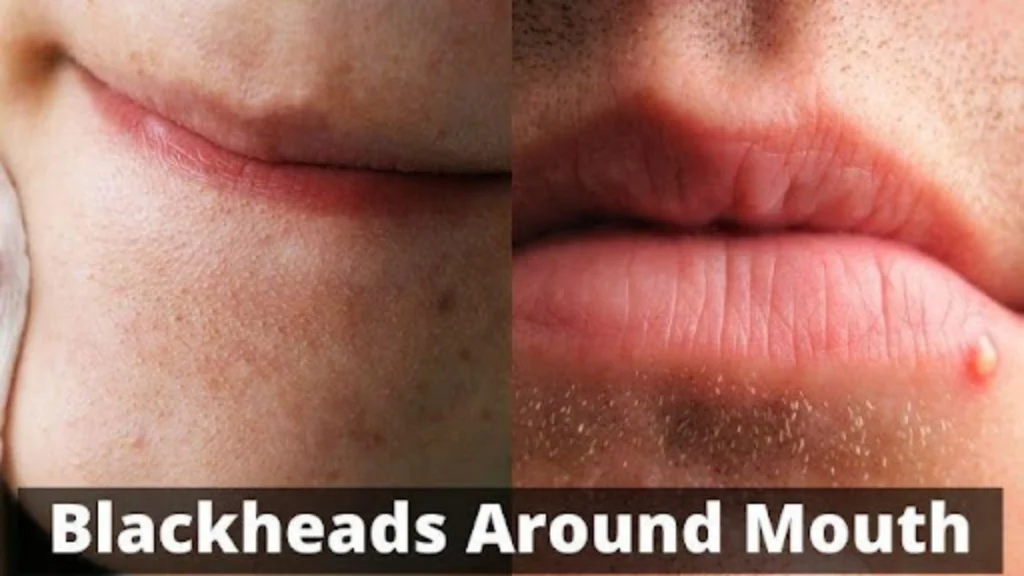
Cleveland Clinic describes Fordyce spots as enlarged oil glands in hairless skin. They look like small white, yellow, pale red or skin-coloured bumps, usually 1 to 3 mm wide. They commonly sit along the lip border and inside the cheeks.
An estimated 70% to 80% of adults have them. They are benign and usually need no treatment. Squeezing them will not remove them and can cause irritation.
True blackheads look different. They are dark dots in the skin around the mouth, chin or upper lip, where hair follicles exist. If you are unsure, a pharmacist or doctor can tell the two apart in seconds.
What Causes Blackheads Around Lips
Oil, dead skin and bacteria block pores. Several habits can add to that load. Heavy sweating, leftover make-up and oily products near the mouth all contribute. Touching your face or resting a phone against your chin may add friction and oil.
Hormones and genetics also play a part. That is why a perfect routine does not always clear them. The NHS lists these as general acne drivers rather than lip-specific causes.
How to Treat Blackheads Around Lips
The NHS gives a short list of self-care steps. Wash your skin twice a day with a gentle cleanser. Remove make-up each evening. Choose products labelled non-comedogenic, which means they should not clog pores.
Do not pick or squeeze, because it can cause scars. Do not scrub either, as scrubbing irritates skin and can make acne worse.
If that is not enough, the NHS says a pharmacist can advise on skin treatments such as salicylic acid or benzoyl peroxide. Benzoyl peroxide usually takes about 4 weeks to start working. Full effect can take 2 to 4 months.
Some treatments need a prescription. In the UK, the NHS lists adapalene among prescription-only treatments. A GP or dermatologist can also prescribe stronger creams, gels or antibiotic tablets. Isotretinoin is a prescription tablet, not an over-the-counter product.
Home Remedies: What to Skip
Lemon juice is the remedy to avoid. Cleveland Clinic explains that citrus juice on skin, especially lime, plus sunlight can cause phytophotodermatitis. Tingling and redness appear within 24 to 48 hours. Painful blisters often follow, and brown marks can last for months.
Honey, tea tree oil and witch hazel are popular too. We found no reliable trial in the sources we reviewed that shows they clear blackheads. Tea tree oil and witch hazel can also irritate skin near the mouth. If you try any product, patch test a small area first.
Evidence Table: Remedy Claims vs Where They Stand
| Claim you may see | Where it stands |
|---|---|
| Gentle washing twice a day helps | Supported by NHS guidance. |
| Salicylic acid or benzoyl peroxide can help | Supported as pharmacy options (NHS). Benzoyl peroxide takes weeks. |
| Squeezing clears blackheads | Not supported. The NHS warns it can scar. |
| Lemon juice treats blackheads | Not supported, and risky. Citrus plus sun can cause blistering. |
| Honey kills the bacteria behind blackheads | Not supported by the sources reviewed. |
| Bumps on the lip edge are blackheads | Often wrong. They are commonly Fordyce spots. |
| Accutane is an over-the-counter retinoid | Not true. Isotretinoin is prescription only. |
Safety: When to See a Doctor
See a GP or dermatologist if self-care fails. The NHS also lists deep, painful or scarring spots, and signs of infection such as hot, swollen, red skin. Seek advice too if acne affects your mental health.
Ask a pharmacist or doctor before using any acne product if you are pregnant or breastfeeding. Keep products away from the lip itself, since the mouth area is easily irritated. Stop a product that causes burning, swelling or blisters.

Not on the red part of the lip, which has no hair follicles. Blackheads form on the skin around the lips. Bumps on the lip edge are often Fordyce spots.
Enlarged oil glands in hairless skin, seen as small white or yellow bumps of 1 to 3 mm. They are benign, very common and usually need no treatment.
Wash gently twice a day, remove make-up nightly, use non-comedogenic products and avoid squeezing. A pharmacist can advise on salicylic acid or benzoyl peroxide.
No. The NHS advises against picking or squeezing spots because it can cause scars.
No. Citrus juice on skin plus sunlight can cause blisters and long-lasting brown marks. It is not a proven blackhead treatment.
About 4 weeks to start working, and up to 2 to 4 months for full effect, according to the NHS.
Some do, but deep or recurring ones often need treatment. See a doctor if spots are painful, deep or scarring.
No. Isotretinoin is a prescription tablet. A GP or dermatologist decides whether it suits you.
Related Reading
- Fungal acne: symptoms and treatment
- Eczema on lips and allergic reactions
- Exfoliation tips: how often and what to avoid
- Skin picking and excoriation disorder
Sources
- NHS: Acne
- NHS: Common questions about benzoyl peroxide
- Cleveland Clinic: Fordyce spots
- Cleveland Clinic: Lime juice and sunshine can make for painful, unexpected sunburn
Disclaimer: this article is general information and not medical advice. Speak to a pharmacist, GP or dermatologist about skin changes, especially if you are pregnant or breastfeeding.
Reviewed by: the HealthCoachJP Editorial Team | Last reviewed and rewritten: October 2026