
Quick answer: You can lose weight without an app, because the habits that matter, such as repeatable eating patterns, regular activity, enough sleep and some form of self-monitoring, do not need technology. A review of 22 studies found self-monitoring was consistently linked to weight loss, and paper diaries were the most common method, although the evidence was weak. Choose a steady pace, and ask a clinician for support if you have a medical condition.
Many people want to lose weight without an app, whether for privacy, cost or simple preference. The research on self-monitoring does not depend on technology. Even so, apps help some people, and this guide says so plainly. Below you will find ten practical methods, a comparison of offline tools, and the safety points that matter. If movement is difficult for you, you can also read how to lose weight without exercise.
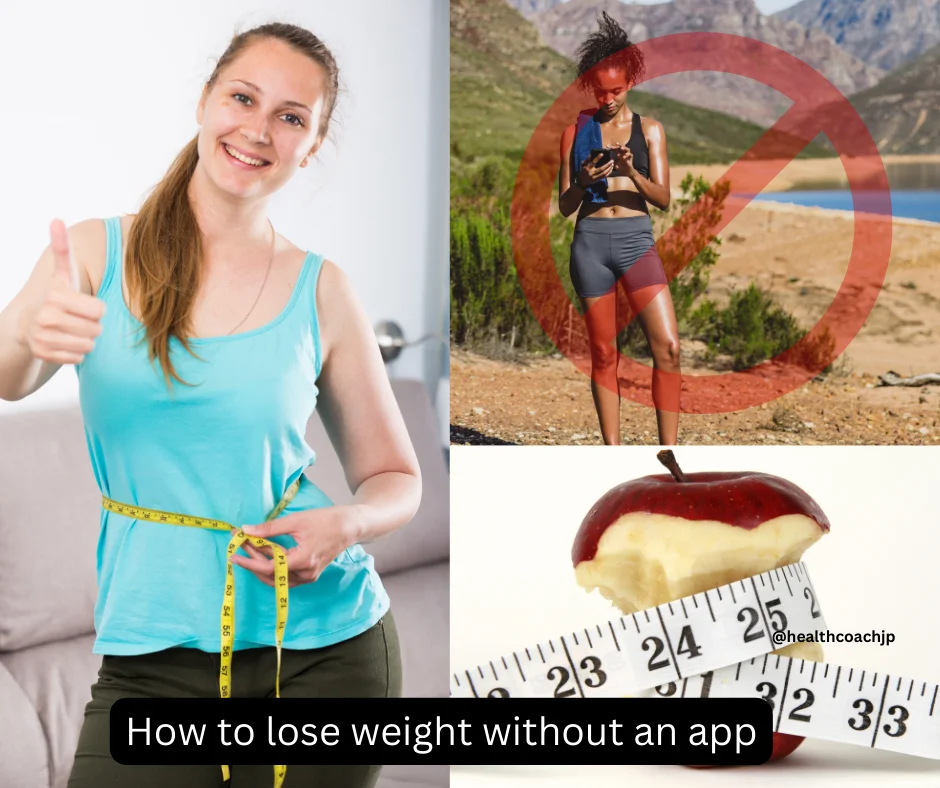
Five Habits to Lose Weight Without an App
- Choose a pace you can sustain. The CDC says gradual loss of about 1 to 2 pounds per week is linked to better long-term success. However, a randomized trial of 200 adults with obesity found fast and slow losers regained a similar share after three years. Therefore, pick the pace you can keep up, and agree it with your clinician.
- Plan meals around foods you like. Build plates from vegetables, beans, whole grains and protein foods. Our guides to macronutrients and fiber explain why.
- Move on most days. The CDC says adults need 150 minutes of moderate activity a week, such as 30 minutes on five days. Muscle-strengthening work on two or more days is also advised. The CDC adds that you may need more to maintain weight loss.
- Protect your sleep. The CDC cites at least 7 hours a night for adults aged 18 to 60. In a randomized trial of 80 adults with overweight who slept under 6.5 hours, sleep counselling added about 1.2 hours a night and reduced calorie intake over two weeks. The CDC also suggests keeping screens out of the bedroom. See how sleep affects weight loss.
- Drink water before meals. In a Birmingham trial of 84 adults with obesity, drinking 500 ml of water 30 minutes before main meals led to 1.3 kg more loss over 12 weeks. An earlier trial in older adults on a reduced-calorie diet found about 2 kg more. The effects are small and the trials were short.
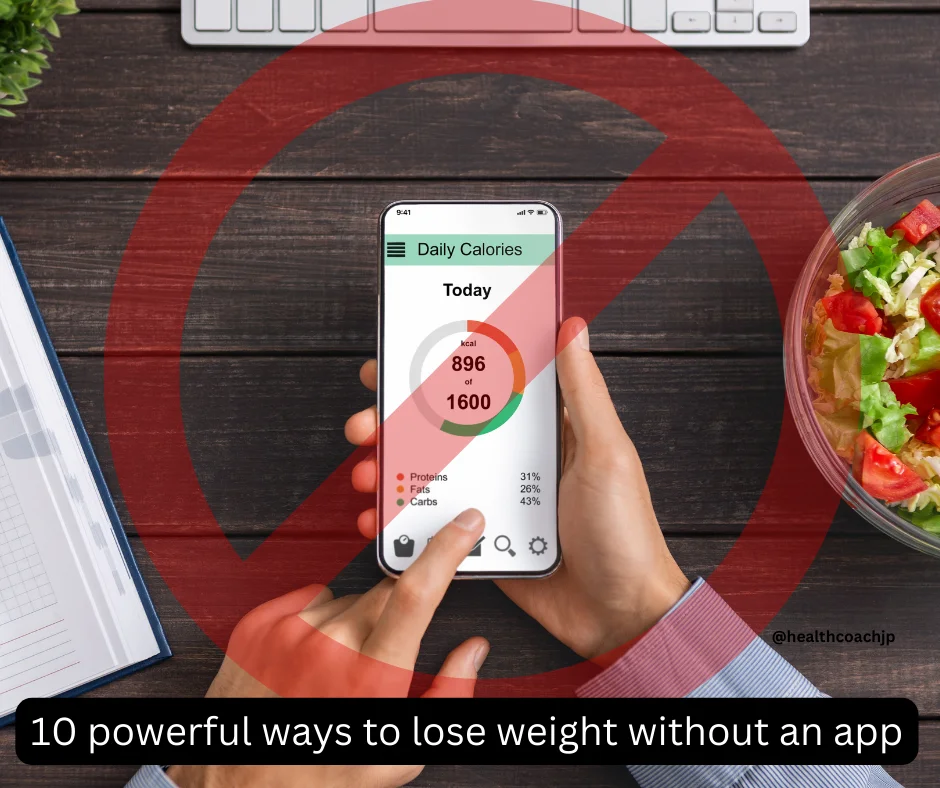
Five More Ways to Lose Weight Without an App
- Keep a paper food diary. Write what you eat, when, and how you felt. A systematic review of 22 studies found a consistent link between self-monitoring and weight loss. Still, it rated the evidence weak because of study limits.
- Weigh in on a schedule. Cornell’s summary of that review reports that people who recorded their weight weekly lost more than those who weighed less often. Use the same scale, day and time.
- Measure your waist. The NHS advises measuring midway between the bottom of your ribs and the top of your hips, after breathing out. Waist size marks health risk, as Table 2 shows.
- Treat intermittent fasting as optional. A 2026 Cochrane review, as reported by Scimex, found it unlikely to beat standard advice for weight loss. An Australian researcher countered that it matches other moderate restriction, at around 7% loss after 6 to 12 months. Both views say it is not superior. See our intermittent fasting studies review.
- Build support. Ask a clinician, dietitian, group or friend to check in. Stress also shapes eating, so read how stress affects your weight.
Which Offline Tools Help You Lose Weight Without an App?
| Tool | What it involves | What the research shows |
|---|---|---|
| Paper diary | Write meals and activity | Used most often in 22 studies. The link to weight loss was consistent, but evidence was weak. |
| Weekly weigh-in | Same scale, same day | Weekly weight records were linked to more loss than less frequent weighing. |
| Waist tape | NHS measuring method | The 94 cm and 80 cm cut-offs identified people with high BMI or high waist-to-hip ratio with over 96% sensitivity in a Glasgow study. |
| Digital tracking (for comparison) | Apps or devices | A meta-analysis of 12 trials found 2.87 kg more weight loss on average. Apps help some people but are not required. |
| Waist risk level | Men | Women |
|---|---|---|
| Increased risk | 94 cm (37 in) or more | 80 cm (31.5 in) or more |
| Substantially increased risk | 102 cm (40 in) or more | 88 cm (34.5 in) or more |
Why Do Water and Pace Guidelines Differ?
The eight-glasses rule is not an official figure in either country. The NHS advises 6 to 8 glasses of fluid a day, and tea, coffee and juice count. In the US, the National Academies set adequate intake for total water, from drinks and food together, at 2.7 litres for women and 3.7 litres for men aged 19 to 30. About 19 percent of that total comes from food. As a result, the two numbers measure different things.
Pace guidance also differs from the evidence. The CDC links gradual loss to long-term success. Yet the 200-person trial above found rapid losers did not regain more. In short, no pace suits everyone, so work with your clinician.
What the Evidence Says About Common Claims
| Claim you may see | Where it stands | Why |
|---|---|---|
| You must track calories in an app | Not supported | Studies used paper diaries and weigh-ins too, although overall evidence was weak. |
| Everyone needs eight glasses of water | Overstated | The NHS and the US National Academies use different bases, and neither sets a fixed eight-glass rule. |
| Water before meals helps | Supported, small | Two trials found 1.3 to 2 kg extra loss over 12 weeks. |
| Intermittent fasting beats other diets | Not supported | Reviews show it performs similarly to, or no better than, standard approaches. |
| Screen time itself causes weight gain | Not verified | No verified trial found. The CDC link is to sleep, so keep screens out of the bedroom. |
Who Should Check Before Starting?
- People with a history of an eating disorder should talk to a clinician before weighing, measuring or tracking food.
- People who take diabetes or blood pressure medicines should check first, because doses sometimes need adjusting when eating or activity changes.
- People who are pregnant or breastfeeding should ask their midwife or doctor before changing how they eat.
- Teenagers and children should not diet without a pediatrician’s guidance.
Lose Weight Without an App: Frequently Asked Questions
Yes. A review of 22 studies found a consistent link between self-monitoring and weight loss, and paper diaries were the most common method. The evidence was weak, so use whichever form of tracking you will keep up.
No single diet is required. Reviews found intermittent and continuous calorie restriction produce similar results, so choose an eating pattern you can repeat.
The CDC says adults need 150 minutes of moderate activity a week, plus muscle-strengthening activity on 2 or more days. You may need more to keep weight off.
The CDC links gradual loss of about 1 to 2 pounds per week to better long-term success. However, a randomized trial of 200 adults found faster loss did not lead to more regain after three years, so ask your clinician which pace suits you.
The NHS advises 6 to 8 glasses of fluid a day, including tea, coffee and juice. The US National Academies set adequate total water intake, from drinks and food, at 2.7 litres for women and 3.7 litres for men aged 19 to 30.
It can. In a randomized trial of 80 adults with overweight, extending sleep by about 1.2 hours a night reduced calorie intake over two weeks. The CDC cites at least 7 hours a night for adults aged 18 to 60.
Weigh yourself on a regular schedule and measure your waist. The NHS method is midway between the bottom of your ribs and the top of your hips, after breathing out. Waist cut-offs for increased risk are about 94 cm for men and 80 cm for women.
No. A 2026 Cochrane review, as reported by Scimex, found it unlikely to beat standard advice, and other reviews found it comparable to continuous restriction.
They can. A meta-analysis of 12 trials found digital self-monitoring of diet and activity gave 2.87 kg more weight loss on average. Apps are optional, and many people do well without one.
Related Reading
- Counting calories for weight loss
- How sleep affects weight loss
- Is BMI a good indicator of weight loss success?
- Top 10 myths about weight loss
Sources
- PubMed, Self-monitoring in weight loss: a systematic review of the literature; Cornell University, Keep a diary
- University of Cambridge repository, Digital self-monitoring of diet and physical activity: meta-analysis
- CDC, Physical activity guidelines for adults; CDC (archived copy), Losing weight
- Center for Science in the Public Interest, Is it better to lose weight slowly?
- CDC, 1 in 3 adults don’t get enough sleep; University of Chicago Medicine, Getting more sleep reduces caloric intake
- Loughborough University repository, Water preloading before main meals: RCT; Medical Xpress, Drinking water prior to meals may help weight loss
- NHS, Why is my waist size important?; Eating a balanced diet
- BMJ via PubMed, Waist circumference as a measure for indicating need for weight management; NSW Health, measuring your waist
- Scimex, Expert reaction: intermittent fasting no better than traditional diets; MJA InSight+, Intermittent fasting can still be beneficial; PMC, Intermittent versus continuous energy restriction meta-analysis
- National Academies Press, Dietary Reference Intakes for water
This article is general information, not medical advice. Talk to a doctor, registered dietitian or pharmacist before changing what you eat or your activity, especially if you take prescription medicine, are pregnant, or manage a health condition. See our fact-checking policy and sources cited page. Last reviewed and rewritten October 2026.