

Are biscuits healthy? The honest answer starts with a question back: which biscuit? In the UK, Ireland, Australia and New Zealand, a biscuit is a sweet baked snack that Americans call a cookie. In the US and Canada, a biscuit is a savoury quick bread served with breakfast or gravy. This guide covers both, using USDA data.

Quick Answer: Are Biscuits Healthy?
Most biscuits are a treat rather than a source of nutrition, and the main concern depends on the type. UK-style sweet biscuits are mostly about sugar and saturated fat: USDA lists shortbread at 514 kcal, 8.1 g saturated fat and 21.6 g sugars per 100 g. US savoury biscuits are mostly about sodium and saturated fat: a 45 g biscuit has about 163 kcal and 419 mg sodium. Either can fit in a varied diet as an occasional food.
Biscuit Nutrition Per 100 g: Sweet vs Savoury
| Per 100 g (%DV) | Shortbread (UK-style sweet biscuit) | Chocolate sandwich cookie, extra creme | US biscuit, wheat |
|---|---|---|---|
| Energy | 514 kcal | 497 kcal | 362 kcal |
| Protein | 5.4 g | 4.3 g | 7.5 g |
| Total fat | 26.2 g (34%) | 24.5 g (31%) | 18.2 g (23%) |
| Saturated fat | 8.1 g (41%) | 5.5 g (27%) | 11.2 g (56%) |
| Carbohydrate | 63.8 g (23%) | 68.2 g (25%) | 43.9 g (16%) |
| Fibre | 1.3 g (5%) | 2.7 g (10%) | 4.5 g (16%) |
| Total sugars | 21.6 g | 46.0 g | 3.7 g |
| Sodium | 353 mg (15%) | 351 mg (15%) | 930 mg (40%) |
Calories reconcile with the macros on each row within a few percent, once fibre is allowed for. In practice, the sweet biscuits are energy-dense because they combine sugar and fat in a dry food. Meanwhile, the US biscuit has fewer calories per 100 g but more than double the sodium.
Per portion, the picture changes again. A 1 oz (28.35 g) serving of shortbread gives about 146 kcal and 6.1 g sugars. The same weight of creme-filled sandwich cookies gives 141 kcal and 13.0 g sugars. A single 45 g US biscuit gives about 5.1 g saturated fat, a quarter of the Daily Value, before any butter or gravy.
One Word, Two Foods: UK Biscuits and US Biscuits
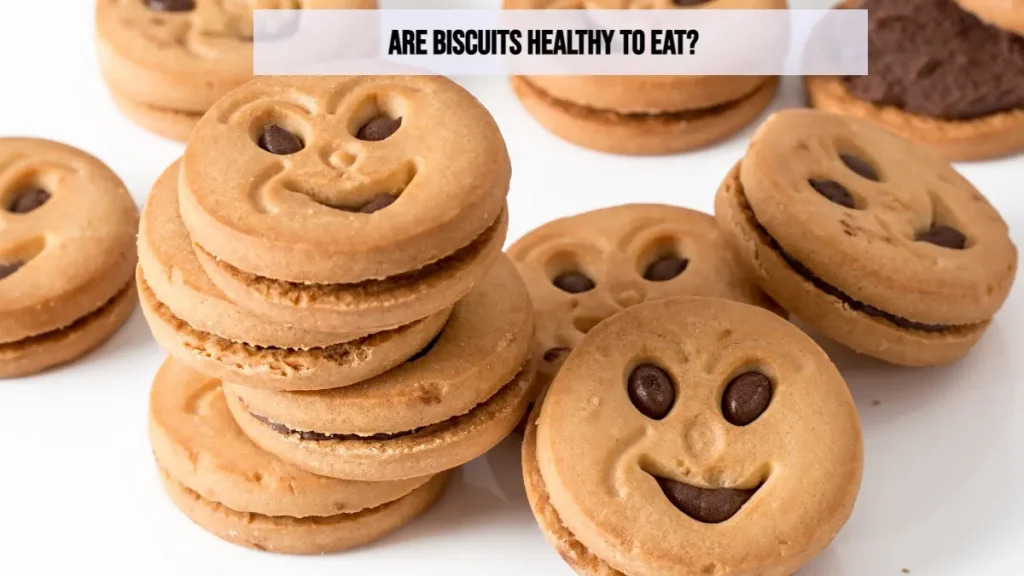
The UK biscuit is a small, crisp, usually sweet bake: digestives, shortbread, rich tea, custard creams and chocolate-coated varieties. Its typical ingredients are flour, sugar and fat. For these, the useful questions are how much sugar and saturated fat a portion carries, and how many you eat at once.
The US biscuit is closer to a British scone without the sugar. It is made from flour, fat, a leavening agent and milk or buttermilk, and it is often eaten with butter, sausage gravy or as a breakfast sandwich. For these, the useful questions are sodium and saturated fat, especially from fast-food versions.
That is why generic answers to whether biscuits are healthy often contradict each other. A US page warning about salt and a UK page warning about sugar can both be right, because they describe different foods.
Why Biscuit Calorie Figures Disagree
- Per 100 g versus per serving. UK and EU labels always show per 100 g. US labels show per serving, often 1 oz or a number of cookies. Comparing a UK pack with a US pack without converting gives misleading results.
- Size of one biscuit. USDA records for a single US biscuit range from 43 g to 182 g. A large bakery biscuit can carry four times the energy of a small one.
- Dry mix versus baked. Several USDA cookie records describe the dry mix, not the baked cookie. Many websites quote those figures as if they were the finished food.
- Total versus added sugars. US labels show added sugars separately. UK labels show only total sugars. Our guide on how to read nutrition labels explains both systems.
Which Ingredients Matter in Biscuits

1. Refined flour
Most biscuits use refined wheat flour, which in India is often called maida. Refined flour is not harmful in itself, but it carries far less fibre than whole wheat flour. Our comparison of flours by calories, fibre and protein puts white flour at 2.7 g of fibre per 100 g against 10.7 g for whole wheat. Even so, a biscuit made with some wholemeal flour is still a biscuit, so check the sugar and fat too.
2. Sugar
The WHO advises limiting free sugars to less than 10 percent of daily energy, about 50 g for a 2,000-calorie diet, and says 5 percent or less may give extra benefits. To put that in context, 28 g of creme-filled sandwich cookies supplies 13 g of sugars, roughly a quarter of the upper limit. Honey, syrups and fruit concentrates count as free sugars too.
3. Fats, including trans fat
Butter and palm-based fats give biscuits their texture and most of their saturated fat. The WHO advises keeping saturated fat to no more than 10 percent of energy. Our butter nutrition facts explain why butter-rich recipes such as shortbread score high here.
Trans fat rules differ by country. In the US, the FDA ruled in 2015 that partially hydrogenated oils are not generally recognised as safe. Manufacturers could not add them to most foods after 18 June 2018, with final distribution deadlines running to 1 January 2021. Elsewhere, the WHO says industrially produced trans fats are not part of a healthy diet and should be avoided. So the check is the same everywhere: if the ingredient list says partially hydrogenated, put it back.
Are Biscuits Healthy for People With Diabetes or High Blood Pressure?

People with diabetes can include biscuits, but carbohydrate per portion matters more than the sugar line alone. A 1 oz serving of shortbread has about 18 g of carbohydrate. If you use insulin or other glucose-lowering medicine, count biscuits in the plan agreed with your care team. Do not change medicine to make room for a snack.
People managing blood pressure should watch US-style biscuits most closely. At 930 mg of sodium per 100 g, one 45 g biscuit supplies about 18 percent of the 2,300 mg Daily Value. Fast-food biscuit sandwiches add more through sausage, bacon or cheese. For the bigger picture, see our guide to foods that are bad for heart health.
Biscuit Claims: What the Evidence Says
| Claim | Where it stands | What to know |
|---|---|---|
| Biscuits have less saturated fat than cakes and muffins | Not supported | USDA shortbread has 8.1 g per 100 g. Chocolate cake from a recipe has 5.4 g and yellow cake 3.9 g. |
| Biscuits are fried in butter or oil | Not supported | Both UK and US biscuits are baked. The fat is in the dough. |
| Digestive or wholewheat biscuits are a health food | Overstated | Some fibre is added, but sugar and fat still dominate. Compare labels per 100 g. |
| Eating biscuits causes type 2 diabetes | Overstated | Diets high in free sugars and excess energy raise risk over time. No single snack causes diabetes. |
| Everyone should avoid wheat flour | Not supported | Wheat is a problem for people with coeliac disease or wheat allergy, not for most people. |
| Eat a biscuit with tea to stop acidity | Not supported | We found no evidence for this. Persistent heartburn needs a doctor, not a snack rule. |
| Biscuits are a cheap replacement for a meal | Not supported | They are cheap energy, but low in protein, fibre and most vitamins compared with a sandwich. |
| Very large shares of UK households buy biscuits every day | Not supported | We could not find a source for the household figures that circulate online. |
Safety: Raw Dough, Allergens and Coeliac Disease
- Raw cookie dough. The FDA says most flour is raw and not treated to kill germs, and past outbreaks of Salmonella and E. coli have involved cake mixes and cookie dough. Never eat or taste raw flour, dough or batter. Do not let children use raw dough for crafts, because they may put their hands in their mouths.
- Allergens. In the US, nine major allergens must be declared, including wheat, milk, eggs, soy, peanuts, tree nuts and sesame. Biscuits often contain several of these. Precautionary may contain wording is voluntary, so its absence guarantees nothing. Rules differ outside the US, so ask about unpackaged bakery items.
- Coeliac disease. Standard biscuits contain gluten. People with coeliac disease need products labelled gluten free, which in the US means under 20 parts per million.
- India-only products. Brands such as Good Day are sold mainly in India. Check the local pack label rather than relying on figures for UK or US products.
Healthier Biscuit Swaps That Work
First, compare per 100 g, not per biscuit. Next, check how far down the list sugar appears and whether several sweeteners are scattered through it. After that, decide on portion before you open the pack.
If you want a sweet snack with more staying power, oats help. Our Quaker Oats nutrition facts show what plain oats deliver. For a lighter crunch, graham crackers sit between a plain cracker and a cookie. For US-style biscuits, a smaller biscuit with a lean filling beats a large one with sausage gravy. Our list of healthy snacks with portions compared gives more options.
If you are weighing up other bakes, see our guides to whether cakes are healthy and to brown bread benefits.
FAQ: Are Biscuits Healthy?
Most biscuits are a treat rather than a nutritious food. UK-style sweet biscuits are high in sugar and saturated fat, and US savoury biscuits are high in sodium and saturated fat. Either can fit into a varied diet as an occasional food.
A UK biscuit is a small sweet baked snack, which Americans call a cookie. A US biscuit is a savoury quick bread made with flour, fat, leavening and milk or buttermilk, similar to an unsweetened scone.
Digestives are a sweet biscuit, not a health food, despite the name. They may contain some wholemeal flour, but sugar and fat still make up much of each biscuit. Compare packs per 100 g and decide on a portion before opening.
It varies widely. USDA data give plain shortbread 21.6 g of sugars per 100 g and creme-filled chocolate sandwich cookies 46.0 g per 100 g. A US savoury biscuit has about 3.7 g per 100 g.
Yes, if they are counted in the overall plan. Carbohydrate per portion matters more than the sugar line alone, and a 1 oz serving of shortbread has about 18 g. If you use insulin or other glucose-lowering medicine, follow the plan agreed with your care team.
A small portion can fit for many people, but there is no benefit to eating them daily. The WHO advises keeping free sugars below 10 percent of daily energy across the whole diet, so daily biscuits use up part of that allowance.
In the US, partially hydrogenated oils have not been allowed in most foods since 18 June 2018, so industrial trans fat is now rare. Outside the US, check the ingredient list for partially hydrogenated oil, which the WHO says should be avoided.
No. The FDA says most flour is raw and not treated to kill germs, and outbreaks of Salmonella and E. coli have involved cookie dough and cake mixes. Bake dough fully before eating it.
Plain oats, fruit with yoghurt, or a smaller portion of a lower-sugar biscuit. Compare labels per 100 g, and for US biscuits choose a smaller one without sausage gravy.
Related Reading
- Are Cakes Healthy? Calories, Sugar and Fat by Cake Type
- Graham Cracker Nutrition Facts: Calories, Sugar and Ingredients
- Healthy Snacks for Weight Loss: Portions Compared
- How to Read Nutrition Labels: A Practical Guide
Sources
- USDA FoodData Central: Cookies, shortbread, commercially prepared, plain (FDC 174967)
- USDA FoodData Central: Cookies, chocolate sandwich, with extra creme filling (FDC 172720)
- USDA FoodData Central: Biscuit, wheat (FDC 2707805)
- USDA FoodData Central: Cake, chocolate, prepared from recipe without frosting (FDC 172697)
- USDA FoodData Central: Cake, yellow, prepared from recipe without frosting (FDC 172710)
- US FDA: Daily Value on the Nutrition and Supplement Facts Labels
- US FDA: Final Determination Regarding Partially Hydrogenated Oils
- World Health Organization: Healthy diet fact sheet
- US FDA: Flour is a raw food and other safety facts
- MedlinePlus: Celiac disease, nutritional considerations
This article is general nutrition information, not medical advice. Talk to your doctor or a registered dietitian before changing your diet, especially if you live with diabetes, coeliac disease, a food allergy, kidney disease or high blood pressure. Never stop or change prescribed medicine because of a food choice. Written and fact-checked by the HealthCoachJP editorial team under our editorial process. Last reviewed and rewritten November 2026.

