
Quick answer: Tree Pose (Vrikshasana) is a standing balance pose. The one rule that matters most: the lifted foot goes above the knee or below the knee — never on it. Pressing your foot against the side of the standing knee pushes a joint sideways that has very little sideways stability. Everything else here is refinement; that one rule is safety.
The Knee Rule
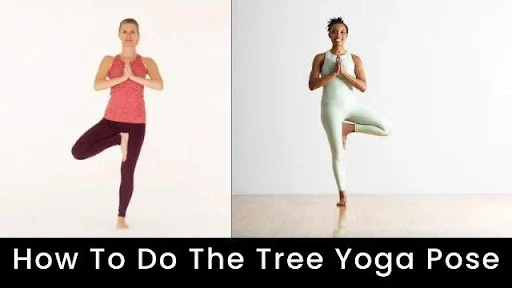
Place the sole of the lifted foot either on the inner thigh, above the knee, or on the inner calf or ankle, below the knee. Never on the knee itself.
The reason is structural. Your knee is built to bend and straighten; it has almost no capacity to move sideways, and the ligaments that resist sideways force are not designed to be pushed against for thirty seconds at a time. A foot planted on the side of the knee does exactly that, and it is the single most common way people hurt themselves in this pose.
The ankle version is not a lesser pose. Toes resting lightly on the floor with the heel against the inner ankle — sometimes called kickstand — gives you a stable, legitimate Tree Pose that most people should use for weeks before going higher.
Who Should Take Extra Care
Tree Pose is low risk in itself. The risk is falling. Practise beside a wall, or with a hand on a chair back, if any of these apply:
- Vertigo, dizziness, or an inner-ear condition. Balance depends heavily on the vestibular system, and this pose removes most of your margin for error.
- Blood pressure that drops when you stand, or medication that makes you light-headed.
- Osteoporosis or low bone density. Not because the pose loads the spine, but because a fall matters more. Practise where you can catch yourself.
- Pregnancy. Your centre of gravity shifts as pregnancy progresses, and balance changes with it. Use a wall throughout.
- A history of falls. This is a good pose for you — just not an unsupported one to begin with.
Skip it entirely with an acute ankle, knee, or hip injury, or after recent lower-limb surgery, until you have been cleared.
How to Do Tree Pose
- Stand tall, feet together or hip-width apart, weight even through both feet.
- Shift your weight onto the left foot. Spread the toes and press the whole sole down — the base does more work than anything above it.
- Pick your gaze point before you lift. A fixed spot on the wall or floor, roughly at eye level, that does not move. See below — this is the biggest single factor in whether you wobble.
- Lift the right foot and place the sole on the inner left ankle, calf, or thigh. Above or below the knee, never on it.
- Press foot and leg into each other. The gentle mutual pressure is what makes the pose feel solid rather than precarious.
- Square your hips forward. The lifted knee opens out to the side, but the pelvis stays facing front. Letting the hip swing open is the most common alignment fault.
- Bring the hands to the chest, or raise the arms overhead. Overhead is harder — it raises your centre of gravity. Start with hands at the chest.
- Hold for five to ten breaths, then switch sides. Most people are noticeably steadier on one side than the other, which is normal.
The gaze point does most of the work
Balance draws on three inputs: vision, the inner ear, and your sense of where your joints are in space. Vision is the one you can control directly, and it is doing more than people realise.
Fix your eyes on a still point and hold it. Do not look at your foot, at a mirror, at other people, or out of a window where things are moving. If you drift, the fix is almost always to find your gaze point again rather than to grip harder with the leg.
Once you are steady, closing your eyes is a genuine progression — it removes the visual input entirely and leaves you working from the inner ear and joint sense alone. Expect it to be dramatically harder. Do it near a wall.
Why Standing on One Leg Is Worth Practising
This is where Tree Pose earns its place, and it is more interesting than the usual claims about it.
Single-leg stance is a standard clinical balance test. It is performed with eyes open and hands on the hips, timed from the moment the foot leaves the floor until it touches down again, touches the standing leg, or a hand leaves the hip. It is used because it is quick, needs no equipment, and reflects a position you actually pass through constantly — walking, turning, climbing stairs, getting dressed.
The published figures give a rough sense of scale. People unable to hold single-leg stance for at least five seconds have been found to be at increased risk of an injurious fall. A ten-second cut-off has produced the best balance of sensitivity and specificity for identifying people with a history of falls — around three quarters correctly classified either way. A 2020 systematic review of balance tests concluded that among the tests requiring no equipment, single-leg stance looked the most promising for distinguishing fallers from non-fallers.
Two honest caveats. Findings are mixed — some follow-up studies failed to confirm the ten-second threshold as a reliable discriminator. And the test loses usefulness at advanced ages, since average single-leg stance time for healthy people around 80 is already under ten seconds.
So: this is a screening marker, not a diagnosis, and a stopwatch at home is not a falls assessment. But it does mean the thing Tree Pose trains is a measurable, trainable capacity that matters — which is a far better reason to practise it than any claim about opening your hip bone.
Common Faults
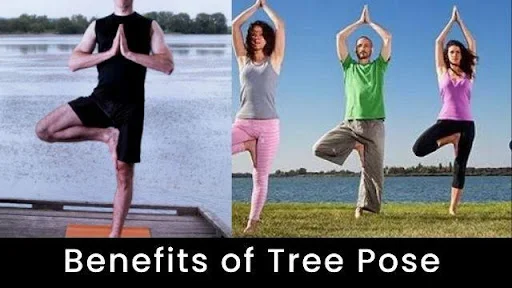
- Foot on the knee. Covered above, and worth repeating because it is the one that causes injuries.
- Hip swinging open. The lifted knee goes out; the pelvis stays square to the front. If your hip juts sideways, lower the foot to the calf.
- Standing knee locked hard back. Keep it straight but soft, not jammed into hyperextension.
- Ribs flaring, back arching when the arms go overhead. If that happens, keep the hands at the chest.
- Watching your own foot. Looking down moves your head, and your head weighs enough to move you. Eyes on the fixed point.
Claims We Corrected on This Page
- The page never stated the knee rule at all. Its “Knee Position” section read, in full: “Remember that your left knee should remain. Your foot should not go down.” The single most important safety instruction for this pose was missing.
- “It helps in reducing your weight.” A held balance pose does not drive weight loss. Removed.
- “Tree Pose opens up your hip bone.” Not a description of anything anatomical. Removed.
- “It strengthens your core and helps build your core quickly.” Stated twice. Tree Pose involves mild postural engagement; it is not core training and nothing about it is quick. Removed.
- Contradictory instructions. The steps had you balancing on the left leg; a later section had you balancing on the right, with the left foot on the right ankle. Standardised throughout.
- An FAQ answer describing a seated position for a standing pose, including the instruction “pull your left foot towards your right foot to play.” Rewritten.
- A muscle list with no punctuation and no explanation, and a “Tree Yoga Pose Good For” section that repeated the benefits list verbatim. Both cut.
Frequently Asked Questions
On the inner thigh above the knee, or on the inner calf or ankle below it — never on the side of the knee itself. The knee bends and straightens but has very little sideways stability, and a foot pressed against it pushes the joint in a direction it is not built to resist. The ankle position, with the toes resting lightly on the floor, is a complete version of the pose and the right place for most people to start.
Usually the gaze. Balance relies on vision, the inner ear, and your sense of joint position, and vision is the one you control directly. Fix your eyes on a still point at roughly eye level and keep them there — not on your foot, not on a mirror, not out of a moving window. Beyond that, most people are steadier on one side than the other, and a wobble is not a failure. Standing beside a wall while you build the skill is sensible, not remedial.
Five to ten breaths each side is a reasonable practice. If you want a rough marker of progress, single-leg stance is a standard clinical balance test timed with eyes open and hands on the hips. Being unable to hold it for five seconds has been linked to increased risk of an injurious fall, and ten seconds is a commonly used threshold. Treat those as rough context rather than a verdict — the research is mixed, and the test becomes much less informative in advanced age.
Yes, and it may be particularly worth doing — but do it beside a wall or with a hand on a chair back. The risk in this pose is not the pose, it is falling out of it. The same applies with vertigo or an inner-ear condition, with blood pressure that drops on standing, with osteoporosis, and during pregnancy. Support removes the risk while leaving the training effect intact.
Forward. The lifted knee opens out to the side, but the pelvis stays square to the front. Letting the hip swing open is the most common alignment fault and it turns the pose into a lopsided stand. If you cannot keep the pelvis square with the foot high on the thigh, lower it to the calf — a lower foot with square hips is the better pose.
Once you are steady with eyes open, yes — and it is a real progression rather than a gimmick. Closing the eyes removes visual input and leaves you balancing on inner-ear and joint-position feedback alone, which is considerably harder for almost everyone. Do it near a wall the first several times.
Sources
- Shirley Ryan AbilityLab — Single Leg Stance test.
- Diagnostic Balance Tests for Assessing Risk of Falls: A Systematic Review with Meta-Analysis, 2020.
Related reading: Utkatasana (chair pose) and Naukasana (boat pose).
Last updated: August 2026. Written by Evy Wilkins, who covers yoga and movement and is not a clinician. This article is general information, not personalised advice. If you have balance problems, dizziness, osteoporosis, a lower-limb injury, or you are pregnant, speak to a doctor or physiotherapist about whether and how to practise standing balance work.

: where the foot actually goes, why never on the knee, the gaze trick that fixes wobbling, and what single-leg balance measures.)