
Quick answer: three different postures are taught as “boat pose”. Supine Naukasana is done lying on your back, lifting the chest and legs together. Prone Naukasana is the face-down version that works the back muscles. Seated Navasana is the V-shaped balance on the sitting bones that most studio classes mean. They train different things, and the one most articles show first is the hardest place to start. This guide covers all three, the safe progression, and who should skip them.
Three Boat Poses, One Name
| Version | Position | What it trains |
|---|---|---|
| Supine Naukasana | On your back, chest and legs lifted, arms reaching towards the feet, balancing on the sacrum | Abdominal muscles and hip flexors |
| Prone Naukasana | Face down, chest and legs lifted, arms forward | Spinal extensors and glutes — the back of the body |
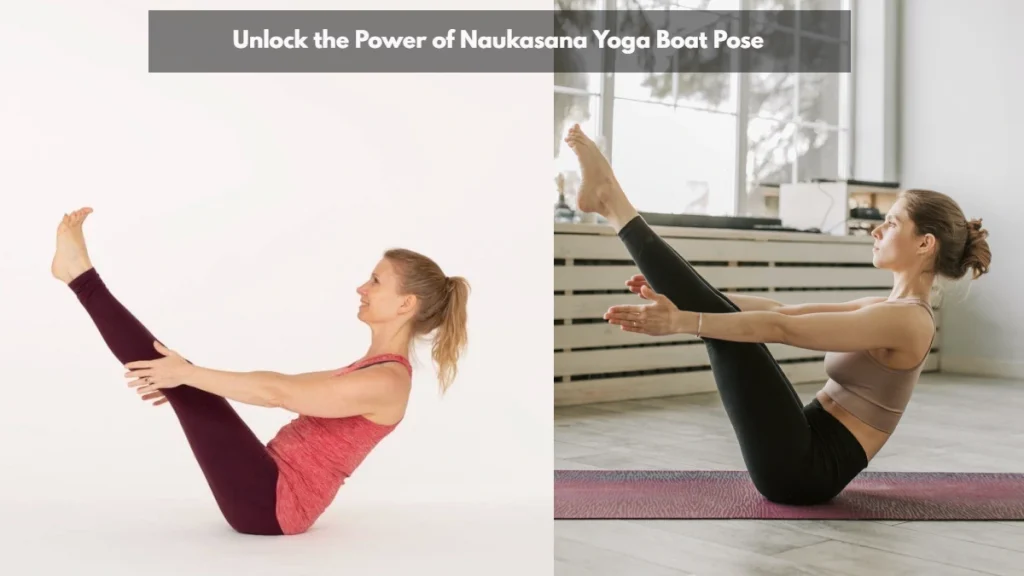
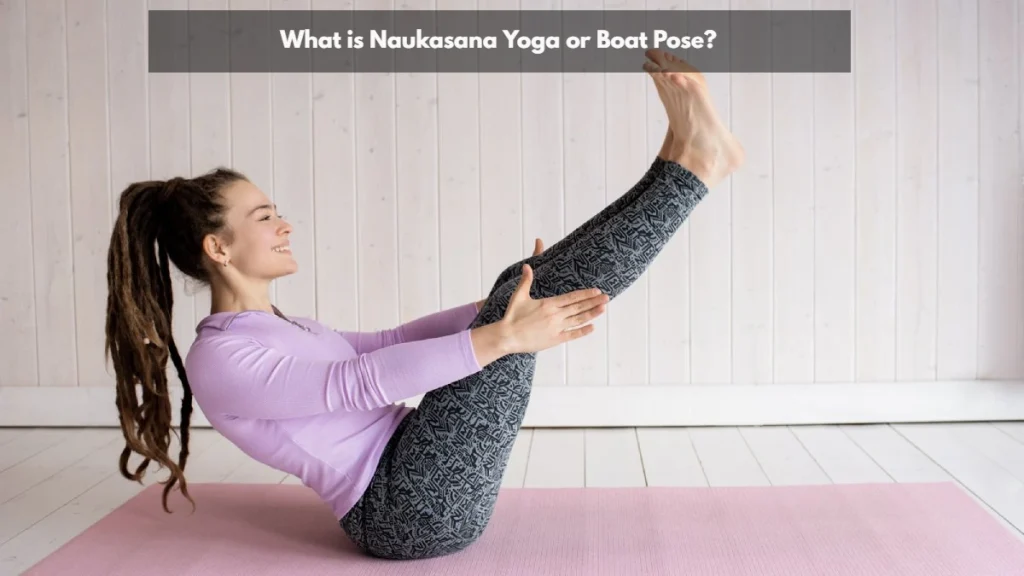
| Seated Navasana (Paripurna Navasana) | Balanced on the sitting bones and tailbone, legs at roughly 45 degrees, arms forward | Core, hip flexors, balance |
Naukasana comes from nauka, boat, and is the traditional hatha term, most often referring to the supine version. Navasana comes from nava, also boat, and is the Ashtanga and modern studio term for the seated V. The pose appears in the 19th-century Mysore treatise Sritattvanidhi as Naukasana and Purna Naukasana.
The practical consequence: the supine and prone versions are near-opposites. One trains the front of the body, the other the back. Practising only one builds an imbalance, which is a reason to know they are different rather than treating “boat pose” as a single thing.
Who Should Not Do Boat Pose
Read this before the steps. All three versions load the abdomen and the lumbar spine, and the supine version in particular is a demanding position that is often taught far too early.
- Pregnancy. Skip all versions. Deep abdominal work is not appropriate, and lying flat on the back for any length of time is generally advised against from the second trimester onward.
- Diastasis recti — the abdominal separation common after pregnancy. See the doming check below before attempting any version.
- Hernia, or recent abdominal, chest, neck or spinal surgery. Wait for clearance from your surgeon.
- Current low back pain, or a known disc problem. Lifting both straight legs from lying pulls hard on the lumbar spine through the hip flexors. If your back is symptomatic, this is the wrong exercise, whatever you have read about boat pose relieving back pain.
- Neck problems. People commonly lead with the head in the supine version, which strains the neck. If your neck aches before your abdomen does, stop.
- Uncontrolled high blood pressure or a heart condition. Holding an effortful position while holding the breath raises blood pressure. Breathe throughout, and check with your doctor.
Practise on an empty stomach, or several hours after a meal.
The doming check
This takes ten seconds and is worth doing before any core work. Lie on your back with knees bent, and lift your head and shoulders slightly. Look down at your midline. If a ridge or cone pushes upward along the centre of your abdomen, that is doming, and it means the load is too much for your abdominal wall to manage in that position. Stop, and start with gentler work — or with a physiotherapist if you are postnatal. Pushing through doming is how people make an abdominal separation worse.
Supine Naukasana: How to Do It
- Lie on your back with your feet together and arms by your sides, palms down.
- Inhale. As you exhale, lift your chest and your legs off the floor at the same time, reaching your arms forward towards your feet.
- Aim to bring your eyes, fingers and toes into one line. This cue does more than any other to stop you leading with your head.
- Keep the lower back in contact with the floor as far as you can. If it arches away and you feel the strain move into your back, you have gone too far — lower the legs slightly, which makes it harder for the abdomen and easier on the spine.
- Hold for 8 to 10 seconds, breathing rather than bracing. Two rounds is plenty at first.
- Lower slowly on an exhale. Rest fully between rounds.
The regression that makes this work: keep the knees bent with the shins parallel to the floor instead of straightening the legs. This shortens the lever, cuts the load on the lower back substantially, and is still demanding. Most people should spend weeks here before straightening the legs. There is no benefit in rushing it.
Prone Naukasana: How to Do It
- Lie face down, arms stretched forward, forehead resting on the mat.
- Inhale and lift your chest, arms and legs away from the floor, keeping the neck long and the gaze down rather than craning upward.
- Lift from the back muscles and glutes, not by throwing the head back.
- Hold 5 to 10 seconds, then lower on an exhale. Or lift and lower with the breath for ten repetitions, which builds endurance in the spinal muscles and is easier to control.
Arms stretched forward is the easier arm position. This version is the counterbalance to the supine one, and if you are doing abdominal work regularly it is the more useful of the two to add.
Seated Navasana: How to Do It
- Sit with knees bent, feet flat, hands on the floor just behind the hips.
- Lift through the top of the chest and lean back slightly, balancing between the sitting bones and the tailbone. Do not let the back round — that is the single most common fault.
- Lift the feet until the shins are parallel to the floor. This is half boat, and it is a complete pose in itself.
- Only if the back stays long, straighten the legs towards 45 degrees and reach the arms forward alongside them.
- Hold for five breaths. Hold the backs of the thighs if you need to — that is a legitimate version, not a failure.
Tight hamstrings are what pull the pelvis into a tuck here and force the back to round. If that is you, the seated forward bend is the pose that unlocks this one over time.
Claims We Corrected on This Page
An earlier version of this article made claims we could not support. Rather than quietly removing them:
- “Decreases cholesterol levels.” No evidence supports this for any yoga posture. Removed.
- “Burns abdominal fat.” Targeted fat loss from a specific area through exercising that area does not happen. Abdominal work strengthens the muscles underneath; it does not selectively remove fat above them. Removed.
- “People with chronic lower back pain will find comfort in performing Naukasana.” This was the most concerning line on the page. Lifting both straight legs from lying is a position frequently unsuitable for a symptomatic back. Replaced with a contraindication.
- “Builds upper body muscle.” It does not meaningfully train the arms, chest or shoulders. Removed.
- “Improves digestion” and “stimulates abdominal organs.” Traditional framing presented as established physiology. Removed.
- “If you can hold the pose for more than 10 seconds, there are chances you did it right.” Duration is not a form check — you can hold a poorly aligned position for a long time and simply load your back doing it. Replaced with actual form cues.
- Contradictory instructions. The steps section and the FAQ described two different movements. Both now describe the same pose.
What boat pose does do: it strengthens the abdominal muscles and hip flexors, and in the prone version the spinal extensors and glutes. That is a real and worthwhile benefit. The rest was inflation.
Frequently Asked Questions
Not quite, and the difference matters when you follow instructions. Naukasana is the traditional hatha term, usually meaning the supine version done lying on the back, and it also has a prone face-down variation. Navasana, or Paripurna Navasana, is the Ashtanga and modern studio term for the seated V-shaped balance on the sitting bones. Both names translate as boat pose. Check which position your source is describing before you follow the steps.
No. Exercising a specific area does not selectively remove fat from that area — targeted fat loss is not how the body works. Boat pose strengthens the abdominal muscles beneath the fat, which is worth doing on its own terms, but it will not reduce abdominal fat on its own. Overall activity levels and diet drive body composition.
Not if your back is currently painful. Lifting both straight legs from a lying position pulls on the lumbar spine through the hip flexors, and it is a common aggravator rather than a treatment. Once symptoms have settled, general core strengthening can be part of a sensible programme, but that programme should come from a physiotherapist who has assessed you rather than from a pose article.
Usually because the legs are too straight or too low for your current strength, so the hip flexors take over and pull on the lumbar spine. The fix is counterintuitive: bend the knees and bring the shins parallel to the floor. That shortens the lever, shifts the work back to the abdomen and takes the strain off the spine. In the seated version, back pain or a rounded spine usually traces to tight hamstrings pulling the pelvis into a tuck.
Skip it during pregnancy — deep abdominal work is not appropriate and lying flat on the back is generally advised against from the second trimester. Afterwards, check for doming first: lie with knees bent, lift your head and shoulders, and look at your midline. A ridge or cone pushing up along the centre means the load is too much for your abdominal wall. If you see doming, or you know you have an abdominal separation, work with a postnatal physiotherapist rather than progressing on your own.
Start with 8 to 10 seconds for the supine version and around five breaths for the seated one, two rounds either way. Duration is not the goal and it is not a measure of whether you are doing it correctly — a longer hold in poor alignment simply loads your back for longer. Better markers are whether your lower back stays down, whether you are breathing rather than bracing, and whether your neck is comfortable.
Related reading: Mandukasana and frog pose, which has the same one-name-several-poses problem, and Janu Sirsasana.
Last updated: August 2026. Written by Evy Wilkins, who covers yoga and movement and is not a clinician. This article is general information, not personalised advice. If you are pregnant or postnatal, or have a back, neck, abdominal or heart condition, check with a doctor or physiotherapist before adding these poses, and learn them with a qualified teacher where you can.

