
The Ardha Chandrasana yoga pose, commonly called the Half Moon pose, offers real benefits — increased flexibility, strengthened core muscles, improved balance — but it’s one of the more challenging standing balance poses, and worth learning with attention to form.
What is a Half Moon Yoga Pose?
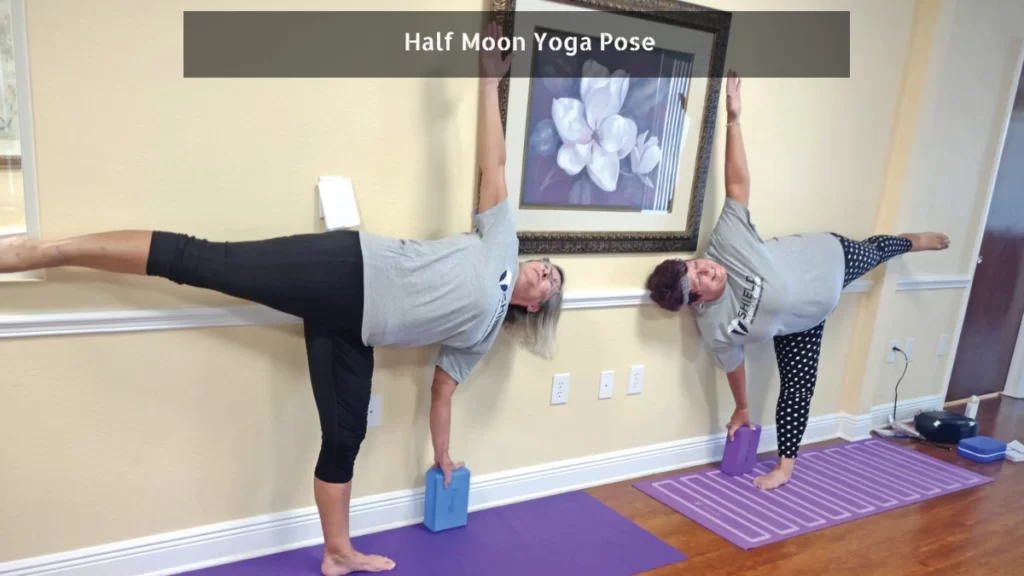
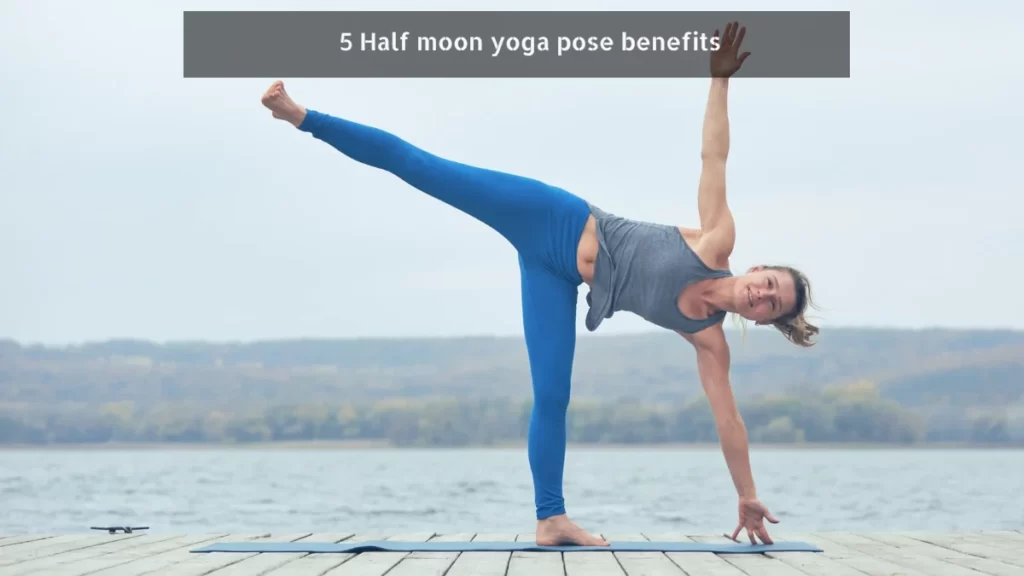
Half Moon Pose is a standing pose that balances on one leg while the other leg extends out to the side, roughly parallel to the floor, with one hand touching (or hovering near) the ground and the other arm reaching straight up. It works balance, focus, and core and leg strength simultaneously.
How to Do Half Moon Pose
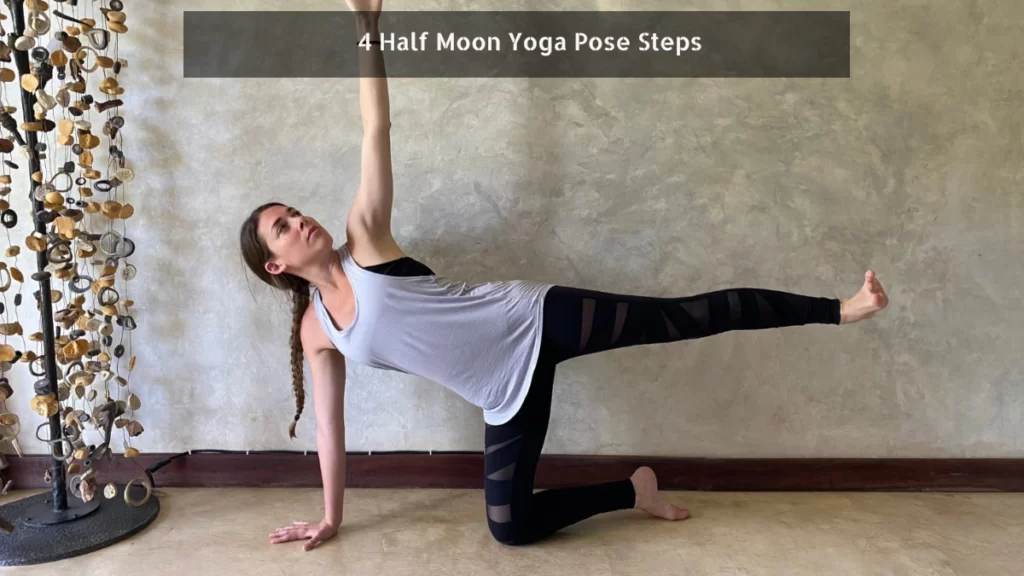
- Start in Triangle Pose (Trikonasana): Right foot forward, left foot turned out at roughly 45 degrees, legs straight, arms extended so your body forms a long diagonal line.
- Shift your weight: Shift weight onto your right foot. Engage your core, bend your right knee slightly if needed, and begin lifting your left leg off the mat while your left hand comes to your hip (or a block on the floor, if you need more height).
- Find your balance: As your left leg rises to roughly hip height, flex your left foot and stack your hips so your body forms a long line from head to heel. Your right hand can rest lightly on the floor or a block beneath your shoulder.
- Extend upward: Reach your left arm toward the ceiling, creating one long line of energy from your grounded hand through your torso to your raised fingertips. Keep your gaze on your standing hand, or turn your head to look up at your raised hand once you feel stable.
- Breathe and hold: Hold for a few steady breaths, core engaged.
- Come out with control: Slowly lower your leg back to Triangle Pose, then repeat on the other side.
Beginners: use a block under your bottom hand for extra height and stability, and practice near a wall until your balance feels reliable.
5 Benefits of Half Moon Pose
1. Strengthens Ankles and Legs
Holding steady on one leg while pressing down and lifting the other gives the standing calf and ankle real work — useful for runners and generally active people, and a genuine balance challenge.
2. Stretches the Chest and Sides
Reaching one arm overhead while the body extends into a long diagonal line opens the chest and the side body — helpful if you spend long hours hunched over a desk or a wheel.
3. Improves Focus and Balance
Balancing on one leg while extending the other and reaching upward genuinely challenges balance and requires sustained focus — this is the pose’s core benefit.
4. Stretches Hips and Hamstrings
The extended leg and the hip opening involved give the hamstrings and hip muscles of both legs a real stretch, which can support better mobility and posture over time when done consistently and without overstretching.
5. Builds Core Strength
Holding the long, horizontal line of the pose without collapsing demands real core engagement, which — combined with regular practice — can support posture generally.
Precautions
Learn this pose under guidance if possible, especially early on. Avoid it if you have a spinal injury, a hernia, osteoporosis, or a significant knee or shoulder injury. If you have low blood pressure, a history of dizziness, or an irregular heartbeat, practice with caution — the balance and position changes involved can trigger light-headedness in people prone to it, and a wall or a partner nearby is a sensible precaution while you’re learning.
How Long Does It Take to See Results?
Like most balance poses, Half Moon takes consistent practice — improvements in stability, flexibility and muscle tone build gradually rather than overnight. Aim for a few sessions a week, listen to your body, and avoid pushing depth or hold time faster than your balance can actually support.
Frequently Asked Questions
What is Half Moon Pose good for?
Building single-leg balance, core strength, and leg stability, while stretching the chest, sides, hips and hamstrings. It’s a genuinely challenging pose that rewards consistent practice.
Is Half Moon just a hip opener?
No. While it does involve hip flexion and stretches the hamstrings and hips of both legs, Half Moon is primarily a balance and core-strength pose — the hip stretch is one benefit among several rather than the main point.
Who should not do Ardha Chandrasana?
Avoid it with a knee or shoulder injury, spinal injury, hernia, or osteoporosis. If you have low blood pressure, a history of dizziness, or an irregular heartbeat, practice only with caution and ideally under guidance, since balance poses can trigger light-headedness in people prone to it.
This article is for general information and is not a substitute for medical advice. Last updated August 2026.

