
If you love fruity, creamy smoothies but still want to stay on track with your health goals, understanding Tropical Smoothie nutrition is essential. Tropical Smoothie Cafe markets itself as a better-for-you fast-casual brand, yet calories, sugar, and carbs can vary a lot between menu items.
In this complete guide, you’ll learn how the Tropical Smoothie Cafe menu works nutritionally, which options are truly “healthy,” which ones to limit, and how to customize your order for weight loss, muscle gain, vegan diets, and more.
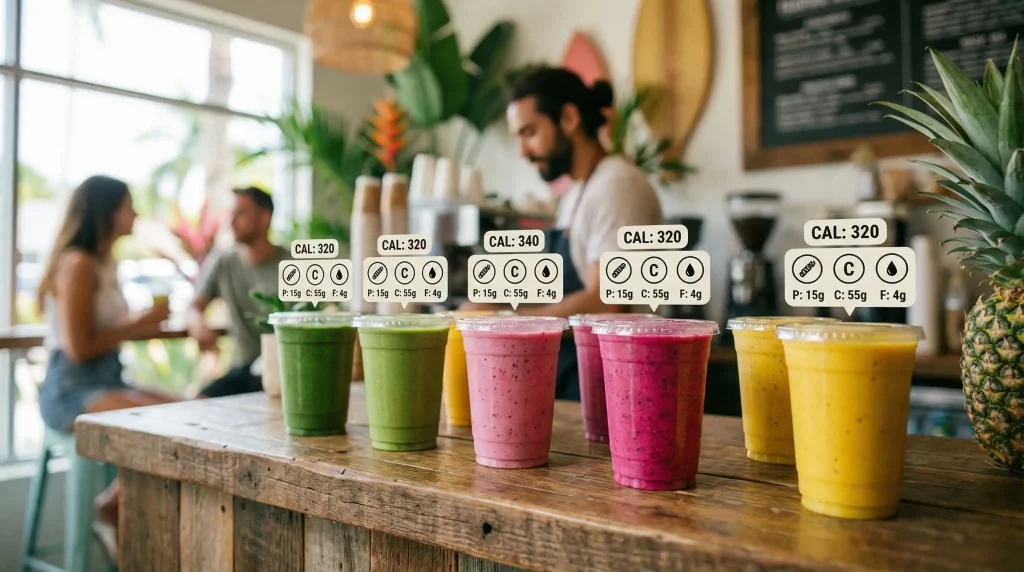
Is Tropical Smoothie Cafe Really Healthy?
Tropical Smoothie Cafe began as a small beachfront smoothie hut and has grown into a large quick-service chain with hundreds of locations across the United States.
Over time, the menu expanded far beyond smoothies to include flatbreads, wraps, sandwiches, quesadillas, bowls, and breakfast items, so your overall Tropical Smoothie nutrition experience depends heavily on what you order and how you customize it.
Key points to know about the brand’s nutrition profile:
- Many smoothies are fruit- and veggie-based but use turbinado sugar or other sweeteners, which can increase total sugar and calories.
- You can often remove added sugar and customize ingredients, especially in smoothies.
- There are clearly lighter, higher-fiber, and lower-sugar options like Detox Island Green, as well as indulgent, dessert-like smoothies.
- Food items range from moderate-calorie, protein-rich bowls and wraps to higher-calorie sandwiches and flatbreads with bacon and cheese.
If you understand a few basic rules, you can absolutely eat at Tropical Smoothie Cafe while still supporting weight loss, blood sugar control, or general health.
Tropical Smoothie Nutrition Basics: What’s On the Menu?
Tropical Smoothie Cafe typically organizes its menu into these main categories.
- Smoothies
- Flatbreads
- Wraps
- Quesadillas
- Sandwiches
- Bowls
- Breakfast
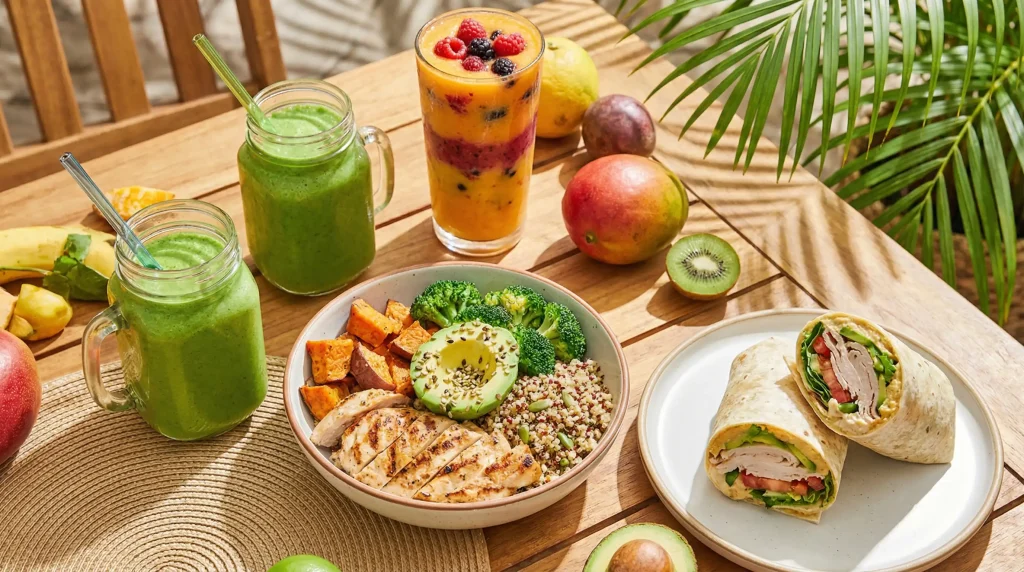
Each category has both “better choice” options and more indulgent items. Below, we’ll walk through how each group usually looks nutritionally and highlight some of the best and worst picks.
Smoothies: Where Most People Start
Smoothies are the star of the brand and also where many people accidentally consume more calories and sugar than they realize.
How smoothie nutrition works
A typical 24–32 oz smoothie from Tropical Smoothie Cafe can range from about 180 calories for a veggie-heavy, no-added-sugar drink to 700–800+ calories for dessert-style options loaded with peanut butter, chocolate, or added sugars.
Common smoothie building blocks:
- Fruits: mango, pineapple, banana, strawberries, mixed berries, peaches, dragon fruit
- Vegetables: spinach, kale, carrot, etc.
- Liquids: water, juice blends, sometimes milk or dairy alternatives
- Add-ons: peanut butter, chia seeds, protein powder, supplements
- Sweeteners: turbinado sugar or alternative sweeteners in some recipes
Example: Detox Island Green – a popular “healthy” choice
Detox Island Green is one of the most frequently recommended healthy smoothies at Tropical Smoothie Cafe because it’s loaded with fruits and greens and can be ordered without added sugar.
Approximate nutrition for one serving of Detox Island Green:
- Calories: about 180
- Total carbs: around 43 g
- Fiber: about 5 g
- Sugar: about 29 g (from fruit, if ordered without added turbinado)
- Protein: about 4 g
- Fat: 0 g
This smoothie is relatively low in calories for its size, provides fiber and vitamins A and C, and contains no fat or cholesterol, making it one of the best Tropical Smoothie nutrition choices if you are watching overall calories and sugar.
Example: Higher-calorie smoothie with peanut butter
On the other end, smoothies that combine peanut butter, chia seeds, and added sweeteners can approach or exceed 700-800 calories per serving.
A typical “boost” smoothie with peanut butter and chia may offer:
- Very high carbs (100+ g)
- High calories (sometimes 700-800+)
- Moderate protein
- Significant fat from nut butters
These can fit into a bulking or high-calorie diet but are not ideal for weight loss or blood sugar control.
Quick smoothie tips for better nutrition
- Ask to remove turbinado sugar or reduce added sweeteners whenever possible.
- Choose fruit-and-vegetable–based smoothies with greens and avoid heavy cream or chocolate-style add-ins if you want a lighter drink.
- Add a scoop of protein to avoid drinking mostly carbs.
- Treat dessert-style smoothies as an occasional treat, not a daily staple.
Flatbreads: Lighter Than Pizza, But Watch Sodium
Flatbreads at Tropical Smoothie Cafe are often positioned as a lighter alternative to pizza, but many are still made with cheese, creamy sauces, and processed meats like bacon.
A typical flatbread will contain:
- Around 400–600 calories
- Moderate carbs (40–50 g)
- Moderate protein (20+ g if chicken-based)
- Varying amounts of saturated fat and sodium
Leaner options often use grilled chicken and vegetables with lighter sauces, while more indulgent choices stack bacon, cheese, and creamy dressings, leading to higher calories and sodium.
To make flatbreads more aligned with your Tropical Smoothie nutrition goals, you can:
- Ask for less cheese or sauce.
- Choose grilled chicken over breaded or heavier meats.
- Skip bacon when offered as an add-on.
Wraps: High-Protein, But Calories Can Add Up
Tropical Smoothie wraps pack chicken and vegetables in large tortillas, which makes them filling but also calorie-dense.
Many wraps land between 500–800 calories, depending on sauces, cheese, and extras like bacon or fried components.
General wrap profile:
- Calories: ~500–800
- Carbs: ~60–80 g
- Protein: 25–40 g (often from grilled chicken or plant-based protein)
- Fat: varies with cheese, bacon, and dressings
- Fiber: usually modest unless wraps include beans, whole grains, or extra veggies
For better Tropical Smoothie nutrition when choosing wraps:
- Prioritize grilled chicken, beans, and veggies rather than fried fillings.
- Ask for dressings on the side or light sauce.
- Consider eating half now and half later if you’re watching calories.
Quesadillas: Cheese-Heavy Comfort Food
Tropical Smoothie quesadillas are typically built with tortillas, grilled chicken, and cheese, often with additional fillings like beans, onions, or peppers.
Because quesadillas tend to rely heavily on cheese, they can be higher in calories, saturated fat, and sodium compared with some wraps or bowls.
A typical chicken quesadilla might include:
- Around 550–650 calories
- Lower fiber (1–3 g)
- Moderate to high sodium
- Moderate protein from chicken and cheese
Quesadillas can fit into your diet occasionally, but if your goal is weight loss or heart health, they’re best treated as an indulgence rather than a default choice.
Sandwiches: Classic Cafe Choices With Mixed Nutrition
Sandwiches give you a familiar, hand-held option, usually with turkey or chicken plus cheese, bacon, and sauces.
Nutritionally, they typically sit in the mid- to high-calorie range, depending on bread type and toppings.
General sandwich trends:
- Calories often range from 550–750 per sandwich.
- Carbs usually fall around 55–65 g.
- Protein is decent but not extremely high once you account for cheese and sauces.
- Sodium can be substantial from deli meats, cheese, and dressings.
Better sandwich practices for smarter Tropical Smoothie nutrition:
- Choose turkey or grilled chicken, not breaded or fried.
- Ask to go light on mayo or creamy sauces.
- Add more veggies like tomato and lettuce for volume and fiber.
Bowls: Some of the Best Balanced Meals
Bowls are often the strongest Tropical Smoothie nutrition choice for a full meal because they combine protein, veggies, and carbs in a more balanced way.
A typical protein bowl with grilled chicken and vegetables might offer:
- Calories in the 350–600 range
- Carbs around 40–60 g, often with some fiber
- Protein 25–35+ g
- Moderate fat depending on sauce and toppings
Because bowls in this chain often feature rice, beans, veggies, and lean proteins, they can be relatively nutrient-dense compared with more bread-heavy items.
Tips for making bowls even healthier:
- Keep cheese or creamy dressings to a minimum.
- Emphasize veggies and lean proteins (or plant-based Beyond Meat where available).
- Watch add-ons like extra sauces, sour cream, or full-fat cheese.
Breakfast: Small Menu, Big Differences
The breakfast section at Tropical Smoothie Cafe is smaller than lunch and dinner, usually featuring a couple of wraps or flatbreads with eggs, cheese, and meats like ham or bacon.
Typical nutrition patterns:
- Calorie range: roughly 400–600 per item.
- Carbs: often 35–75 g depending on bread and added ingredients.
- Protein: moderate from eggs and meats.
- Fiber: may be low unless paired with fruit or a veggie-heavy smoothie.
For better breakfast nutrition:
- Choose options with more egg and lean protein, less bacon or sausage.
- Pair with a no-added-sugar green smoothie instead of a high-sugar drink.
Tropical Smoothie Nutrition: Healthiest vs. Least Healthy Types of Items
Here’s a simplified look at how different Tropical Smoothie Cafe choices typically stack up nutritionally:
| Category | Generally Better Choices (examples) | Generally Heavier Choices (examples) |
|---|---|---|
| Smoothies | Green/veggie smoothies, Detox Island Green, no added sugar | Peanut butter, chocolate, or sugar-heavy smoothies |
| Flatbreads | Grilled chicken with veggies, lighter sauces | Options with bacon, extra cheese, creamy sauces |
| Wraps | Grilled chicken with lots of vegetables | Large wraps with creamy dressings and fried elements |
| Quesadillas | Smaller portions, extra veggies, less cheese | Cheese-heavy chicken quesadillas with creamy dips |
| Sandwiches | Turkey or grilled chicken, light dressing | Bacon-heavy or double-cheese sandwiches |
| Bowls | Veggie-rich rice/bean bowls with lean protein | Bowls overloaded with cheese, creamy sauces, or fried toppings |
| Breakfast | Egg-based wraps with lean meat, paired with green smoothie | Breakfast flatbreads heavy in bacon/cheese plus sugary smoothies |
This table is simplified, but it captures core Tropical Smoothie nutrition patterns you can use whenever you look at the menu.
Vegan and Vegetarian Nutrition at Tropical Smoothie Cafe
Tropical Smoothie Cafe became notably more vegan-friendly when it started offering Beyond Meat as a plant-based protein option in the early 2010s.
According to vegan advocacy groups and reporting, the chain allows you to:
- Replace chicken with Beyond Meat in many wraps, sandwiches, flatbreads, or bowls.
- Request no cheese or dairy-based sauces to keep items fully plant-based.
- Rely on plant-based smoothies that use fruit, vegetables, and turbinado sugar, many of which are vegan when you avoid dairy add-ins.
Key vegan/ vegetarian nutrition notes:
- Beyond Meat provides plant protein from pea and soy, offering a similar protein content to chicken with no cholesterol.
- Many breads and tortillas are vegan, though some may contain honey; you can confirm using the official nutrition/allergen guide.
- Smoothies can be customized to exclude yogurt or dairy, making them more suitable for vegans or those with lactose intolerance.
This flexibility can make Tropical Smoothie Cafe a practical option for plant-based eaters who still want quick, convenient meals.
How to Read the Tropical Smoothie Nutrition Guide
Tropical Smoothie Cafe publishes a nutrition guide for its entire menu, detailing calories, total fat, saturated fat, cholesterol, sodium, carbs, fiber, sugar, and protein for each item.
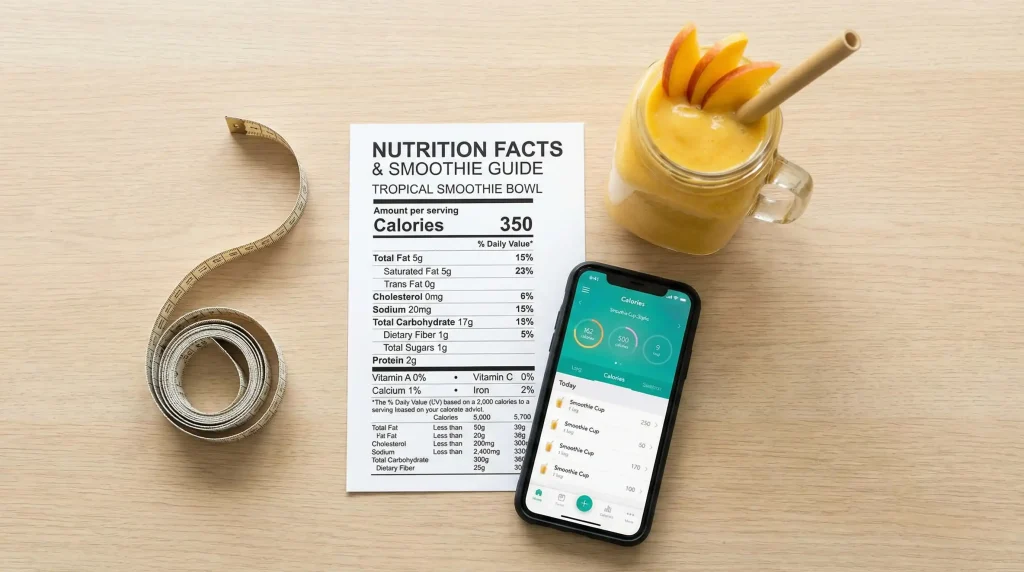
When you check this guide (either in-store or online), prioritize these numbers based on your goals:
- For weight loss: Focus on total calories and sugar, especially in large smoothies.
- For blood sugar control: Emphasize total carbs, fiber, and added sugars; choose high-fiber smoothies and bowls with veggies and protein.
- For heart health: Watch saturated fat and sodium in quesadillas, sandwiches, and flatbreads.
- For muscle gain: Look for higher-protein items like bowls, wraps, or smoothies with added protein powder.
Many third-party nutrition databases also list Tropical Smoothie Cafe items, which can be useful if you track macros with an app.
Customization Strategies for Better Tropical Smoothie Nutrition
You don’t need to memorize every item on the menu to eat well at Tropical Smoothie Cafe. Instead, learn a few simple customization rules.
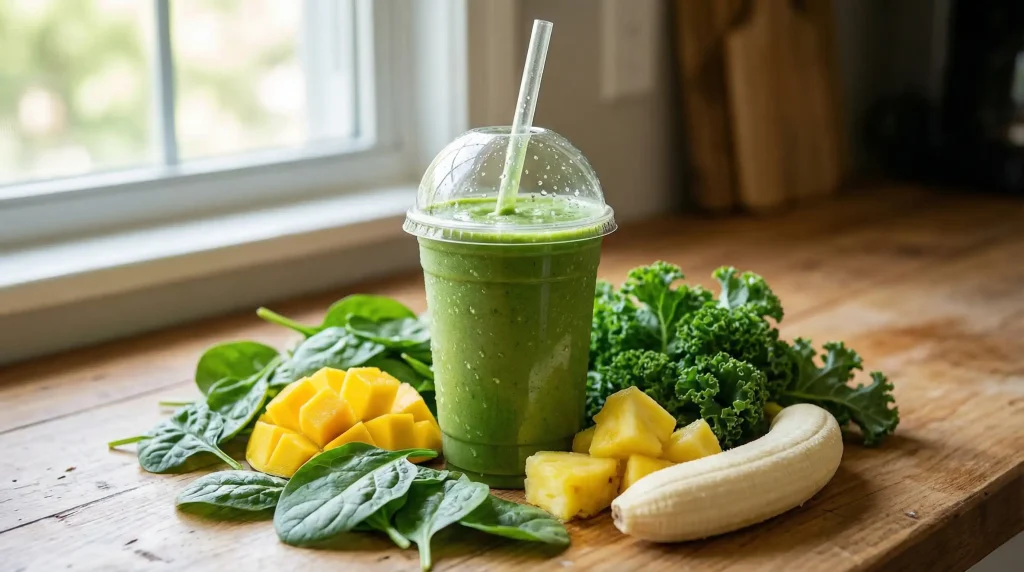
1. Optimize your smoothie
- Ask for no turbinado sugar or reduced sugar when possible.
- Choose smoothies with greens (spinach, kale) and whole fruits instead of candy-like add-ins.
- Add protein (whey, plant-based, or collagen) to balance out carbs.
- Consider ordering a smaller size if available or sharing if calories are high.
2. Improve your main meal
- Prioritize bowls with veggies and lean protein; they’re often the most balanced.
- For wraps and sandwiches, choose grilled chicken or plant-based protein instead of bacon-heavy or fried fillings.
- Ask for sauces and dressings on the side; use just enough for flavor.
- Skip chips or high-calorie sides if you’re already having a large smoothie.
3. Balance your order as a whole
Instead of pairing a high-calorie smoothie with a large quesadilla or loaded sandwich, think of your meal as one unit:
- If you want a big, filling smoothie, pair it with a light side like a small salad or nothing else.
- If you want a more substantial bowl or wrap, choose a lighter drink such as unsweetened tea or water.
This approach helps prevent unintentional “double meals” from a big drink plus a full entree.
Tropical Smoothie Nutrition for Specific Goals
For weight loss
- Lean toward green smoothies like Detox Island Green without added sugar.
- Choose bowls and wraps around 400–550 calories and skip add-ons like extra cheese or bacon.
- Limit dessert-style smoothies to special occasions.
For muscle gain
- Order a higher-calorie smoothie with nut butter or oats, plus added protein.
- Pair with a protein-rich bowl or wrap to support your overall protein and calorie targets.
For vegan or vegetarian diets
- Use Beyond Meat in place of chicken in wraps, bowls, flatbreads, or sandwiches.
- Ask for no cheese or dairy sauces and confirm vegan breads/tortillas via the nutrition guide.
- Pick fruit-and-veggie smoothies that do not rely on dairy yogurt.
For lower sugar or carb-conscious eating
- Use the nutrition guide to spot smoothies with lower sugar and higher fiber, and ask to remove added sugars.
- Favor bowls with veggies and lean proteins instead of large flour tortillas or white-bread sandwiches.
Are smoothies good for us?
FAQs About Tropical Smoothie Nutrition
Tropical Smoothie Cafe smoothies can be healthy, but it depends on what you order and how you customize it.
Veggie-forward options like Detox Island Green ordered without added sugar are lower in calories and sugar and provide fiber, vitamins, and antioxidants, while dessert-style smoothies with peanut butter, chocolate, and added turbinado can be very high in calories and sugar.
Detox Island Green is widely regarded as one of the healthiest drinks at Tropical Smoothie Cafe because it’s made with spinach, kale, mango, pineapple, banana, and ginger and can be ordered without added sugar.
At around 180 calories per serving with roughly 5g of fiber and no fat or cholesterol, it offers a nutrient-dense, lower-calorie option compared with many other smoothies on the menu.
Many Tropical Smoothie Cafe recipes traditionally include turbinado sugar or other sweeteners, which can significantly increase total sugar and calorie content.
However, you can often request no added sugar or reduced sugar, particularly in fruit- and veggie-based smoothies, which lets you rely more on natural sweetness from whole fruits.
Yes, Tropical Smoothie Cafe offers Beyond Meat as a plant-based protein option, and many menu items can be customized to be vegan by swapping chicken for Beyond Meat and removing cheese or dairy sauces.
Several smoothies are already vegan or can be made vegan by avoiding yogurt or milk-based add-ins, and most breads/tortillas are plant-based except specific varieties that may contain honey.
Calories vary widely, but a common combination of a 500-600 calorie wrap or bowl plus a 300-700 calorie smoothie can easily reach 800-1,200+ calories in one sitting.
To keep meals more moderate, you can choose a lower-calorie smoothie like Detox Island Green, pair it with a lighter bowl or half wrap, and avoid extra sides like chips or high-sugar drinks.
Resources:
- https://www.tropicalsmoothiecafe.com/nutrition/
- https://www.eatthismuch.com/calories/detox-island-green-smoothie-1979985
- https://fastfoodnutrition.org/tropical-smoothie-cafe
- https://www.laziestvegans.com/2013/06/beyond-meat-chicken-free-strips-at.html
- https://www.carbmanager.com/food-detail/md:d2945b1bf21b847f46d2ebd0d7ffd3ed/smoothies-detox-island-green
- https://www.vrg.org/blog/2014/02/17/tropical-smoothie-cafe-offers-beyond-meat%C2%AE/
- https://animaloutlook.org/beyond-meat-tropical-smoothie-cafe/
- https://www.myfooddiary.com/brand/tropical-smoothie-cafe


