

Ultra-processed foods inflammation links appear in many large cohort studies, but proof that one causes the other is much weaker than most online articles claim. This guide separates what controlled trials show from what only observational research suggests. It also explains why UK and US reviews of the same evidence sound so different.
Quick Answer
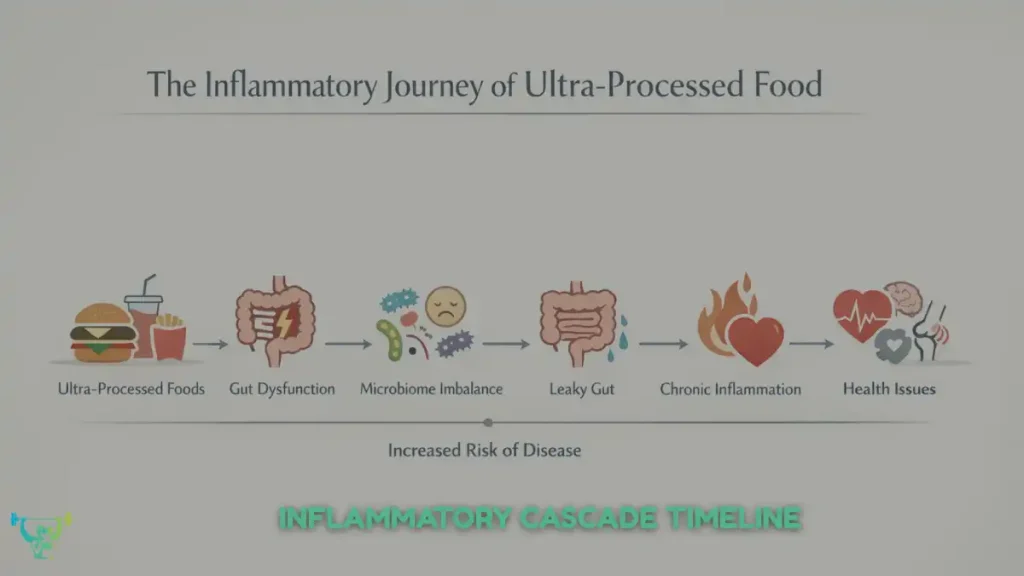
Higher intake of ultra-processed foods is associated with more heart disease deaths and type 2 diabetes, but no trial has shown that these foods cause lasting inflammation in people. The best controlled evidence shows that people eat more and gain weight on them in the short term, which is a different pathway.
For most people, the practical ultra-processed foods inflammation advice is modest. Build more meals around minimally processed foods, and use a nutrition label guide to compare packaged options.
What Counts as Ultra-Processed Food?
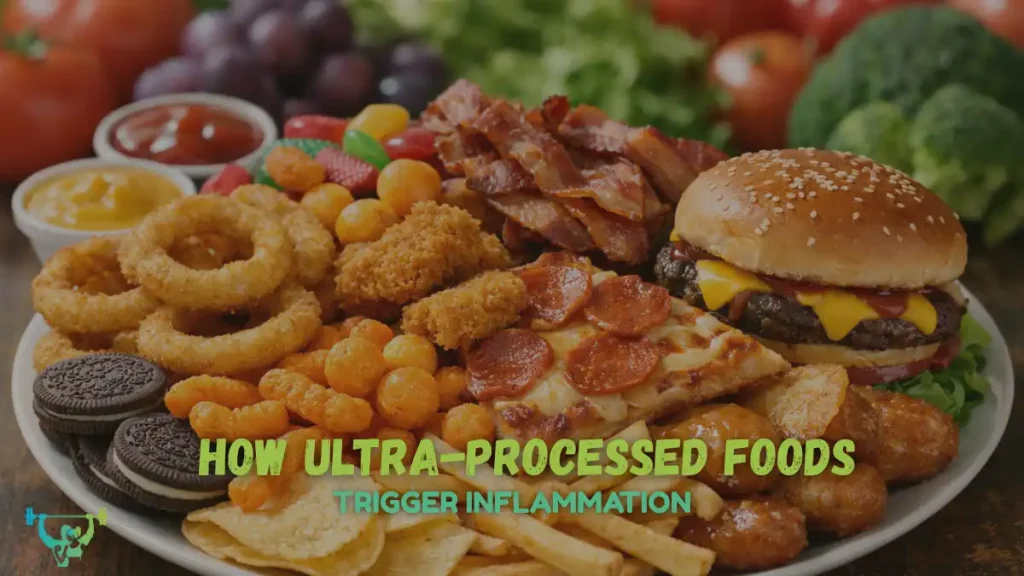
Researchers mostly use the NOVA system, which groups foods by how much industrial processing they have had. Ultra-processed foods sit in its fourth group. In the US, the top sources are sandwiches including burgers, sweet bakery products, savory snacks and sweetened drinks.
However, NOVA has critics. The UK Scientific Advisory Committee on Nutrition (SACN) found its categories very broad, with foods of very different nutrition grouped together. Label shortcuts, such as counting ingredients, are only rough guides.
How Much Ultra-Processed Food Do People Eat?
The latest US national survey puts the figure at 55.0% of total calories for people aged 1 and older. That is lower than the 60% often quoted online. Shares have also been drifting down since 2013.
| Group | Share of total daily calories from ultra-processed foods |
|---|---|
| All ages (1 year and older) | 55.0% |
| Youth (1 to 18 years) | 61.9% |
| Adults (19 and older) | 53.0% |
| Adults 19 to 39 | 54.4% |
| Adults 40 to 59 | 52.6% |
| Adults 60 and older | 51.7% |
Ultra-Processed Foods and Inflammation: What the Trials Show
Only two tightly controlled feeding trials stand out. Both measured eating and body weight rather than inflammation, so neither settles the ultra-processed foods inflammation question directly.
| Trial | Design | Main result | Main limits |
|---|---|---|---|
| Hall et al., 2019 (US, NIH) | 20 adults lived on site. Two weeks on each diet, eating as much as they wanted. | About 508 more calories eaten per day on the ultra-processed diet. Average weight change was about +2 lb versus -2 lb. | Small and short. Diets matched on listed nutrients, but protein was slightly lower on the ultra-processed diet. |
| UPDATE trial, 2025 (UK) | 55 adults randomized. Two 8-week diets at home, both following the UK Eatwell Guide. | Weight fell 2.06% on minimally processed food and 1.05% on ultra-processed food. The gap was 1.01 percentage points. | Mostly women, not blinded, and a relatively healthy, reformulated ultra-processed diet. |
Notably, the UPDATE trial also found weight loss on the ultra-processed diet. In other words, a well-planned packaged-food diet is not automatically harmful. The Hall trial is a strong hook for a different reason: it shows that people ate roughly 500 more calories a day without being told to. It did not show that calories matched, so “same calories, more inflammation” is wrong.
Why Advice on Ultra-Processed Foods and Inflammation Disagrees
First, the evidence is mostly observational. A 2024 BMJ umbrella review found higher intake linked to 32 of 45 health outcomes, such as heart disease deaths and type 2 diabetes. Even so, most ratings were low or very low certainty, and people who eat more packaged food often differ in other ways.
Second, regulators weigh the same studies differently. SACN called the associations “concerning” but said they need caution, and it did not establish causation. The 2025 to 2030 US Dietary Guidelines likewise stopped short of firm limits on ultra-processed foods, while telling people to favor whole, nutrient-dense foods.
Third, ultra-processed foods inflammation outcomes differ. Trials measure eating and weight. Cohort studies measure disease years later. Blog claims often blur the two. For foods with stronger anti-inflammatory evidence, see our guide to foods that reduce inflammation.
Mechanisms: Emulsifiers, Seed Oils and Sweeteners
The ultra-processed foods inflammation mechanisms come mostly from animal studies and short human studies.
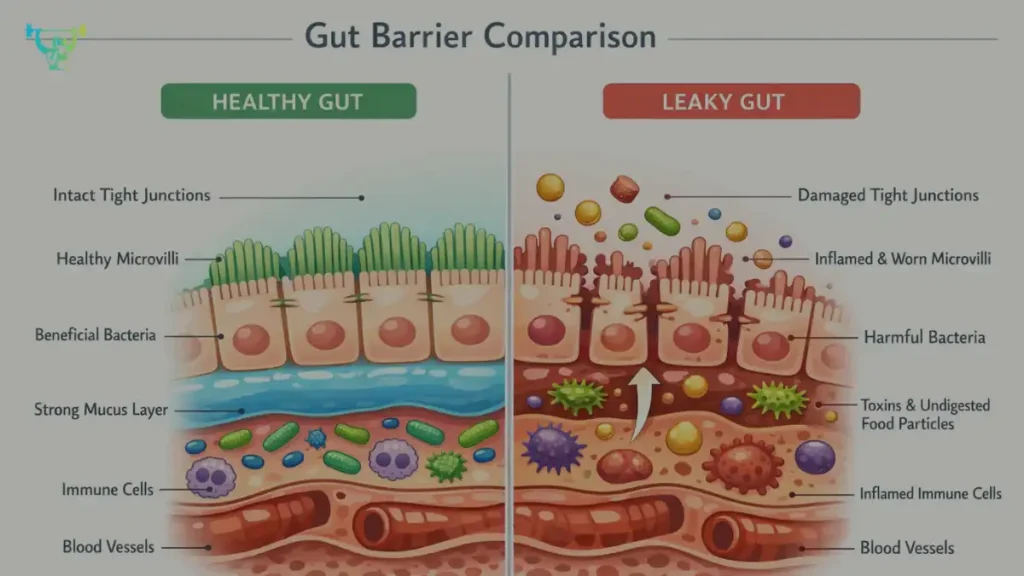
Emulsifiers. Mouse studies link some emulsifiers to gut inflammation. A two-week human feeding study of carboxymethylcellulose (CMC) found changes in gut bacteria and fewer beneficial metabolites. Some people also had bacteria closer to the gut lining. However, nobody developed disease, and responses varied widely.
Seed oils. The American Heart Association has said omega-6 fats should not be viewed as pro-inflammatory. Trials that replace saturated fat with omega-6 fats show lower heart disease risk. As a result, blaming seed oils for inflammation is not supported.
Sweeteners. The World Health Organization conditionally advises against non-sugar sweeteners for weight control. That includes stevia. The advice does not apply to people who already have diabetes, so ask your care team before changing drinks.
Blood tests. Lab guidance puts hs-CRP below 1.0 mg/L as lower risk, 1.0 to 3.0 as moderate and above 3.0 as higher. Colds and injuries can raise it temporarily, so one result means little.
Evidence Table: Claims About Ultra-Processed Foods and Inflammation
| Claim | Where it stands | What it means for you |
|---|---|---|
| Higher intake is linked to heart disease deaths and type 2 diabetes | Supported as an association | Worth acting on, but certainty is limited. |
| Diets high in these foods lead people to eat more | Supported in a short trial | Plan meals and snacks ahead. |
| They cause measurable chronic inflammation within weeks | Not supported | No trial shows this. Be wary of exact hs-CRP numbers. |
| Emulsifiers cause leaky gut and disease in people | Overstated | Human data show microbiome shifts only, so far. |
| Seed oils are inflammatory | Not supported | Olive oil is still a good choice, but not for this reason. |
| Every ultra-processed food is equally harmful | Overstated | Compare products, not just categories. |
| Stevia and monk fruit are a safer swap | Overstated | WHO does not recommend them for weight control. |
| Cutting them out fixes joint pain, brain fog or hormones | Not supported | See a clinician about persistent symptoms. |
How to Cut Back Without the Stress
For ultra-processed foods inflammation worries, you do not need a strict challenge. Start by swapping one or two items you eat most often. For example, choose plain yogurt with fruit, or fruit with nut butter instead of a bar.
Then add fiber, since many packaged snacks provide little. Our list of high-fiber foods and the fiber and weight loss guide give easy ideas. A Mediterranean diet meal plan is one well-studied pattern, and the macronutrients guide explains protein, carbs and fat. For a steady approach, read sustainable weight loss tips.
Finally, keep some flexibility. Packaged foods can be affordable, safe and convenient, and that matters for many households.
Safety Notes
Before acting on ultra-processed foods inflammation headlines, note these safety points.
- Medication: never stop or change prescribed medicine because of a diet change or a blood marker.
- Diabetes: people with diabetes should talk with their care team before changing carbohydrates, drinks or sweeteners.
- Warfarin: if you take warfarin, keep vitamin K from leafy greens steady each day. The NIH Office of Dietary Supplements warns that sudden changes can raise bleeding or clot risk.
- Kidney disease: swapping to more nuts, beans or bananas can change potassium and phosphorus intake. Ask a renal dietitian first.
- Pregnancy and children: avoid restrictive plans. Youth get 61.9% of calories from these foods in the US, so gradual changes work better.
- Allergies and eating disorders: check labels when swapping foods, and skip food-elimination plans if you have a history of disordered eating.
Video on Ultra-Processed Food
FAQ: Ultra-Processed Foods and Inflammation
Not proven. Large studies link them to heart disease and type 2 diabetes, but no trial has shown that they cause lasting inflammation in people. The strongest trial evidence is that people eat more of them without noticing.
Nobody can say for sure, because no trial has timed it. Markers such as hs-CRP also rise with colds and injuries, so one test can mislead. Speak with a clinician before testing.
Probably not. The UK advisory committee SACN found the NOVA groups very broad, and the UPDATE trial saw weight loss on a reformulated ultra-processed diet. Compare individual products instead of judging a whole category.
The American Heart Association has said omega-6 fats should not be viewed as pro-inflammatory, and trials that replace saturated fat with omega-6 fats show lower heart disease risk. Blaming seed oils for inflammation is not supported.
Animal studies suggest they might. A two-week human study of carboxymethylcellulose changed gut bacteria and metabolites, but nobody developed disease. Longer human studies are still needed.
The World Health Organization conditionally advises against non-sugar sweeteners, including stevia, for weight control. It does not apply to people with existing diabetes, so ask your care team before changing anything.
In the US, 55.0 percent of calories for people aged 1 and older in 2021 to 2023. That is 53.0 percent for adults and 61.9 percent for youth, based on the NOVA system.
Only if a clinician advises it. Results vary with infections and some medicines, and a single high result should be repeated. The test does not diagnose a condition on its own.
Make gradual changes and tell your care team. Never stop or change prescribed medicine because of a diet change. People with diabetes, kidney disease or a history of disordered eating should get personal advice first.
Related Reading
- How to read nutrition labels
- Heart disease prevention guide
- Foods bad for heart health
- Top 8 foods to eat for better health
Sources
- CDC NCHS Data Brief 536: Ultra-processed Food Consumption in Youth and Adults, United States, August 2021 to August 2023
- News-Medical summary of Hall et al., Cell Metabolism, 2019 (secondary summary; the original paper was not accessible)
- UPDATE trial, Nature Medicine, 2025 (UCL repository PDF)
- UK SACN statement on processed foods and health, summary report
- Lane et al., BMJ 2024: ultra-processed food exposure and adverse health outcomes, umbrella review
- News-Medical summary of the human carboxymethylcellulose feeding study, Gastroenterology, 2021 (secondary summary)
- CSPI: Do omega-6 fats cause inflammation? (advocacy-group summary of the American Heart Association advisory on omega-6 fatty acids)
- WHO guideline on non-sugar sweeteners, 2023
- Testing.com: high-sensitivity C-reactive protein (hs-CRP) test (lab-testing information page)
- AJMC: USDA and HHS 2025 to 2030 Dietary Guidelines for Americans (news summary)
- NIH Office of Dietary Supplements: Vitamin K fact sheet for consumers
This article is for general education and is not medical advice. Written and fact-checked by the HealthCoachJP editorial team. No clinician has reviewed this article. See our sources and editorial standards. Last reviewed and rewritten October 2026.

