

Quick answer: corn tortilla nutrition is about 218 kcal per 100 g, or roughly 50 kcal for one small tortilla, with about 10.7 g of carbohydrate and 1.5 g of fibre. A corn tortilla has about one-third fewer calories than a flour tortilla of the same weight, and far less fat than tortilla chips. Plain masa tortillas contain no gluten, but cross-contact and added wheat flour are the risks to check.
This page is part of our nutrition facts guide. It compares corn tortillas, flour tortillas, chips and taco shells on one weight basis, and explains the nixtamalization step that makes masa different from plain cornmeal.
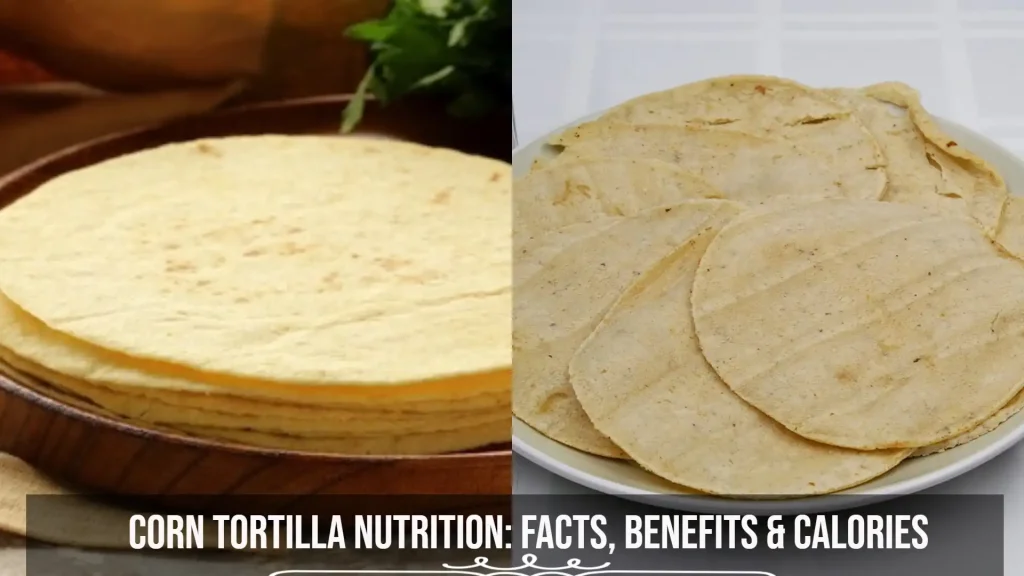
Corn Tortilla Nutrition Facts per 100 g and per Tortilla
| Nutrient | Per 100 g (%DV) | One small tortilla (about 24 g) |
|---|---|---|
| Calories | 218 kcal | about 52 kcal |
| Total fat | 2.9 g (4%) | 0.7 g |
| Carbohydrate | 44.6 g (16%) | 10.7 g |
| Fibre | 6.3 g (23%) | 1.5 g |
| Protein | 5.7 g (11%) | 1.4 g |
| Sodium | 45 mg (2%) | 10.8 mg |
| Calcium | 81 mg | 19.4 mg |
Brands vary. A packet label for a larger or thicker tortilla will differ, so use the label for the exact product.
Corn vs Flour Tortillas, Chips and Taco Shells
Tortilla comparisons mislead when sizes differ. A flour tortilla is often larger, so a per-tortilla comparison hides the real gap. The table below uses a single 28 g (1 oz) basis.
| Per 28 g (1 oz) | Calories | Fat | Fibre |
|---|---|---|---|
| Corn tortilla (USDA 175036) | 62 kcal | 0.8 g | 1.8 g |
| Flour tortilla (USDA SR, aggregator) | 92 kcal | about 2 g | about 0.9 g |
| Plain white corn tortilla chips | 138 kcal | 6.6 g | 1.5 g |
Per ounce, the corn tortilla has about one-third fewer calories than flour (62 against 92). Chips carry about eight times the fat of the soft tortilla at the same weight (6.6 g against 0.8 g). Frying, not corn, is what changes the numbers. Dry-warming a tortilla keeps it near 62 kcal per ounce.
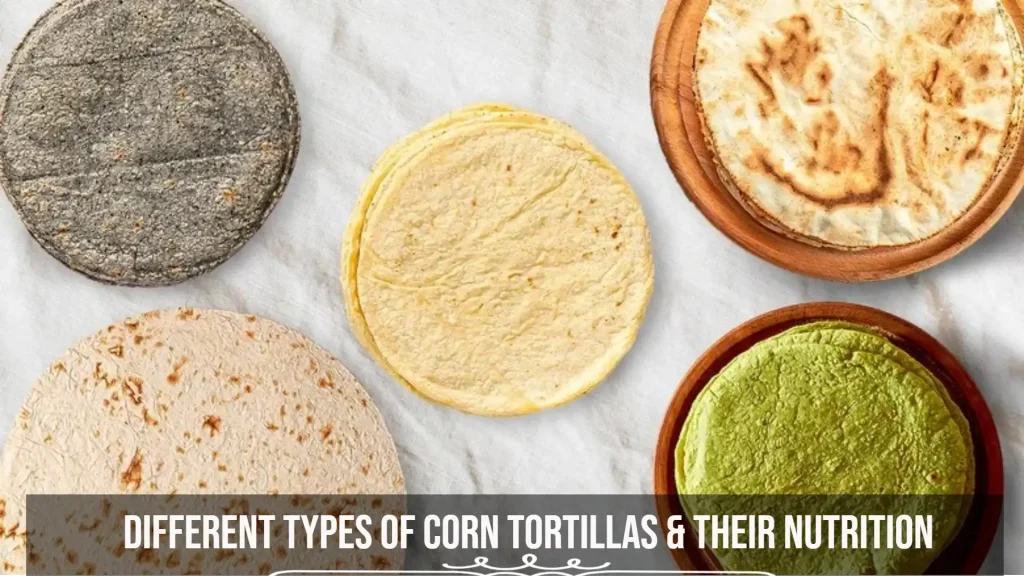
What Nixtamalization Does
Masa is corn cooked and soaked in an alkaline solution, usually lime. The process is called nixtamalization. A Nebraska Extension publication says that as calcium content rises, niacin becomes available and phytic acid falls. The tortilla’s calcium (81 mg per 100 g in USDA data) partly reflects this step. I could not verify a figure comparing it with plain cornmeal, so I do not give one.
The same publication reports that the process can sharply cut mould toxins. Fumonisin fell by 80 to 100% in one study, and aflatoxin by 52 to 85% with the traditional method and 30 to 71% with commercial steeping. Results vary with conditions, and the authors conclude that good-quality grain is the main safeguard. Nixtamalization is not a substitute for it.
Gluten, Allergens and Folic Acid
Corn is not wheat, rye or barley, so a tortilla made only from masa contains no gluten ingredient. Check the label anyway. Some “corn” or multigrain tortillas and chips contain wheat, and the Celiac Disease Foundation warns about cross-contact from shared fryers and equipment. In the US, FDA lets a product say gluten-free if it has under 20 ppm gluten. UK law uses the same 20 ppm limit, according to Coeliac UK. If you have coeliac disease, choose products labelled gluten-free. Corn is not one of the nine major US food allergens, which are milk, egg, fish, shellfish, tree nuts, peanuts, wheat, soy and sesame. I did not verify the UK allergen list.
US and UK rules differ on folic acid. Since 2016, FDA has allowed manufacturers to add folic acid to corn masa flour, up to 0.7 mg per pound. It is voluntary and must appear in the ingredient list. The UK government says non-wholemeal wheat flour will be fortified by law from December 2026, but that rule covers wheat flour, not maize. Pregnancy advice on folic acid comes from a clinician. For related reading see our nutrition label guide.
Corn Tortilla Claims: What the Evidence Says
| Claim | Where it stands | What it means for you |
|---|---|---|
| Corn tortillas have fewer calories than flour tortillas | Supported | About one-third fewer per ounce in USDA data. Compare the same weight, not the same count. |
| Corn tortillas are gluten-free | Depends | True for pure masa. Added wheat and cross-contact can make a product unsuitable for coeliac disease. |
| Masa processing destroys nutrients | Not supported | The alkaline step makes niacin available and lowers phytic acid and some mould toxins. |
| Tortilla chips are as healthy as tortillas | Not supported | Chips carry about eight times the fat per ounce. |
| Corn tortillas are a good protein source | Not supported | About 1.4 g per small tortilla. Add beans, eggs or fish. |
| Blue corn is clearly healthier | Unproven | I found no source showing a practical difference, so choose by taste. |
Using and Storing Tortillas
I found no USDA or FDA storage rule specific to tortillas, so follow the use-by date and storage instructions on the packet. Cooked tortilla dishes count as leftovers. USDA FSIS says to refrigerate leftovers within two hours and eat them within three to four days. For other staples on a comparable basis, see corn on the cob, bagels, brown bread, wild rice and spaghetti squash.
3 Corn Tortilla Nutrition Facts (Video)
Frequently Asked Questions
A small corn tortilla (about 24 g) has roughly 50 kcal. USDA data put corn tortillas at 218 kcal per 100 g. Check the packet because size and brand vary.
Pure masa tortillas contain no gluten ingredient. Some products add wheat flour, and shared equipment can cause cross-contact, so people with coeliac disease should choose products labelled gluten-free.
Per ounce, corn has about one-third fewer calories and less fat than flour in USDA-based data. Both can fit a balanced diet, and the fillings matter more.
About 10.7 g in a small tortilla of roughly 24 g, or 44.6 g per 100 g. Larger tortillas contain more, so check the packet.
It is cooking and soaking corn in an alkaline solution such as lime. It makes niacin available, lowers phytic acid and can reduce some mould toxins.
No. Plain chips have about 6.6 g of fat per ounce against 0.8 g for a corn tortilla, and about 138 kcal against 62 kcal.
Only if the maker adds it. The FDA has allowed folic acid in corn masa flour since 2016, and it must appear in the ingredient list.
Corn is not one of the nine major US allergens. Allergy to corn exists but is less common, so avoid it if you react.
Follow the packet instructions and use-by date, as I found no tortilla-specific official rule. Cooked tortilla dishes should be refrigerated within two hours and eaten within three to four days.
Related Reading
- Nutrition facts guide: US and UK labels explained
- Spaghetti squash nutrition facts
- Shirataki noodles nutrition
- How to read nutrition labels
Sources
- USDA SR Legacy 175036, corn tortilla, ready-to-bake or fry (mirror site)
- Flour tortilla nutrition (aggregator, USDA-derived)
- University Hospitals: corn tortilla, one tortilla
- University Hospitals: plain white corn tortilla chips, 1 oz
- University Hospitals: baked taco shell
- Nebraska Extension G2329: nixtamalization and mycotoxins
- FDA: Gluten and food labeling
- Coeliac UK: gluten free labelling
- Celiac Disease Foundation: Sources of gluten
- FDA: FASTER Act and the nine major food allergens
- FDA: Fortifying corn masa flour with folic acid
- UK Government: Folic acid
- USDA FSIS: Leftovers and food safety
This page is general information, not medical or dietary advice. Figures are approximate and vary by brand and tortilla size, so check the packet. If you have coeliac disease or a food allergy, rely on the product label and your clinician’s guidance. Last reviewed and rewritten November 2026.

