
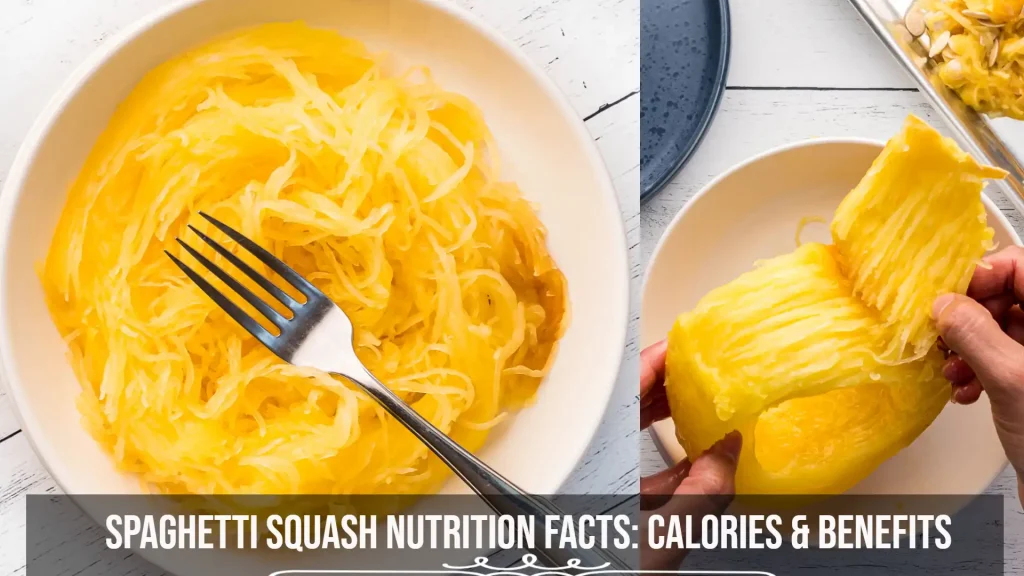
Quick answer: one cup of cooked spaghetti squash (155g) has about 42 calories, 10g carbs, 2.2g fibre — so roughly 8g net carbs — and 1g protein. It is naturally gluten-free and one of the better low-carb pasta swaps, though whether it fits keto depends entirely on how much of it you eat. That last point is where most articles on this vegetable mislead people, so we have given it its own section.
What Is Spaghetti Squash?
Spaghetti squash (Cucurbita pepo) is a winter squash whose flesh separates into noodle-like strands when cooked. It is oblong, pale yellow to golden, mild and slightly sweet, and can be baked, steamed or microwaved.
Spaghetti Squash Nutrition Facts: Raw vs Cooked
Raw and cooked figures differ, and mixing them up is the most common error in nutrition write-ups for this vegetable. Both columns below are per 100 grams, from USDA FoodData Central.
| Nutrient | Raw, per 100g | Cooked, per 100g |
|---|---|---|
| Calories | 31 | 27 |
| Total Fat | 0.6 g | 0.3 g |
| Sodium | 17 mg | 18 mg |
| Potassium | 108 mg | 117 mg |
| Total Carbs | 6.9 g | 6.5 g |
| Dietary Fibre | 1.5 g | 1.4 g |
| Sugars | 2.8 g | 2.5 g |
| Protein | 0.6 g | 0.7 g |
Per cooked cup (155g)
- Calories: ~42
- Carbs: ~10 g, of which ~2.2 g fibre — about 8 g net carbs
- Protein: ~1 g
- Fat: ~0.4 g, before anything you cook it in
The Portion Problem: Is It Actually Keto?
Per 100 grams, spaghetti squash looks unambiguously keto. Per plate, it often is not — because nobody eats 100 grams of it as a pasta replacement.
A medium spaghetti squash yields roughly 4 to 5 cups of cooked strands. A realistic main-course portion is half a squash, or about 2 to 3 cups:
| Portion | Calories | Total carbs | Net carbs |
|---|---|---|---|
| 1 cup cooked | ~42 | ~10 g | ~8 g |
| 2 cups (half a small squash) | ~84 | ~20 g | ~16 g |
| 3 cups (a generous main) | ~126 | ~30 g | ~24 g |
| Whole medium squash | ~190–210 | ~45 g | ~35 g |
Strict keto typically allows around 20–25 g net carbs for the entire day. A three-cup bowl of spaghetti squash can use most or all of that on its own, before sauce. It is far lower in carbs than pasta, and it is a genuinely useful swap — but “keto-friendly” is true at one cup and misleading at three. Weigh or measure your portion if you are tracking closely.
Health Benefits of Spaghetti Squash
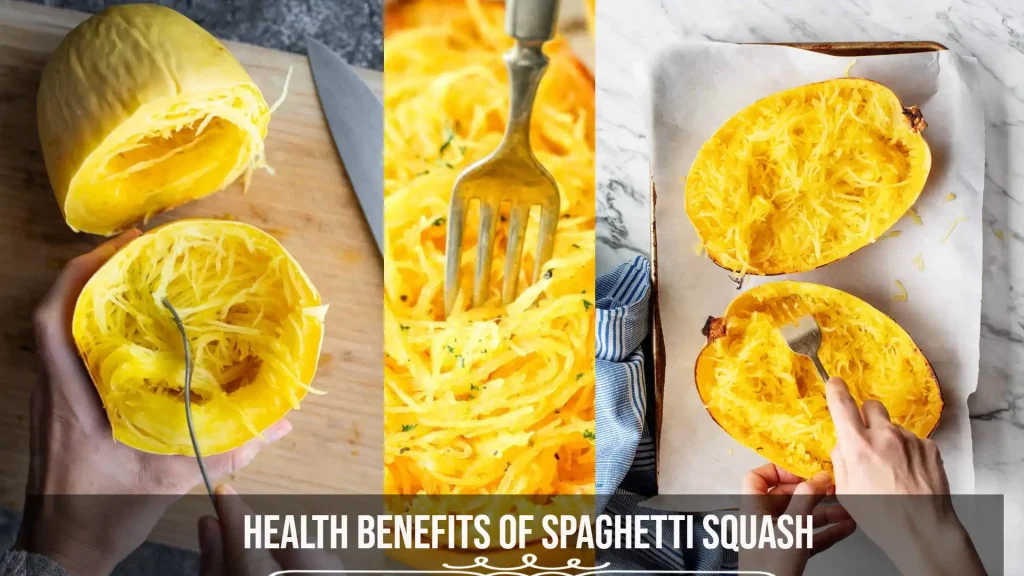
1. A low-calorie swap for pasta
A cup of cooked spaghetti squash has around 42 calories and 10g carbs against roughly 200 calories and 43g carbs for a cup of cooked white pasta. If you are managing calories or carbs, that is a meaningful difference at the same visual portion size.
2. Contains antioxidants
It provides beta-carotene and a modest amount of vitamin C. Worth noting the scale: a cooked cup supplies around 6% of the daily value for vitamin C, so this is a contribution to a varied diet rather than a standout source. It supports normal immune function as part of adequate overall nutrition — no food boosts immunity above normal.
3. Adds fibre
At about 2.2g of fibre per cooked cup, it contributes to digestive health and to feeling full. Most adults need 25–30g of fibre a day, so treat this as one contributor among several.
4. Naturally gluten-free
Spaghetti squash is a vegetable and contains no gluten, which makes it a practical pasta substitute if you have coeliac disease or gluten sensitivity. As with any food, what matters is the whole dish — check sauces, stocks and any pre-seasoned products, and avoid cross-contact with wheat in shared kitchens.
How to Cook Spaghetti Squash
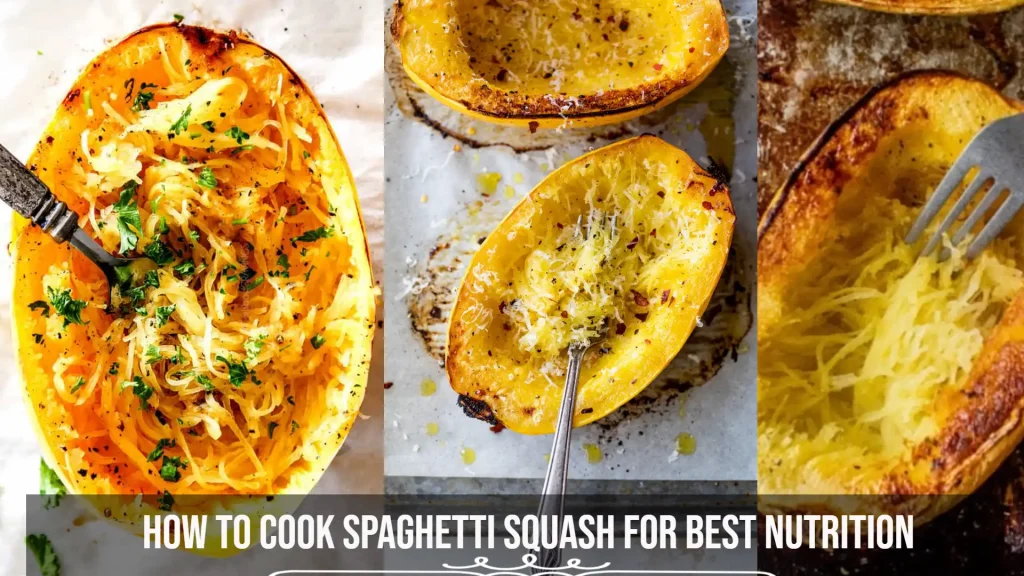
Baking (most popular)
- Heat the oven to 400°F (200°C).
- Cut the squash in half lengthwise — use a sharp, heavy knife on a stable board, and microwave the whole squash for 3–4 minutes first to soften it if it feels difficult. Cutting a hard squash is a common source of kitchen injuries.
- Scoop out the seeds.
- Brush with olive oil and season lightly.
- Roast cut-side down for 30–40 minutes, then scrape into strands with a fork.
Microwave (fastest)
Pierce the squash several times so steam can escape, microwave 10–12 minutes turning halfway, then slice open and scoop.
Steaming (gentlest)
Steam halves or cubes for 20–25 minutes. Gentler cooking retains more vitamin C than long roasting.
Spaghetti Squash vs Pasta, Zoodles and Shirataki
| Per 1 cup cooked | Spaghetti Squash | Regular Pasta | Zucchini Noodles | Shirataki Noodles |
|---|---|---|---|---|
| Calories | 42 | 200+ | ~20 | ~10 |
| Carbs | 10g | 43g | 4g | 3g |
| Fibre | 2.2g | 2.5g | 1g | 3g |
| Protein | 1g | 7g | 1.5g | 0g |
| Gluten-free | Yes | No | Yes | Yes |
Ways to Use It
- Pad Thai style: strands in place of rice noodles.
- Garlic parmesan boats: mix with cheese and bake in the shells.
- Cold “pasta” salad: toss with vegetables, olive oil and lemon.
- Stir-fry: sauté with tofu and tamari.
Because it is so low in protein, pair it with beans, tofu, eggs, chicken or fish to make a balanced meal rather than treating it as a like-for-like pasta replacement.
Potential Downsides
- Not a meaningful protein source
- Turns watery if overcooked
- Whole squash are hard to cut safely — soften in the microwave first
- Store whole in a cool, dry place; refrigerate cooked strands and use within 3–5 days
How to Cook Spaghetti Squash 4 Ways
FAQs About Spaghetti Squash Nutrition
About 42 calories per cooked cup (155g), with around 10g carbs and 2.2g fibre.
At one cup, yes — about 8g net carbs. At a realistic main-course portion of two to three cups, it is 16–24g net carbs, which can use most of a strict keto daily allowance on its own. It depends entirely on portion size, so measure it if you are tracking.
No, it is a vegetable and naturally gluten-free. Check any sauces, stocks or seasonings you serve with it, and avoid cross-contact with wheat in shared kitchens.
It contains fewer carbohydrates than pasta at the same portion size, so its effect is generally smaller. Individual blood sugar responses vary, and portion size matters — if you have diabetes, discuss your own diet with your doctor or a dietitian.
Both work well. Zucchini noodles are lower in carbs and calories; spaghetti squash has more fibre and a texture closer to real noodles. Choose on texture preference rather than a nutritional winner.
Yes — rinse, dry and roast them like pumpkin seeds.
Three to five days in an airtight container in the fridge. Cooked strands also freeze reasonably well, though they soften further on thawing.
Botanically a fruit, since it develops from the flower and contains seeds. Culinarily it is treated as a vegetable.
Sources
- USDA FoodData Central — spaghetti squash, raw and cooked
- Harvard T.H. Chan School of Public Health — Winter squash
- Mayo Clinic — Dietary fibre
Last updated: August 2026. Nutrition figures are approximate and vary with growing conditions, squash size and cooking method. This article is general information, not medical or dietetic advice — if you are managing diabetes, coeliac disease or another condition, discuss your diet with your doctor or a registered dietitian.

