
Quick answer: the products with the most evidence behind them are continuous low-level heat wraps (short-term pain and function in acute and subacute episodes), adjustable lumbar support and an ergonomic chair (prolonged sitting), and a yoga mat for daily mobility and activation. Cold packs are reasonable in the first 48 to 72 hours of an acute strain. Braces, foam rollers and massage guns are adjuncts, not treatments. No product on this page changes outcomes as much as regular movement does.
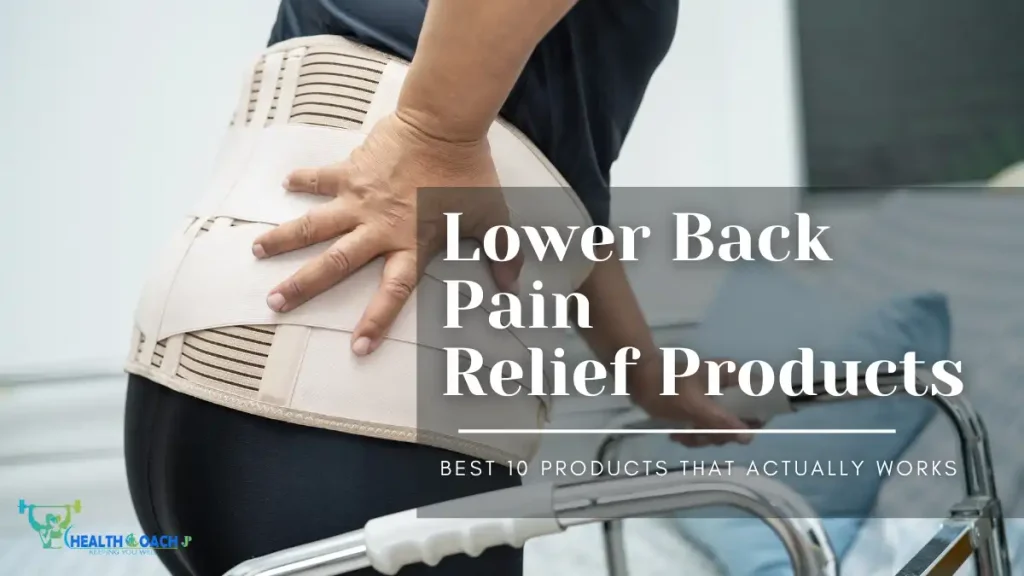
Lower back pain rarely starts with a dramatic injury. It usually builds through long sitting, unvaried posture, deconditioning and load on the tissues that stabilise the lumbar spine. Products can play a real role, but only when matched to the actual problem and used alongside movement, ergonomics and sleep. This guide ranks ten categories by how much evidence sits behind each, following guidance from bodies such as the American College of Physicians and MedlinePlus.
Before You Buy Anything: Red Flags
No product on this page is appropriate if any of the following apply. These need medical assessment first:
- Numbness around the groin, genitals or inner thighs, new difficulty passing or controlling urine, or loss of bowel control. These suggest cauda equina syndrome and need same-day emergency assessment.
- Leg weakness that is worsening, or a foot that catches when you walk.
- Back pain with fever, night sweats, unexplained weight loss, or a history of cancer.
- Significant trauma, or sudden severe pain in anyone with osteoporosis or on long-term corticosteroids.
For the full picture on causes and treatment, start with our lower back pain guide.
The Ten Categories, Ranked by Evidence
| Product type | Best for | When to use | Evidence level |
|---|---|---|---|
| Yoga mat (daily mobility) | Mobility and core activation | 10 minutes a day minimum | Strong – exercise is guideline first-line |
| Heat wrap | Muscle guarding, stiffness | After the first 72 hours of acute strain; subacute and chronic | Moderate, from randomised trials |
| Lumbar cushion | Long sitting at a desk or in a car | Any prolonged sitting | Ergonomic consensus |
| Ergonomic chair | Full-time desk work | Daily | Ergonomic consensus |
| Standing desk | Reducing time in flexed posture | Alternating every 45 to 60 minutes | Ergonomics research |
| Mattress (medium-firm) | Night pain, morning stiffness | Ongoing | Mixed, favours medium-firm |
| Cold pack | Acute injury, inflammatory flare | First 48 to 72 hours only | Limited and inconsistent |
| Foam roller | Glutes, hips, thoracolumbar fascia | Before mobility or after activity | Evolving |
| Massage gun | Paraspinal and glute tightness | 30 to 120 seconds per area | Adjunct only |
| Back brace | Acute flare, specific tasks | Short-term only, then wean off | Adjunct only |
1. Lumbar support cushions
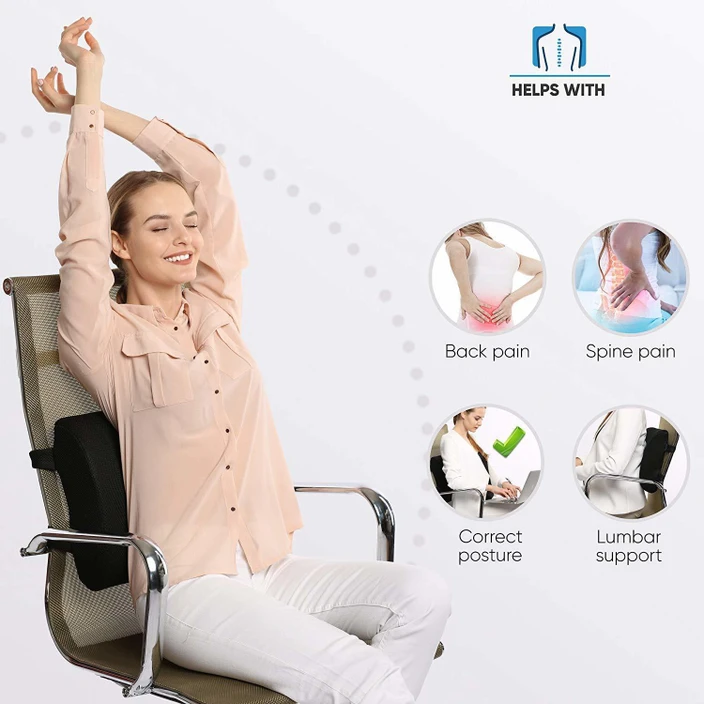
Best for: office chairs, car seats, long sitting hours.
Why it helps: a properly shaped support helps maintain the lumbar lordosis, the natural inward curve of the lower spine, reducing shear and compressive load and easing muscular guarding during prolonged sitting. Ergonomics research has found wide variability in preferred support height and depth between individuals, which is precisely why adjustable supports outperform fixed pads.
- What to look for: adjustable height, depth or straps; contoured high-density foam that resists collapse; a breathable cover.
- Setup: sit fully back, then position the thickest part at belt-line level or slightly above. Re-check after 10 to 15 minutes, because posture drifts.
- What to track: whether you can sit longer before stiffness starts, and whether end-of-day aching reduces over two to three weeks.
2. Adjustable standing desks
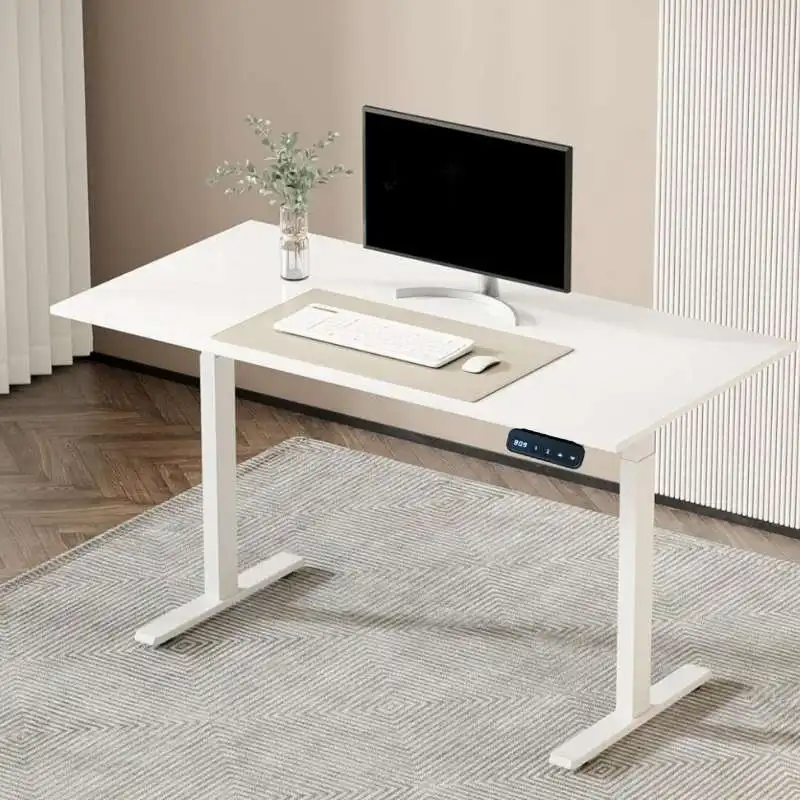
Best for: preventing pain that builds through prolonged sitting.
Why it helps: alternating postures distributes load and reduces time in sustained lumbar flexion, which aggravates symptoms in some people. Sit-stand variability promotes micromovement and reduces static tissue loading, a consistent theme in ergonomics research. Standing all day simply swaps one static posture for another, and can produce its own problems see back pain when walking or standing.
- What to look for: smooth electric lift on a stable frame that does not wobble when typing; enough vertical range for a 90 to 100 degree elbow angle both seated and standing; saved height presets, which measurably increase how often people actually switch.
- Setup: alternate every 45 to 60 minutes. Add micro-breaks such as calf raises, hip shifts and gentle spinal extension rather than marathon standing bouts.
- What to track: afternoon stiffness, and whether you last longer in each position over a month.
3. Heat therapy wraps

Best for: muscle guarding and stiffness, particularly in acute and subacute episodes.
Why it helps: superficial heat raises local tissue temperature, increases blood flow and reduces muscle spasm, which lowers pain sensitivity and improves movement. This is supported by randomised trials and systematic review. The Cochrane review by French and colleagues found moderate evidence that heat wrap therapy reduces pain and disability in acute and subacute low back pain, while evidence for cold was limited and mixed. In at least one trial, continuous low-level heat outperformed common over-the-counter analgesics over the first 48 hours.
- What to look for: even heat distribution and steady low-level output; adjustable closure that contours to the lumbar region; auto-off on electric models.
- How to use safely: 15 to 20 minutes for standard heat pads. Continuous low-level wraps can be worn longer per the product instructions, but check the skin regularly. Do not use over open wounds, over areas of reduced sensation, immediately after trauma, or while asleep on a high setting.
- What to track: easier forward bending and reduced morning stiffness.
4. Cold gel packs
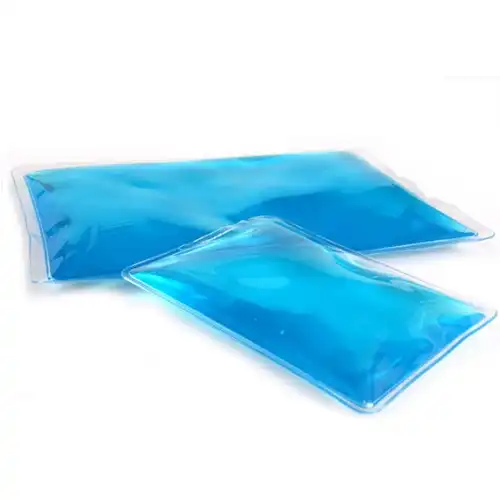
Best for: a recent acute strain or an inflammatory flare.
Why it helps: cold slows nerve conduction and can reduce nociceptor activity and superficial swelling, which is soothing in acutely irritated tissue. Be aware that back-specific evidence for cold is weaker and less consistent than for heat. It is a comfort measure with a short window rather than a treatment.
- What to look for: a reusable gel pack that stays flexible when frozen so it contours to the lumbar curve, plus a cloth sleeve.
- How to use safely: 10 to 15 minutes per application with a barrier between pack and skin, allowing the skin to re-warm fully between bouts. Do not use over areas of poor circulation or impaired sensation.
- What to track: reduced throbbing and better tolerance of movement. If it is not helping by day three, switch to heat.
5. Ergonomic office chairs
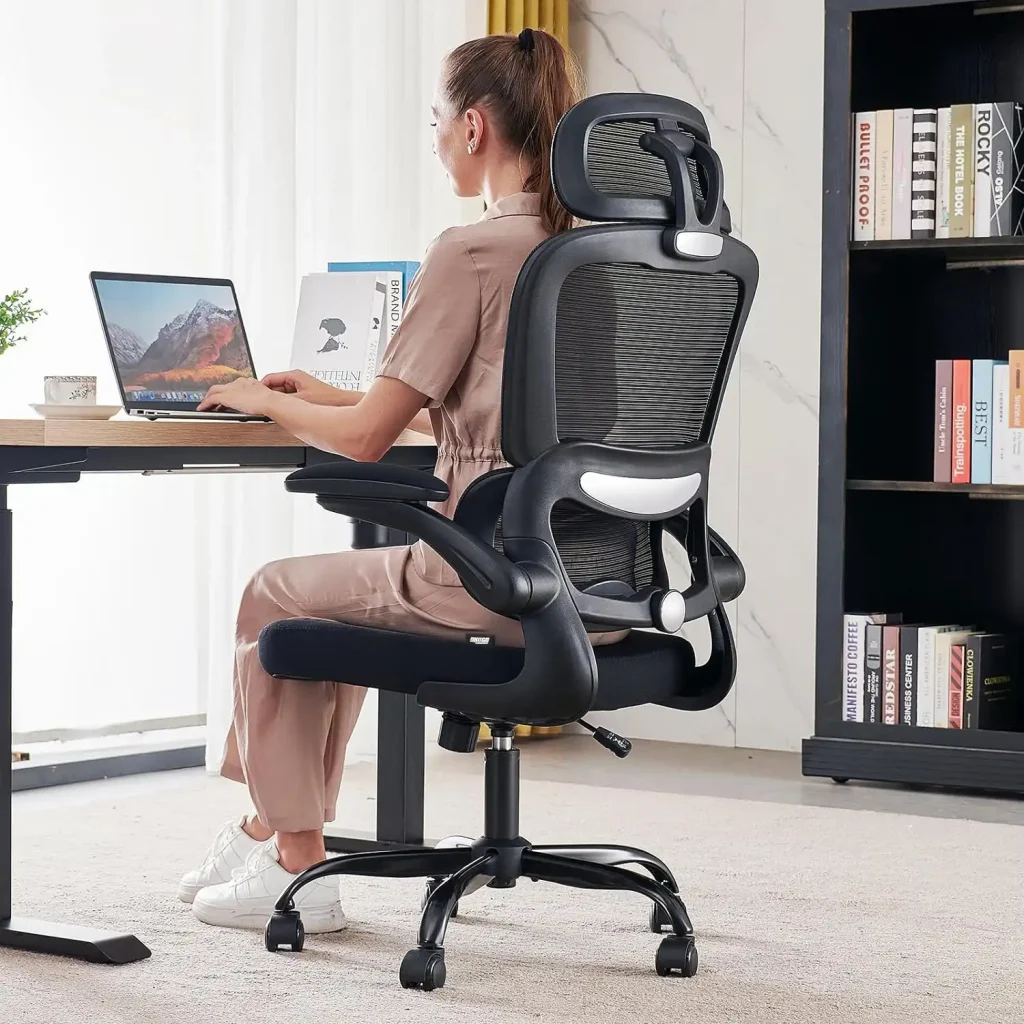
Best for: full-time desk work where adjustability and movement matter.
Why it helps: a chair that supports the lumbar curve, allows seat pan depth adjustment and positions the armrests to reduce trunk strain lowers perceived discomfort and appears to encourage the frequent minor postural adjustments that help during long tasks.
- What to look for: adjustable lumbar height and depth; backrest tilt with tension control; seat pan depth adjustment; four-way armrests.
- Setup: hips slightly above knees, feet flat or on a footrest, two to three finger widths of clearance behind the knees, lumbar contact at the small of the back, armrests just under the forearms without shrugging.
- What to track: cumulative discomfort by late afternoon.
6. Back braces
Best for: short-term support during an acute flare or a specific aggravating task.
Why it helps, and the catch: external support limits painful ranges and cues neutral posture during recovery. Over-reliance is the real risk. Wearing a brace continuously allows the muscles that should be doing the job to weaken, which is the opposite of what you want. Guidelines treat braces as adjuncts, not primary treatment, in non-specific low back pain without instability.
- What to look for: breathable fabric, adjustable compression, a snug but not restrictive fit, and an easy on-off design so you only wear it when needed.
- How to use: wear during provoking tasks such as lifting or prolonged standing, for brief periods. Plan a weaning strategy from the start.
- What to track: pain during the specific task, and that your tolerance without the brace is not falling over time.
7. Foam rollers
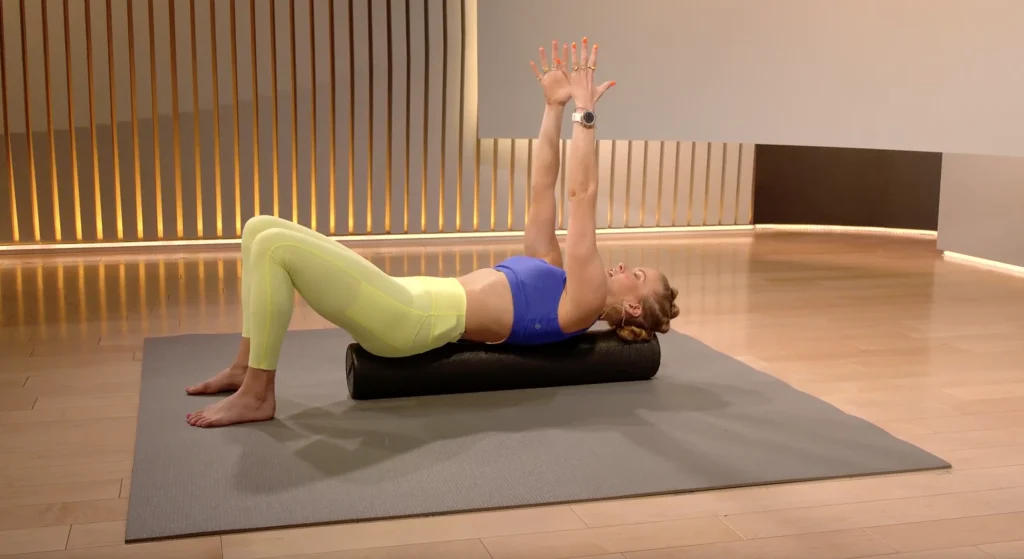
Best for: the paraspinals, gluteals and hip rotators that feed lumbar tension.
Why it helps: self-myofascial work reduces perceived muscle stiffness and improves short-term movement comfort. Direct evidence in low back pain specifically is still evolving, so treat it as a practical adjunct within an active programme rather than a treatment in itself.
- What to look for: medium firmness and moderate texture, since very hard rollers provoke guarding. A 36-inch roller is the most versatile.
- How to use: target glutes, piriformis, hip flexors and thoracolumbar fascia. Avoid rolling directly on the lumbar vertebrae. Roll slowly for 30 to 60 seconds per area, stopping for numbness or sharp pain, and pair it with mobility work.
- What to track: hip rotation range and easier sit-to-stand.
8. Massage guns (percussive therapy devices)
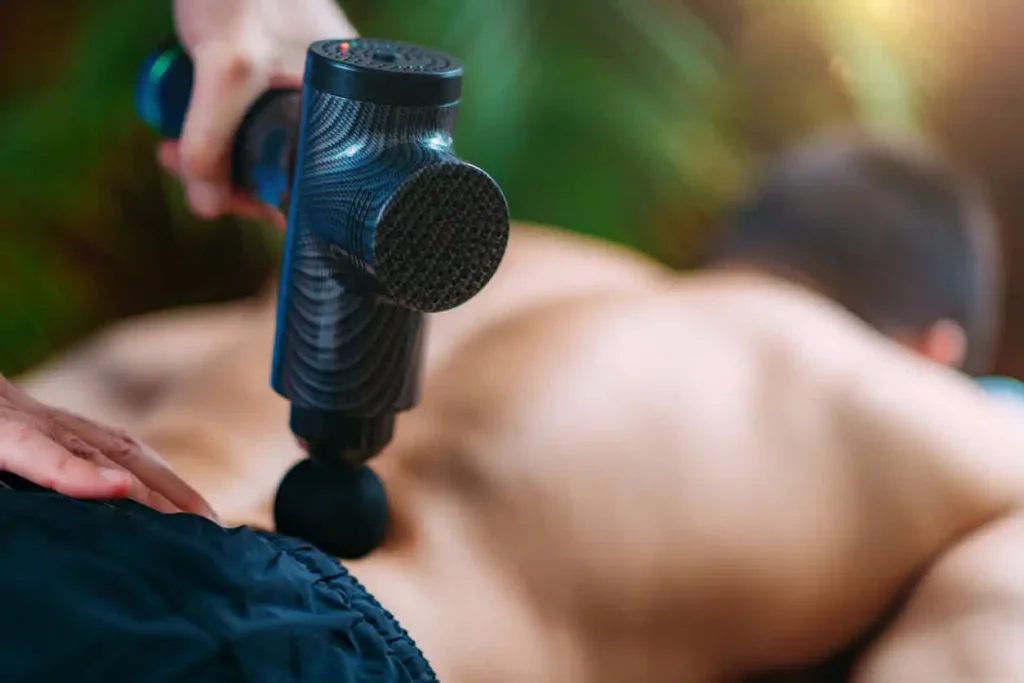
Best for: paraspinals, glutes, hamstrings and hip rotators.
Why it helps: percussive therapy reduces the sensation of tightness and can improve short-term range, indirectly offloading lumbar tissues by addressing tight segments elsewhere in the chain. The effect is short-lived, which is why it belongs before movement rather than instead of it.
- What to look for: variable speeds, softer head attachments for sensitive regions, quiet operation, and a handle shape that lets you reach your own back without twisting awkwardly.
- How to use: start on the lowest speed with a soft head. 30 to 120 seconds per muscle group. Avoid the spine itself, the kidneys and any area of numbness. Stop if symptoms worsen.
- What to track: whether it makes the following mobility work easier. If it does not, it is not earning its place.
9. Mattresses
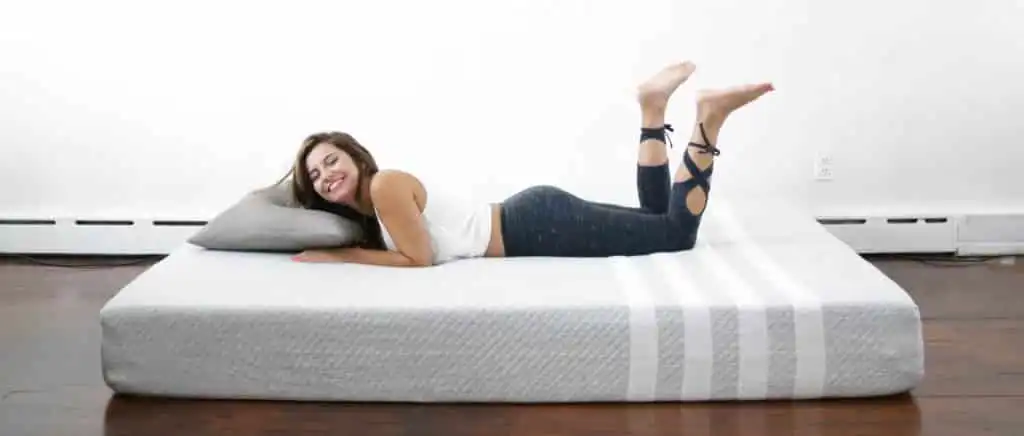
Best for: night pain and morning stiffness.
Why it helps, and the myth to drop: the long-standing advice to buy the firmest mattress possible is not supported. Trial evidence tends to favour medium-firm surfaces, which preserve spinal alignment without creating pressure points that disturb sleep. Since sleep quality itself affects pain sensitivity, comfort is not a soft consideration here it is part of the mechanism. Note that the term orthopaedic is a marketing label, not a regulated standard.
- What to look for: medium-firm feel, zoned support, adequate edge reinforcement, cooling materials if heat disturbs your sleep, and above all a genuine home trial period.
- Setup: pair with a pillow that keeps the neck neutral, and a knee pillow if you sleep on your side. Replace a mattress roughly every seven to ten years, or sooner if permanent impressions form.
- What to track: morning stiffness in the first 30 minutes of the day, and night awakenings.
10. Yoga mats, for mobility and core activation
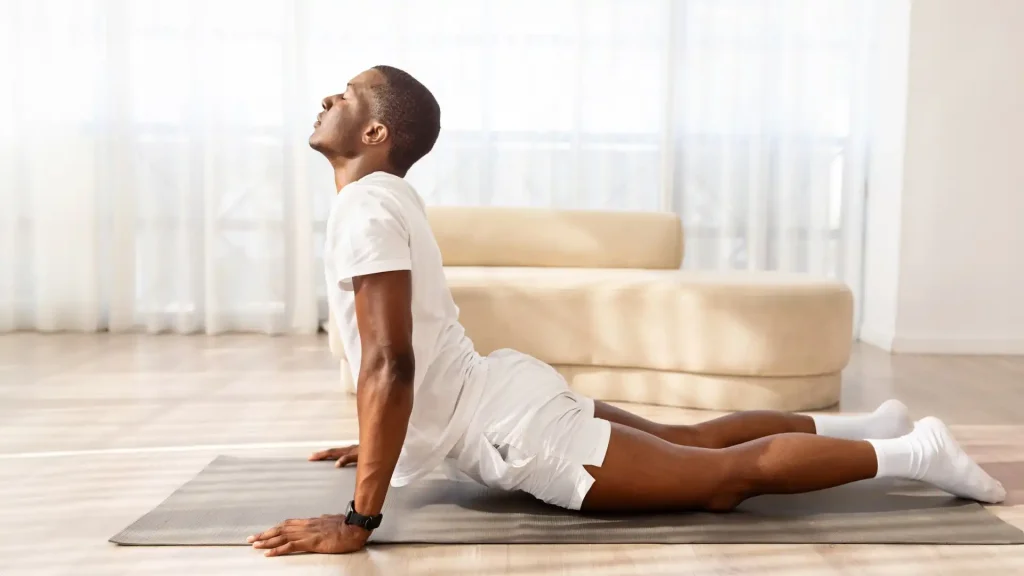
Best for: daily mobility and stabilisation work at home.
Why it tops the evidence table: the mat itself does nothing. What it enables floor-based mobility and low-load activation is the one thing on this page that clinical guidelines actually recommend as first-line care for subacute and chronic low back pain. Cat-cow, child’s pose, gentle hip openers, bridges and abdominal bracing reduce stiffness and improve tolerance of daily activity. Our phased at-home programme sets out what to do and in what order.
- What to look for: non-slip surface, at least 6mm thickness for knee comfort, and enough length for supine work.
- Setup: ten minutes daily beats an hour at the weekend. Emphasise hips and thoracic spine while practising abdominal bracing and glute activation.
- What to track: easier bending, and improved tolerance of sitting and walking.
How to Choose: Five Rules
- Identify the dominant driver. Is the pain worse with sitting, with standing, with bending, or is it post-injury? Ergonomics and sit-stand strategies for sitting-related pain; heat for muscle guarding; cold for the first days of an acute strain; braces for brief task-specific support; daily mobility for almost everyone.
- Test before you invest. Trial cushions, chairs and mattress firmness in person where you can. Preferred lumbar support settings vary widely between individuals, so a five-minute test prevents an expensive poor fit.
- Combine tools with movement. Products support; movement changes outcomes. Cycle sitting and standing, add short walks, and do five to ten minutes of mobility and isometrics daily.
- Respect the time course. Acute strain: cold in the first 48 to 72 hours, then heat. Subacute stiffness: heat. Chronic: prioritise exercise and ergonomics, with everything else as an adjunct.
- Set a review date. Give any product three to four weeks against a tracked measure. If nothing has changed, stop using it rather than buying an upgrade.
A 30-Day Plan
Weeks 1 to 2
- Acute flare: cold for 10 to 15 minutes, two or three times a day, for 48 to 72 hours. Switch to heat afterwards if stiffness dominates.
- Ergonomics: fit a lumbar cushion, adjust chair lumbar and armrests, set a 45 to 60 minute sit-stand timer.
- Movement: ten minutes a day of mobility plus basic activation such as abdominal bracing and bridges.
- Measure: a daily discomfort rating and an end-of-day stiffness note. Without this you cannot tell what worked.
Weeks 3 to 4
- Heat as needed before mobility work. Add foam rolling for glutes and hips.
- Progress walking volume gradually, and introduce light resistance work if tolerated, prioritising hip hinge form.
- Audit mattress and pillow if night pain persists.
- Reassess. No improvement, or symptoms worsening, means it is time to see a clinician rather than buy something else.
When to Seek Professional Care

- Any red flag listed at the top of this page.
- Pain persisting beyond several weeks despite appropriate self-care.
- Pain travelling below the knee with numbness or weakness see our sciatica guide.
- One-sided pain low down and to the side, which may be the sacroiliac joint, or pain right at the tailbone, which may be coccydynia a case where the usual cushion advice is often wrong.
Bottom Line
The products that help reduce tissue load, support neutral alignment and make movement easier. None of them immobilise you, and none replace activity. Start with adjustable ergonomics and daily mobility, add heat after the first 48 to 72 hours of an acute strain, use braces sparingly and with an exit plan, and treat myofascial tools as short-term enablers. If symptoms persist or any red flag appears, get assessed rather than buying the next device.
Frequently Asked Questions
Judged on evidence rather than marketing, a continuous low-level heat wrap has the best short-term trial support for acute and subacute pain, and a yoga mat has the best long-term support because it enables the daily mobility and activation work that guidelines recommend as first-line care. The two answer different questions: heat for the next few days, movement for the next few months.
Cold in the first 48 to 72 hours after an acute strain, then heat. For subacute stiffness and chronic muscle guarding, heat is the better choice throughout. Heat has considerably stronger trial evidence in low back pain than cold does. If you are unsure which stage you are at, and the pain is more stiff than sharp, use heat.
No. They are adjuncts within a conservative care plan. Guidelines put activity, superficial heat and exercise first, with individual assessment for persistent or complicated cases. If you have any red flag symptom, a product is not the right response.
Heat wraps can provide noticeable short-term relief within days. Ergonomic changes such as a cushion, chair or standing desk usually take one to three weeks as habits stabilise. Exercise-based change is measured in months. Give any single item three to four weeks against something you are actually tracking before deciding it works.
Safe for short periods, but avoid full-day reliance. Continuous bracing allows the trunk muscles that should be supporting you to weaken, which makes the underlying problem worse over time. Use it for specific provoking tasks and plan how you will wean off it as symptoms settle.
Not usually, despite the common advice. Trial evidence tends to favour medium-firm over very firm. The label orthopaedic is marketing rather than a regulated standard. Prioritise a genuine home trial period over the firmness rating on the box, since sleep quality itself affects how much pain you feel.
Neither is better in the abstract, and standing all day creates its own problems. What helps is alternating between the two and building in micromovement through the day. If standing specifically brings your pain on and sitting relieves it, that pattern is worth discussing with a clinician rather than solving with furniture.
The evidence for lasting benefit is limited. Some people report short-term relief, but there is little to suggest durable change, and inversion is not appropriate for anyone with high blood pressure, glaucoma, heart conditions or eye problems. Spend the money on the items higher up this list before considering one.
Sources
- MedlinePlus (NIH) – Home care for acute low back pain, including the timing of ice then heat
- MedlinePlus (NIH) – Back pain: when to call your doctor and red flag symptoms
- Annals of Internal Medicine – ACP clinical practice guideline on noninvasive treatment of low back pain
- American College of Physicians – Guideline summary for nonradicular low back pain
- NICE guideline NG59 – Low back pain and sciatica in over 16s
- PMC – Review of superficial heat and continuous low-level heat wrap therapy for low back pain
- PMC – Evidence on heat and cold application in musculoskeletal pain
- JOSPT – Low back pain clinical practice guidelines
- RACGP – Heat therapy for low back pain: patient guidance
- Versus Arthritis – Back pain: self-management and safe use of heat and cold
- American Family Physician – Superficial heat and cold in the treatment of low back pain
- PubMed – Inter-individual variability in preferred lumbar support settings
- PMC – Systematic review of workstation adjustability, sit-stand work and musculoskeletal outcomes
- University of Pittsburgh EHS – How to choose and set up an ergonomic chair
How we chose: product categories are ranked by the strength of published evidence for that category, not by brand, price or popularity. We do not accept payment for inclusion and we recommend categories rather than specific brands, because fit varies too much between individuals for a single model to be the right answer.
Last updated: August 2026. Written by Aisha Desai, who covers back and musculoskeletal topics and is not a clinician. This page has been reviewed for accuracy by our editorial team but has not been reviewed by a named clinician. It is general information, not a diagnosis or a treatment plan. See a doctor or physiotherapist for pain that is severe, persistent, worsening, or accompanied by any of the red flag symptoms listed above.