
The benefits of chia seeds come mainly from fibre and minerals. One ounce (28 g, about two tablespoons) has about 138 calories, 9.8 g of fibre and 4.7 g of protein. Trials have not shown that chia seeds treat diabetes, blood pressure or cholesterol.
Treat chia seeds as a food, not a remedy. Soak them before eating, because dry seeds can swell and block the throat.
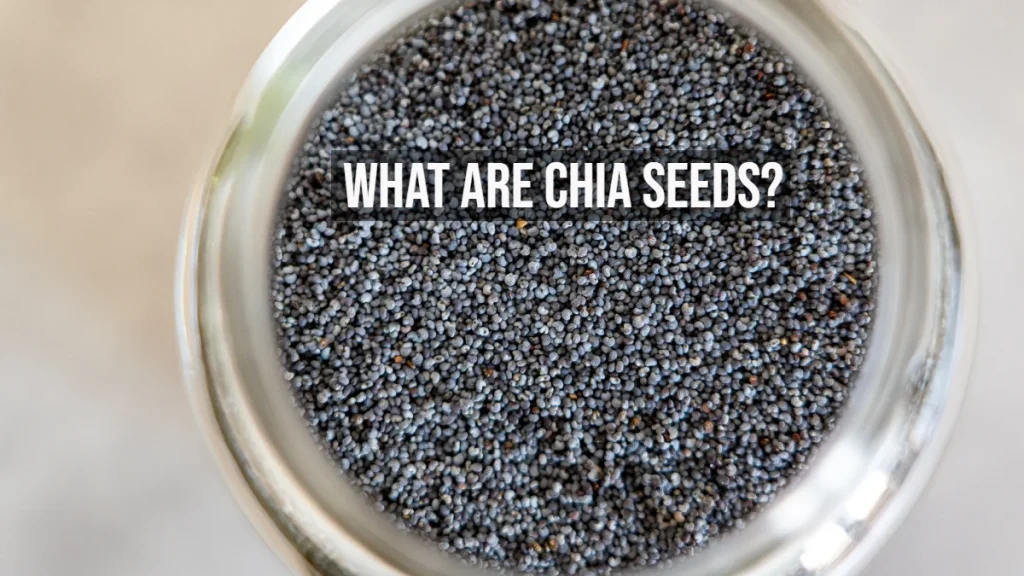
What Are Chia Seeds?
Chia seeds come from Salvia hispanica, a flowering plant in the mint family. They are tiny and white, grey, brown or black. When soaked, they form a gel.
Benefits of Chia Seeds: Nutrition Facts per Ounce
The table uses one USDA entry: dried chia seeds. The ounce column is calculated from the per 100 g values. Percent Daily Value (%DV) uses current FDA reference amounts.

| Nutrient | Per 100 g | Per ounce (28.35 g) | %DV (ounce) |
|---|---|---|---|
| Calories | 486 | 138 | n/a |
| Protein | 16.5 g | 4.7 g | n/a |
| Total fat | 30.7 g | 8.7 g | 11% |
| Carbohydrate | 42.1 g | 11.9 g | 4% |
| Fibre | 34.4 g | 9.8 g | 35% |
| Calcium | about 635 mg | 180 mg | 14% |
| Iron | about 7.8 mg | 2.2 mg | 12% |
| Magnesium | about 335 mg | 95 mg | 23% |
| Potassium | about 423 mg | 120 mg | 2% |
Most of the fat is polyunsaturated, with about 1 g of saturated fat per ounce. In short, an ounce is a compact source of fibre, calcium and magnesium.
Why Chia Seed Numbers Differ Between Sources
- Tablespoons vs ounces. Harvard’s Nutrition Source uses two tablespoons as one ounce (28 g). That gives about 14 g per tablespoon. Pages that quote one tablespoon are showing half the ounce values.
- Rounding. Harvard lists 140 calories, 4 g of protein and 11 g of fibre per ounce. USDA data work out to 138 calories, 4.7 g and 9.8 g. Both describe the same seeds.
- Net carbs. Some pages list about 2 g of net carbohydrate. That is simply total carbohydrate minus fibre. It is a calculation, not a USDA value.
- Dry or soaked. Soaked chia holds extra water, so a spoonful of gel has far fewer nutrients than a spoonful of dry seeds. Always check which one a source means.
What the Evidence Says About the Benefits of Chia Seeds
Harvard’s Nutrition Source lists claims for chia seeds, including lower appetite, lower triglycerides and better blood sugar in type 2 diabetes. It says human reviews and trials have not shown a specific benefit on cardiovascular risk factors. Animal studies suggest possible effects. Meta-analyses of randomised trials exist, but I could not review their findings here.
| Claim | Where it stands | What to know |
|---|---|---|
| Chia seeds are high in fibre | Supported | 9.8 g per ounce, or 35% of the Daily Value. |
| Chia seeds supply calcium and magnesium | Supported | 14% and 23% of the Daily Value per ounce. |
| Chia seeds cause weight loss | Not established | Appetite effects are claimed, not shown in trials. Portion size and the rest of the diet decide the total. |
| Chia seeds act like insulin or prevent diabetes | Not supported | They are a food, not a drug. Follow your care plan. |
| Chia seeds lower blood pressure or cholesterol | Not established | Harvard reports no specific benefit shown in human trials. |
| Chia seeds prevent osteoporosis or arthritis | Not supported | They add some calcium, but no trial shows disease prevention. |
| Chia seeds improve sleep through tryptophan | Not supported | No evidence from eating chia seeds. |
| Chia seeds promote tumour growth or fight cancer | Not supported | No reliable evidence either way. |
| Chia seeds are a superfood | Not a defined term | They are a nutritious seed, like others. |
Chia Seed Safety: Dry Seeds, Medication and Allergy
Dry seeds. Harvard reports a case where seeds expanded in the oesophagus and caused a blockage. It advises not to eat dry chia seeds by themselves. Soak them first or mix them into moist food. For gel, it suggests about a quarter cup of seeds per cup of liquid.
Swallowing difficulty. People with swallowing problems or digestive conditions should take extra care and ask their clinician first.
Medication. Never stop or change prescribed medicine for diabetes, blood pressure or blood clotting because of a food. If you take these medicines, tell your care team or pharmacist before you add large amounts of chia seeds or chia oil.
Allergy. Any seed can cause an allergic reaction. Seek urgent care for swelling, wheeze or trouble breathing after eating one.
Fibre load. An ounce holds 35% of the fibre Daily Value. Adding that suddenly can cause gas or bloating in some people, so start small.
Pregnancy and breastfeeding. Ask your clinician before using chia supplements or oil in large amounts.
Benefits of Chia Seeds FAQ
Chia seeds come from Salvia hispanica, a plant in the mint family. They are tiny seeds that form a gel when soaked.
About 486 calories per 100 g, or about 138 per ounce (28 g, roughly two tablespoons), based on USDA data for dried seeds.
About 9.8 g per ounce, which is 35% of the 28 g Daily Value. That makes them one of the more fibre-dense foods per spoonful.
Not shown. Claims about appetite are common, but no single food causes weight loss. A registered dietitian can tailor advice to you.
Claims exist, but chia seeds do not act like insulin and are not a treatment for diabetes. Follow your care plan and ask your care team before changing how you eat.
Harvard reports that human reviews and trials have not shown a specific benefit on cardiovascular risk factors. Animal studies suggest possible effects only.
Harvard advises against eating dry chia seeds by themselves. A case report described seeds expanding in the oesophagus and causing a blockage. Soak them or mix them into moist food.
Possibly. Large amounts of fibre can cause gas or bloating, and any seed can trigger an allergy. Check with your clinician if you take regular medicine.
Harvard suggests about a quarter cup of seeds per cup of liquid to make a gel. Let it sit until thick, then add it to food or drinks.
Related Reading
- Balance protein, carbs and fats
- Heart disease prevention: 10 preventive measures
- How to read nutrition labels
- Sweet potato nutrition facts
Sources
- USDA FoodData Central, SR Legacy, chia seeds dried, FDC 170554. Values read from a mirror: getfoodfacts.com
- Harvard T.H. Chan School of Public Health: Chia Seeds, The Nutrition Source
- FDA: Daily Value on the Nutrition and Supplement Facts Labels
This article is for general information and is not medical or dietetic advice. Talk to your doctor or a registered dietitian about your own needs, especially if you manage diabetes, blood pressure, blood clotting, swallowing difficulty or pregnancy.
Last reviewed and rewritten October 2026.

