
Clean label foods in 2026 are no longer just a marketing buzzword-they’re a shortcut for choosing products with simple, recognizable ingredients and fewer artificial additives. But the term is still unregulated and often misused, so understanding what “clean label” really means is essential for metabolic health optimization.
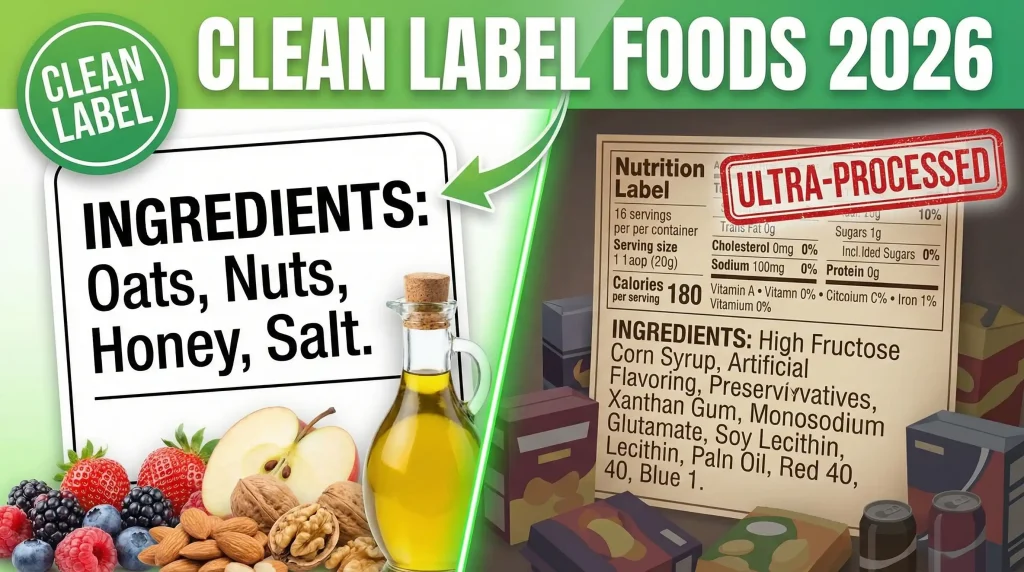
This guide breaks down the real meaning of clean label foods, how they intersect with ultra-processed foods, what to watch out for on packaging, and how to build a 100% clean label pantry that supports metabolic health, gut integrity, and lower inflammation.
What Does “Clean Label” Mean in 2026?
There is still no official legal definition of “clean label,” but industry groups and food scientists broadly agree on core principles.
Core Characteristics of Clean Label Foods
- Short, simple ingredient lists using kitchen-like ingredients consumers recognize.
- No artificial additives such as synthetic colors, flavors, or preservatives.
- Minimal processing rather than heavy extrusion, refining, or restructuring.
- Transparent sourcing and processing with clear labeling and fewer hidden additives.
- Increasingly, alignment with sustainability and ethics (responsible sourcing, better packaging).
In other words, a clean label product should look like something you could make at home—with ingredients you’d actually keep in your kitchen.
How Clean Label Evolved to 2026
The clean label movement began more than 15 years ago as a push to remove obvious artificial ingredients and highlight “natural” or organic foods. Over time, it has expanded into a broader expectation of transparency, better nutrition, and lower processing.
Key shifts by 2026:
- From “no artificial flavors or colors” to short, recognizable ingredient lists.
- From focusing only on additives to including processing methods and environmental impact.
- From a niche marketing term to a baseline expectation across categories like beverages, snacks, and plant-based foods.
Consumers now view clean label as part of a larger value system: health, trust, sustainability, and authenticity.
Clean Label vs “Natural” vs Organic vs Ultra-Processed
These terms are often confused, but they’re not the same.
| Term | What It Really Means | Limitations |
|---|---|---|
| Clean label | Short, familiar ingredients, minimal artificial additives. | No legal definition; can still be ultra-processed. |
| “Natural” | Loosely implies minimal artificial ingredients. | Largely marketing; not tightly regulated in many regions. |
| Organic | Grown/produced without most synthetic pesticides or GMOs. | Can still be high in sugar, refined flours, or additives. |
| Ultra-processed (UPF) | Industrial formulations with additives, emulsifiers, and heavy processing. | Some products hide UPF status behind “clean” or “natural” labels. |
A product can be:
- Organic but not clean label (e.g., organic cookies with long ingredient lists).
- Clean label but still ultra-processed if ingredients are cleverly reformulated to hide additives within “extracts” or processed components.
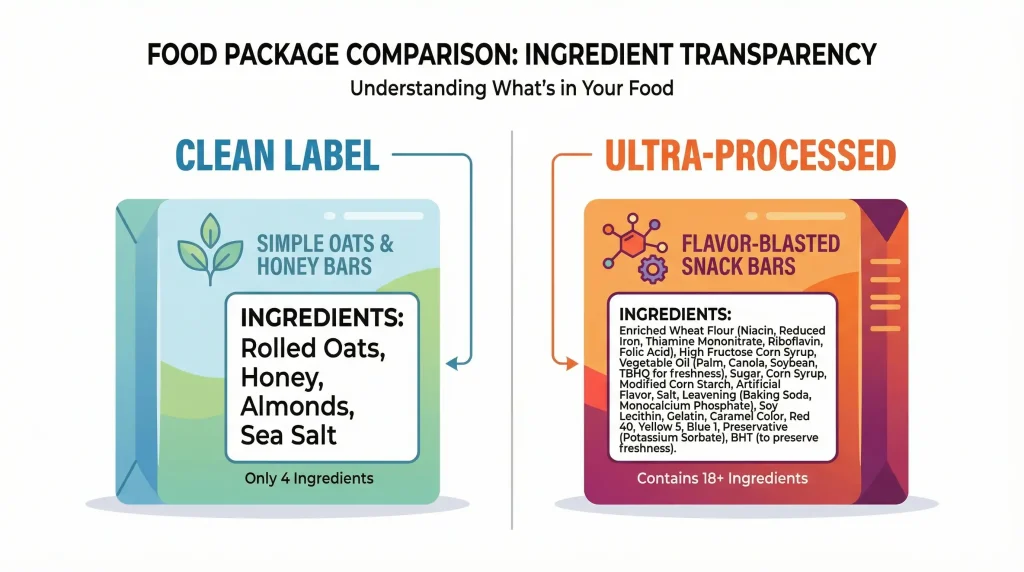
For metabolic health, the goal is clean label AND minimally processed, not just a nice-sounding claim.
Why Clean Label Foods Matter for Metabolic Health
Clean label eating supports metabolic health optimization through multiple mechanisms: lower inflammation, more nutrient density, and improved gut function.
1. Reduced Exposure to Questionable Additives
Clean label products aim to eliminate or reduce:
- Artificial colors and flavors.
- Synthetic preservatives (e.g., BHA, BHT).
- Emulsifiers implicated in gut barrier disruption (e.g., certain gums and polysorbates).
These additives are linked in emerging research to gut dysbiosis, behavioral changes in children, and potential long‑term metabolic risks.
2. More Whole, Nutrient-Dense Ingredients
Short ingredient lists tend to feature whole or minimally processed inputs: whole grains, nuts, legumes, real spices, and natural sweeteners. This typically means:
- Higher fiber intake → better glycemic control and GLP‑1 response.
- More vitamins, minerals, and polyphenols → improved mitochondrial and immune function.
3. Better Alignment with Non-UPF Eating
Clean label overlaps with the push away from ultra-processed foods, which are associated with higher rates of obesity, diabetes, and cardiovascular disease. Products built around real food ingredients and gentle processing tend to have a lower ultra-processed score, making them more supportive of long‑term metabolic health.
The Dark Side: When “Clean Label” Is Just Marketing
Because regulators have not formally defined “clean label,” brands often stretch the term to make highly processed products appear healthier than they are.
Common Clean Label Traps
- Hidden additives in “extracts”: Additives reformulated as “plant extract,” “yeast extract,” or “flavor concentrate” to avoid scaring consumers.
- Long ingredient lists made to look short: Splitting similar sweeteners under different names (e.g., cane sugar, rice syrup, fruit juice concentrate).
- “No artificial preservatives” but heavy processing: Using high heat, ultra‑refining, or novel processing to create long shelf life while still claiming “clean.”
- Clean label on UPF snacks: Protein bars, “keto cookies,” and “natural chips” that remain ultra-processed despite nicer labels.
Red Flags to Watch For
- More than 5-7 ingredients in a simple product like a snack or drink.
- Multiple forms of sugar listed separately.
- Vague terms like “natural flavors,” “proprietary blend,” “plant-based flavor system.”
- Unfamiliar or science‑sounding ingredients that you wouldn’t use at home.
How to Read a Clean Label in 10 Seconds
Use this quick framework when picking products in 2026.
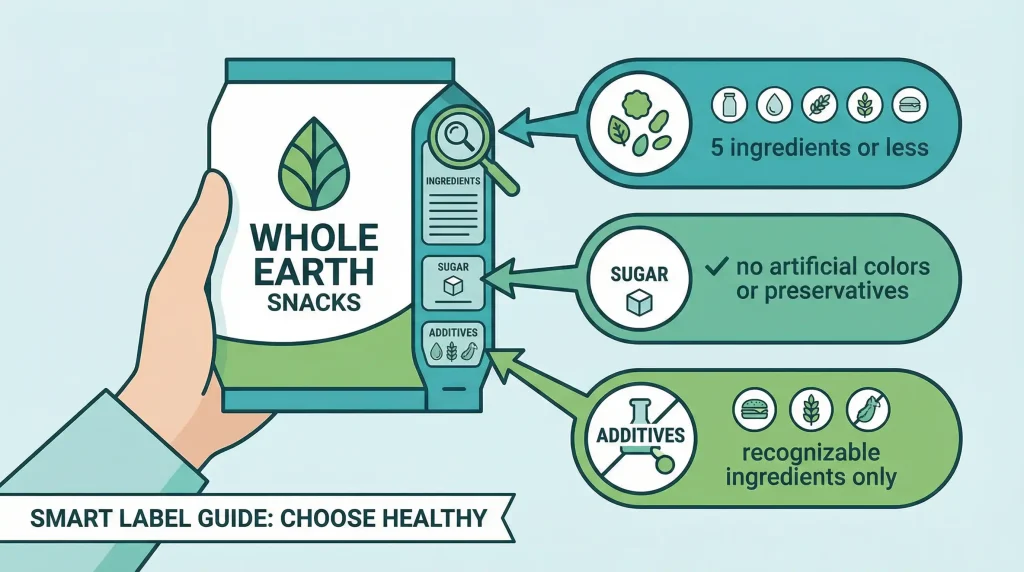
- Count the ingredients:
- Scan for artificial additives:
- Check the first 3 ingredients:
- Look at the processing signals:
- Assess sugar and fiber:
If it fails more than one of these tests, it’s probably clean label in name only.
Clean Label Foods and Ultra-Processed Foods: Where They Overlap
Regulators in the U.S. and Europe are looking more closely at ultra‑processed foods, with plans to formally define “UPF” and potentially allow front‑of‑pack labeling for it. In this context, clean label is increasingly used as a way for manufacturers to distance products from the ultra‑processed category.
However:
- A clean label snack can still qualify as ultra‑processed under NOVA if it uses isolates, reconstituted ingredients, or industrial processing steps.
- The safest bets are products that are both clean label AND obviously simple, like plain yogurt, nut butters with only nuts and salt, or minimally processed grains.
For metabolic health optimization, treat clean label as a starting filter, not the final decision.
Building a Clean Label Pantry in 2026
Here is a practical way to structure a primarily clean label, metabolically friendly kitchen.
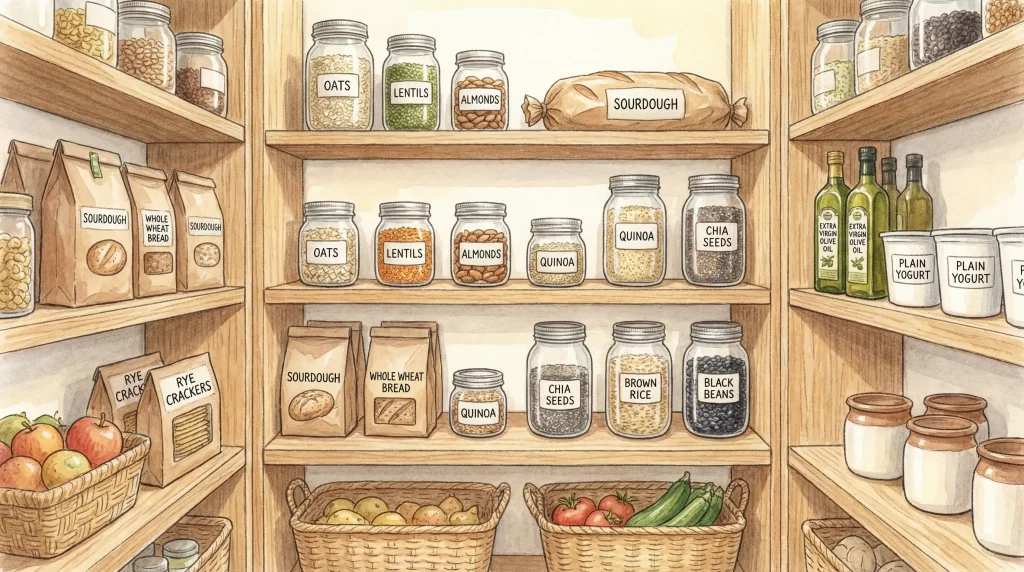
Staple Categories to Prioritize
- Proteins: Eggs, plain Greek yogurt, paneer, unseasoned meats, lentils, chickpeas.
- Fats: Extra virgin olive oil, avocado oil, ghee, butter, whole nuts and seeds.
- Carbohydrates: Oats, unflavored muesli, rice, millets, potatoes, minimally processed breads with short ingredient lists.
- Snacks: Nuts, seeds, roasted chana, 1–2 ingredient nut butters, dark chocolate with few ingredients.
- Beverages: Black coffee, tea, sparkling water, simple electrolyte mixes without artificial colors.
Example: Clean Label vs Fake Clean Label
- Peanut butter A: Peanuts, salt → Clean label & minimally processed.
- Peanut butter B: Peanuts, sugar, vegetable oil, “natural flavor,” stabilizer → Marketed as “natural,” not truly clean label or metabolically friendly.
7-Day Clean Label Upgrade Plan
Use this as a companion to your metabolic health optimization journey.
Days-1-2: Audit & Awareness
- Empty your pantry and fridge.
- Tag each product as Whole / Minimally Processed / Ultra‑Processed based on ingredients and processing cues.
- Circle anything with long ingredient lists, artificial additives, or multiple sugars.
Days-3-5: Replace Key Staples
- Swap flavored yogurt → plain yogurt + fruit.
- Swap instant noodles → whole-grain pasta or rice with homemade sauce.
- Swap “healthy” snack bars → nuts, seeds, or home‑baked oat bars with 5–6 ingredients.
Days-6-7: Rebuild Your Shopping Routine
- Create a go‑to clean label shopping list with 20–25 products that meet your standards.
- Start shopping the perimeter of the store and limit time in processed aisles.
Within a week, most people find their overall ultra‑processed intake falls sharply, even if they’re not counting calories.
Clean Label Foods Explained: How to Read Food Labels and Avoid Ultra‑Processed Traps (2026)
FAQ: Clean Label Foods (2026)
No. There is no universal legal definition or certification for clean label in 2026. It is a marketing and product‑development philosophy, so you must always read the ingredients yourself.
Not necessarily. A product can be clean label but still high in sugar, refined carbs, or low in fiber, which can harm metabolic health over time. Clean label is about ingredients, not overall nutrition profile.
Clean label has expanded from “no artificial ingredients” to include simple lists, minimal processing, ethical sourcing, and sustainability. Consumers now expect transparency about how foods are made, not just what is in them.
Yes. A bar or snack may avoid obvious additives but still use isolates, restructured ingredients, and industrial processing, qualifying as ultra‑processed under systems like NOVA. That’s why choosing minimally processed foods remains key.
Begin with 1–2 swaps per category: plain yogurt instead of flavored, real nut butter instead of sweetened spread, and simple breads or grains instead of instant mixes. Build from there as your pantry transitions.
Resources:
- https://www.foodchainid.com/resources/clean-label-trends-a-global-perspective/
- https://www.ift.org/news-and-publications/blog/2018/november/what-is-clean-label
- https://en.wikipedia.org/wiki/Clean_label
- https://foodsafetyworks.com/insights/clean-labels/
- https://tandobeverage.com/clean-label-beverage-trend/
- https://thinkingforks.com/natural-and-clean-labels-safeguarding-consumers-and-improving-health-standards/


