

Quick answer: both can, but not equally. Pregabalin (Lyrica) carries a clearly higher risk than gabapentin (Neurontin), and the two are otherwise prescribed almost interchangeably for nerve pain which makes this one of the few situations where the weight question has a genuinely useful answer. Some of the gain is fluid rather than fat, and the mechanism behind that fluid is not what most people assume.
As with any prescribed medication: do not stop or reduce either drug on your own. Stopping gabapentinoids abruptly can cause withdrawal effects, and in epilepsy it risks losing seizure control.
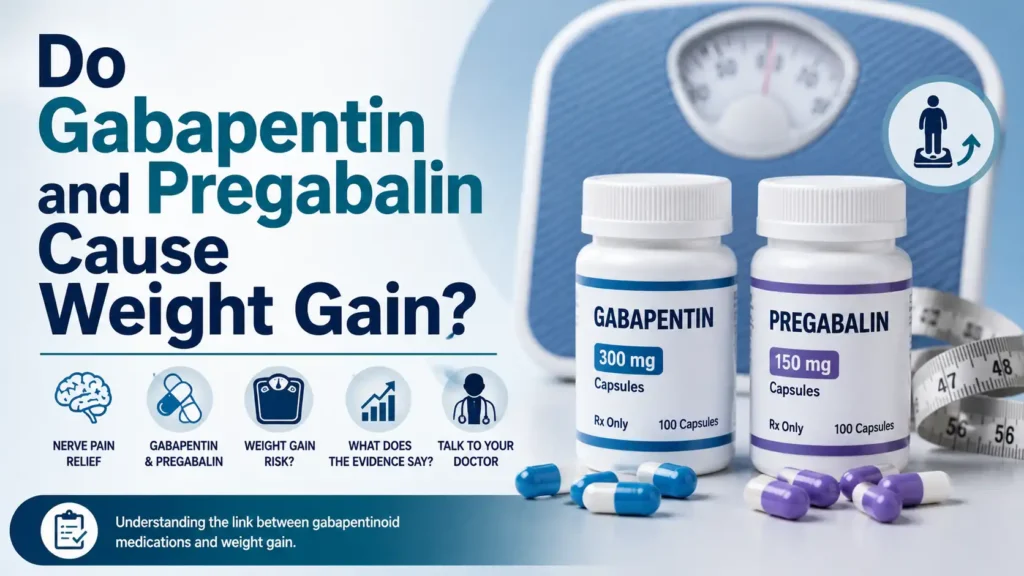
The Two Are Not Interchangeable on Weight
Gabapentin and pregabalin work the same way both bind the alpha-2-delta subunit of voltage-gated calcium channels and are often swapped for one another. Their weight and swelling profiles are not the same.
| Gabapentin | Pregabalin | |
|---|---|---|
| Weight increase reported in trials | About 2–3%, versus 2% on placebo | Gain of 7% or more of body weight in about 9% of patients, versus 2% on placebo |
| Peripheral swelling | Around 8%, versus 2% on placebo | Higher; reported at 10% or above across studies |
| Overall | Recognised but uncommon | Recognised, more frequent, and dose-dependent |
A randomised phase 2 trial in painful diabetic neuropathy compared the two directly and found the same pattern. Peripheral swelling occurred in 17% on pregabalin against 4% on placebo. A gain of 7% or more of body weight occurred in 15% on pregabalin against 3% on placebo. Mean weight change was +2.65 kg on pregabalin against -0.55 kg on placebo, with the gabapentin-based arms falling in between and rising with dose.
If weight is a significant concern for you and both drugs are clinically appropriate, this difference is worth raising with your prescriber. That is a conversation, not a reason to switch or stop by yourself.
Three Findings From the Pregabalin Trial Data
Pregabalin’s controlled-trial data answers three questions people actually ask, and the answers are more useful than the headline percentage.
- It is not just fluid. Weight gain in those trials was not limited to patients who had swelling. So it cannot be dismissed as water weight, and it cannot be assumed to be fat either for many people it is both.
- You cannot predict it from body size. The gain was not associated with baseline BMI, sex or age. Being slim or being older does not protect you.
- Dose and duration are what predict it. These were the two factors that did track with weight gain. That makes the lowest effective dose the single most relevant lever, and it makes a long course different from a short one.
In diabetic patients specifically, pregabalin users gained an average of 1.6 kg against 0.3 kg on placebo, with a very wide individual range in both groups. In a cohort followed for at least two years the average was larger, which fits the dose-and-duration pattern.
The Swelling Is Not a Kidney Problem
Peripheral edema swelling of the ankles, feet and sometimes hands is the most visible weight-related effect of these drugs, and it worries people because swelling is usually associated with heart or kidney trouble.
The mechanism here is different. Binding at the calcium channels causes small arteries to dilate without a matching dilation of the small veins. Pressure builds in the capillary bed, and fluid moves out into the surrounding tissue. It is a plumbing effect, not a sign that the kidneys have stopped clearing fluid.
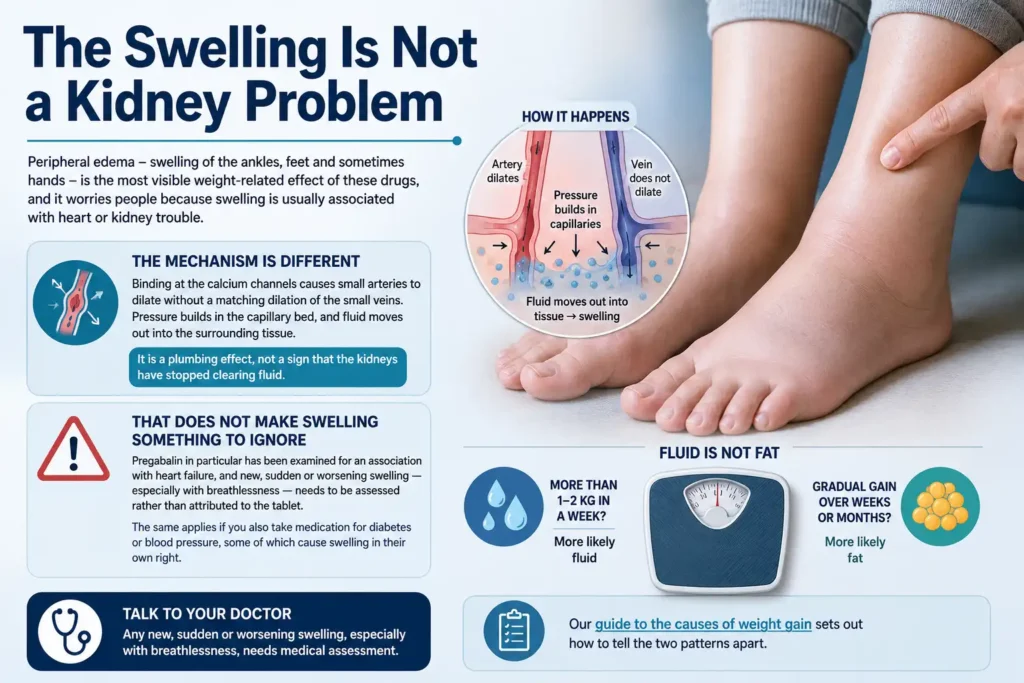
That does not make swelling something to ignore. Pregabalin in particular has been examined for an association with heart failure, and new, sudden or worsening swelling especially with breathlessness needs to be assessed rather than attributed to the tablet. The same applies if you also take medication for diabetes or blood pressure, some of which cause swelling in their own right.
Fluid also behaves differently from fat on the scale. A rise of more than a kilogram or two within a week is more likely fluid than fat gain. our guide to the causes of weight gain sets out how to tell the two patterns apart.
Why Weight Changes Beyond the Swelling
- Increased appetite. Reported by many users, though the exact mechanism is not established.
- Sedation. Drowsiness and dizziness are among the most common effects of both drugs, and both reduce daily activity. Somnolence and dizziness are also the most frequent reasons people stop these medications.
- Pain relief changing behaviour. This one cuts both ways. If treatment works, people often move more. If sedation dominates, they move less.
- Other medications. Gabapentinoids are frequently prescribed alongside drugs that affect weight in their own right, including some diabetes medications, antidepressants and corticosteroids. Attributing everything to one tablet is often wrong.
A Harder Question Worth Asking
Independent drug-review analysis of the randomised trials in neuropathic pain has made an uncomfortable point: across the published trials, only a small minority showed an average pain improvement over placebo large enough to be clinically meaningful for an individual, while adverse effects including weight gain and swelling rose consistently with dose.
That is not a reason to abandon a medication that is helping you. Averages across trials say nothing about whether it works for you specifically, and nerve pain is genuinely difficult to treat. But it does mean that if you are on a high dose, gaining weight, and not sure the drug is doing much, the balance is worth reviewing because the side effects scale with dose more reliably than the benefit does.
Safety Points That Matter More Than Weight
- Never stop abruptly. Withdrawal effects can include insomnia, anxiety, nausea, sweating and pain, and in epilepsy there is a risk of losing seizure control. Tapering is done with your prescriber.
- Combination with opioids carries a serious breathing risk. Gabapentinoids taken with opioids increase the risk of severe respiratory depression. Make sure every prescriber knows everything you take.
- Kidney function affects dosing. Both drugs are cleared by the kidneys, and doses are reduced when kidney function is impaired.
- Mood changes. As with other antiseizure medicines, new or worsening low mood or thoughts of self-harm should be reported promptly. In the US, call or text 988.
The shocking hidden side effect of gabapentin that no one knows!
Frequently Asked Questions
It can, but it is uncommon. Weight increase was reported in roughly 2 to 3% of patients in trials, against about 2% on placebo. Peripheral swelling is more common, at around 8% versus 2% on placebo, and that swelling is fluid rather than fat.
The evidence points that way. In pregabalin’s controlled trials, about 9% of patients gained 7% or more of their body weight against 2% on placebo. A randomised trial comparing the two directly in diabetic nerve pain found more swelling and more weight gain on pregabalin. If weight matters to you and both drugs are appropriate for your condition, it is worth raising with your prescriber.
No. In pregabalin’s controlled trials, weight gain was not limited to patients who had swelling, so it cannot all be explained by fluid. For many people it is a mixture of fluid and fat, and a rise of more than a kilogram or two within a single week is more likely to be fluid.
These drugs dilate small arteries without a matching dilation of the small veins, which raises pressure in the capillary bed and pushes fluid into the surrounding tissue. It is a circulatory effect rather than a sign of kidney failure. Even so, new, sudden or worsening swelling, particularly with breathlessness, should be assessed rather than assumed to be the medication.
Not from your body size. In the trial data, weight gain was not associated with baseline BMI, sex or age. The two factors that did track with it were dose and duration of treatment, which makes the lowest effective dose the most useful lever available.
Not on your own. Stopping gabapentinoids abruptly can cause withdrawal effects including insomnia, anxiety, nausea, sweating and pain, and in epilepsy it risks losing seizure control. Report the weight change to your prescriber, who can look at dose, at switching, or at whether something else is responsible.
Sources
- Calkins A, Shurman J, Jaros M, et al. Peripheral edema and weight gain in adult patients with painful diabetic peripheral neuropathy receiving gabapentin enacarbil or pregabalin: randomised phase 2 trial. Neurology, 2014.
- Therapeutics Letter – Gabapentin and pregabalin: dose-response in neuropathic pain.
- MedlinePlus – Gabapentin
- MedlinePlus – Pregabalin
- Ho JM, Tricco AC, Perrier L, et al. Risk of heart failure and edema associated with the use of pregabalin: a systematic review. Systematic Reviews, 2013.
Related reading: Weight Gain Guide: causes, medications and when to see a doctor | Does prednisone cause weight gain? | Does mirtazapine cause weight gain?
Written and fact-checked by the HealthCoachJP editorial team. No clinician has reviewed this article. It is general information about prescription medicines, not medical advice and not a dosing guide. Never start, stop or change a prescribed medication on your own. Follow the instructions you were given and read the patient information leaflet supplied with your medication.
Last updated: August 2026. See our sourcing policy.