
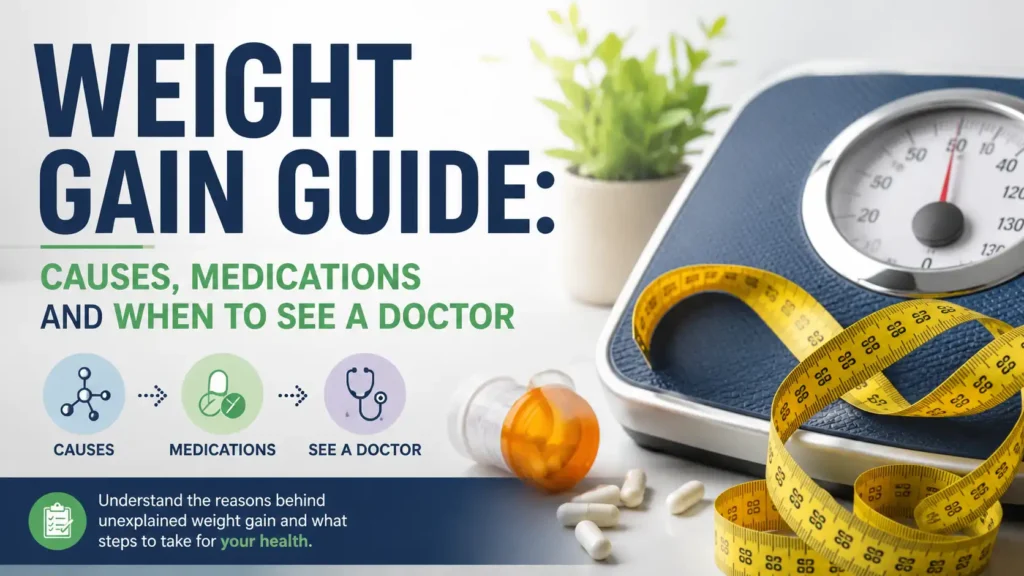
Weight gain is a symptom, not a diagnosis. It can be a medication side effect, a hormonal or metabolic problem, a consequence of poor sleep or chronic stress, a normal part of recovery from illness, or simply an intended training outcome. Those causes have completely different implications, and treating them the same way is why so much weight-gain advice fails. This guide separates them.
Unintentional Weight Gain: When to See a Doctor
Gradual weight change over years usually reflects lifestyle and ageing. Weight gain that is rapid, unexplained or accompanied by other symptoms is a different matter and warrants medical assessment rather than a diet.
Book an appointment if weight gain comes with any of the following:
- Rapid gain over days or weeks rather than months
- Swelling in the legs, ankles or abdomen, which can indicate fluid retention rather than fat
- Persistent fatigue, cold intolerance, hair thinning or constipation, a common thyroid picture
- Irregular periods, acne or excess hair growth, which may point toward PCOS
- Weight concentrated in the face and trunk with thinning limbs and easy bruising
- Breathlessness, or gain that started shortly after a new prescription
None of these confirm a diagnosis on their own. They are the pattern that tells you a clinician, not a meal plan, is the right next step. If you have heart failure, a rapid rise in weight has a specific and urgent meaning see the beta blocker guide for the red flags.
Medication-Related Weight Gain
A number of widely prescribed drugs list weight change as a recognised effect, including several antidepressants, antipsychotics, corticosteroids, gabapentinoids, beta blockers, insulin and certain hormonal contraceptives.
Four different mechanisms, four different responses
Most articles list the drugs and stop there. The mechanism matters more than the drug name, because it determines what the gain looks like, how fast it appears, and what is worth raising with the prescriber.
| Mechanism | Commonly involved | What it looks like |
|---|---|---|
| Increased appetite | Mirtazapine, several antipsychotics, corticosteroids | Noticeable hunger; gain builds steadily over weeks to months |
| Fluid retention | Corticosteroids, gabapentin and pregabalin, some blood pressure drugs | Fast gain over days; swelling at the ankles, tighter rings and shoes |
| Lower energy expenditure | Beta blockers, some antipsychotics | Slow drift upward; reduced exercise tolerance |
| Appetite returning to normal | Antidepressants, insulin, thyroid treatment, treatment of an illness that suppressed appetite | Weight moves back toward its previous baseline as eating normalises |
The fourth row is the one most often misread. If an untreated illness was suppressing appetite, effective treatment restores it, and the weight that returns is recovery rather than a side effect. That distinction changes whether the drug is the problem at all.
Guides by drug class
Mental health medication
- Does Mirtazapine Cause Weight Gain? – the highest-risk antidepressant, and why its average is misleading
- Do Antipsychotics Cause Weight Gain? – ranked drug by drug, and why published figures disagree
- Does Zoloft Cause Weight Gain? – what SSRI trial data actually shows
- Does Trazodone Cause Weight Gain? – appetite effects and how often they occur
Long-term condition medication
- Does Prednisone Cause Weight Gain? – three processes on three timelines, and only two are fat
- Does Insulin Cause Weight Gain? – diabetes drugs compared, and why some of it is recovery
- Do Beta Blockers Cause Weight Gain? – which ones do, and the one class that works on energy rather than appetite
- Do Gabapentin and Pregabalin Cause Weight Gain? – the two are not interchangeable on weight
- Does Birth Control Cause Weight Gain? – method by method, and the one that is genuinely different
Supplements
- Does Creatine Cause Weight Gain? – intracellular water, not fat
- Does Collagen Make You Gain Weight? – why the claim does not hold up
Important: never stop or adjust a prescribed medication because of weight change. Raise it with the prescriber. Alternatives within the same drug class often have different metabolic profiles, and switching is usually a better option than discontinuing.
Hormonal and Metabolic Causes
Several endocrine conditions cause weight gain that does not respond normally to diet and exercise, which is precisely why they are so often missed and so often blamed on willpower.
- Hypothyroidism – an underactive thyroid lowers resting metabolic rate and causes fluid retention. Diagnosed with a simple TSH blood test.
- PCOS – insulin resistance is central to the condition, and weight gain around the midsection is common.
- Cushing’s syndrome – rare, caused by prolonged cortisol excess, and produces a characteristic central fat distribution.
- Insulin resistance and prediabetes – makes fat storage easier and fat mobilisation harder.
- Perimenopause – declining oestrogen shifts fat distribution toward the abdomen independently of total weight.
Further reading: how metabolism actually affects body weight and the science of fat storage and mobilisation.
Sleep, Stress and Cortisol
Two of the most powerful and most overlooked drivers of weight change are not dietary at all.
Short sleep raises ghrelin and lowers leptin, the two hormones that govern hunger and satiety, which increases appetite the following day without any conscious decision being involved. Chronic stress keeps cortisol elevated, which promotes visceral fat storage specifically and increases preference for energy-dense food.
When Gaining Weight Is the Goal
Some people need to gain weight: recovery from illness or surgery, being clinically underweight, or building muscle for athletic performance. These are legitimate goals with different requirements.
For muscle gain, the levers are a modest energy surplus, adequate protein and progressive resistance training. Training stimulus matters more than the size of the surplus a large surplus mostly adds fat, not muscle. See the Exercise and Fitness Guide and Nutrition Facts Guide for the components.
Occasionally a medication is chosen partly because it increases appetite mirtazapine is sometimes prescribed this way for people who are underweight or not eating because of depression. If that describes you, the weight change may be part of the intended effect rather than an unwanted one.
If you are underweight, that should be worked through with a doctor or registered dietitian rather than from an article. Being underweight has its own risks, including reduced bone density, impaired immune function and fertility effects, and unintentional weight loss can itself be a symptom of an undiagnosed condition. Deliberately gaining weight beyond a healthy range is not a health goal and this site does not present it as one.
Measurement, Body Image and What the Scale Does Not Tell You
BMI and height-weight charts are population screening tools, not individual diagnoses. They do not distinguish muscle from fat, they say nothing about where fat is stored, and they perform poorly for athletes, older adults and several ethnic groups. Treat them as a rough reference point only see the height and weight chart for women for what those ranges do and do not mean.
Public commentary on body weight, particularly when directed at women, has documented effects on body image and on disordered eating risk. A number on a chart is not a verdict on health, and a change in that number is a starting point for a question, not a conclusion.
If Food and Weight Feel Out of Control
Preoccupation with weight, secrecy around eating, compensatory behaviour after meals, or distress that dominates your day are signs worth taking seriously. Eating disorders occur at every body size, and weight is a poor indicator of whether someone has one.
The National Alliance for Eating Disorders operates a helpline staffed by licensed clinicians: 1-866-662-1235. If you are in crisis in the US, call or text 988.
What Drugs Can Cause Weight Gain?
Frequently Asked Questions
The most common explanations are fluid retention, a new medication, thyroid dysfunction, reduced activity that went unnoticed, or gradual portion increases that tracking would reveal. If the gain is rapid or comes with swelling or fatigue, get it assessed rather than assuming a dietary cause.
Several antidepressants, antipsychotics, corticosteroids, gabapentinoids, beta blockers, insulin and sulfonylureas, and certain hormonal contraceptives are all recognised. The class matters less than the mechanism: appetite increase, fluid retention, lower energy expenditure, or an appetite that is simply returning to normal as an illness is treated.
Fluid tends to appear quickly, over days rather than months, and often shows as swelling at the ankles and lower legs, tighter rings or shoes, and pitting when you press the skin. Rapid gain with swelling should be checked by a clinician rather than dieted away.
Chronic stress contributes through several routes: cortisol-driven visceral fat storage, disrupted sleep, altered food preference and reduced activity. It rarely acts alone, but it reliably makes weight harder to manage.
No. Creatine draws water into muscle cells, which shows up on the scale within the first week or two. That is intracellular water, not fat, and it is not the same as bloating.
No, not without speaking to your prescriber. Stopping abruptly carries real risks that vary by drug, including relapse, withdrawal effects and, with some medications, serious medical emergencies. Alternatives within the same class often have very different weight profiles, and switching is generally the better route.
Sources
- National Institute of Diabetes and Digestive and Kidney Diseases – Weight Management
- American Thyroid Association – Hypothyroidism
- Centers for Disease Control and Prevention – Healthy Weight
- National Institute of Mental Health – Eating Disorders
Reviewed by: the HealthCoachJP Editorial Team | Last updated: August 2026 | Related: Weight Loss Guide | Mental Health Guide
Medical disclaimer: This guide is for informational and educational purposes only and does not constitute medical advice, diagnosis or treatment. Unexplained weight change should be assessed by a qualified clinician. Never start, stop or change a prescribed medication based on information found here. See our Fact-Checking Policy.