

Quick answer: insulin is associated with weight gain, and so are sulfonylureas and thiazolidinediones. Metformin, GLP-1 receptor agonists and SGLT2 inhibitors go the other way. The spread between diabetes drug classes is the widest of any medication group the difference between the two ends runs to ten kilograms or more.
But the most useful thing to understand about insulin and weight is not on that list, and almost no article leads with it.
Some of “Insulin Weight Gain” Is Weight You Were Losing Because You Were Ill
When blood glucose is high and uncontrolled, the kidneys cannot reabsorb it all and glucose spills into the urine. Glucose is calories. Those calories leave the body instead of being used or stored.
This is why unexplained weight loss is one of the classic presenting symptoms of undiagnosed or poorly controlled diabetes. It is not a sign of health. It is the body running at a deficit because fuel is being flushed away, alongside the breakdown of fat and muscle when cells cannot access glucose.
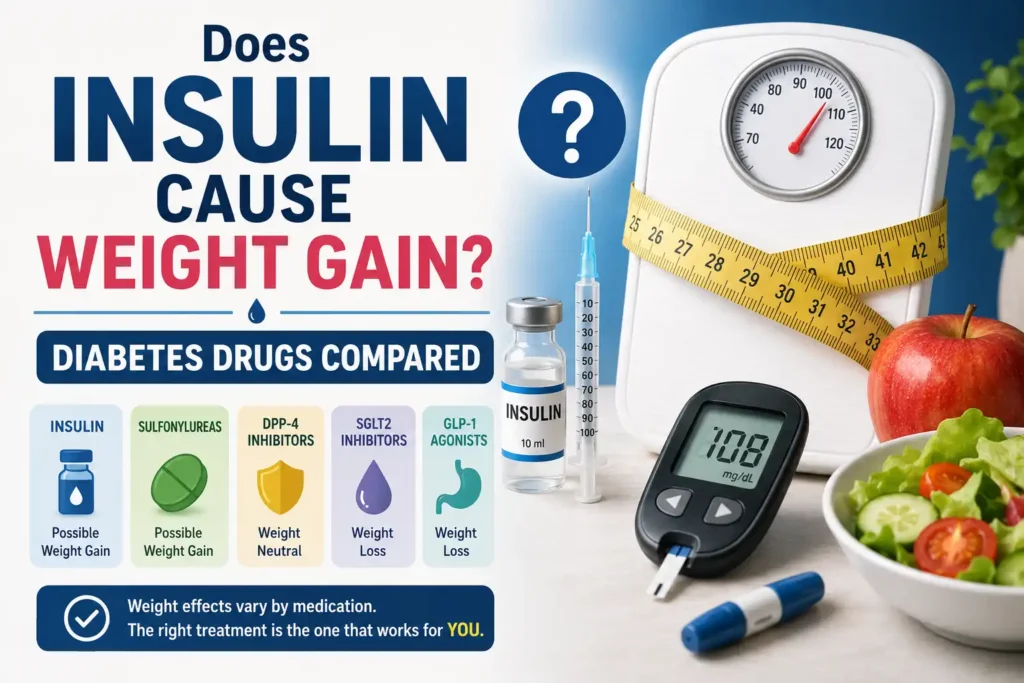
When insulin restores control, that leak stops. Calories you eat now stay in your body and get used normally. Some of the weight that returns is weight you had lost through illness, coming back a sign the treatment is working, not evidence the drug is making you fat.
That does not account for all of it. Insulin is an anabolic hormone and it does promote fat storage directly. But the distinction matters, because “my medication made me gain weight” and “my treatment stopped me wasting” call for very different responses.
The Hypoglycaemia Loop, and Why It Is Worth Reporting
The second driver is one people rarely connect to their weight.
Insulin and sulfonylureas can push blood glucose too low. Treating a hypo means eating fast-acting carbohydrate, and that is not optional. But frequent hypos mean repeated unplanned eating, and the fear of them leads to defensive snacking and eating “just in case” before bed or before exercise.
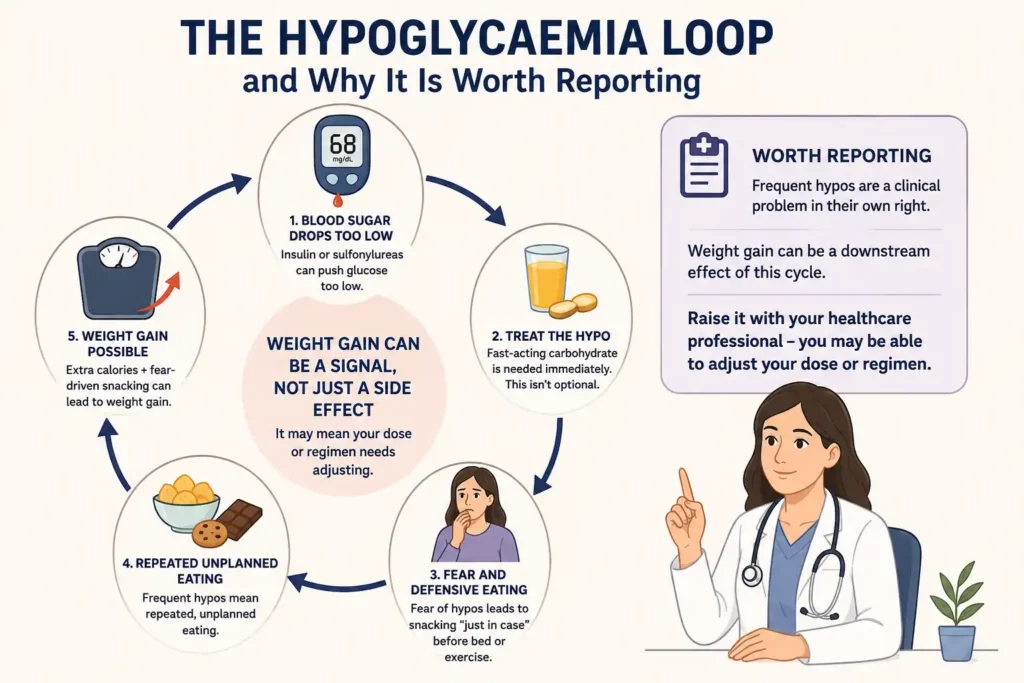
This makes weight gain a possible signal that the dose or the regimen needs adjusting, rather than an unavoidable cost of treatment. If you are having frequent hypos, that is a clinical problem in its own right and worth raising the weight is downstream of it.
Class by Class
| Class | Effect on weight |
|---|---|
| Insulin | Gain. Among the largest in this group when added to metformin |
| Sulfonylureas (gliclazide, glimepiride, glibenclamide) | Gain, alongside the highest hypoglycaemia risk of the oral options |
| Thiazolidinediones (pioglitazone) | Gain, partly fat and partly fluid retention |
| Meglitinides (repaglinide) | Gain, with hypoglycaemia risk |
| DPP-4 inhibitors (sitagliptin, linagliptin) | Broadly weight-neutral |
| Metformin | Neutral to modest loss |
| SGLT2 inhibitors (dapagliflozin, empagliflozin) | Loss |
| GLP-1 receptor agonists (semaglutide, liraglutide, dulaglutide, tirzepatide) | Loss, the largest of any class |
A systematic review in Annals of Internal Medicine found weight was reduced or maintained with metformin, DPP-4 inhibitors, GLP-1 receptor agonists and SGLT2 inhibitors, and increased with sulfonylureas, thiazolidinediones and insulin, with between-group differences reaching around 5 kg. Guideline summaries put the gain from insulin, sulfonylureas and thiazolidinediones added to metformin at roughly 1.5 to 5 kg.
At the other end, a study following 22,601 patients on metformin in routine care estimated average 24-month changes of about -5.15 kg for GLP-1 receptor agonists and -6.71 kg for SGLT2 inhibitors.
The mechanisms differ in an interesting way. SGLT2 inhibitors work by deliberately creating the glucose leak that uncontrolled diabetes causes accidentally roughly 75 g of glucose, around 300 calories, excreted in urine daily. GLP-1 receptor agonists slow stomach emptying and reduce appetite. Metformin’s effect is more modest and less well explained.
Where Current Guidance Has Moved
The American Diabetes Association’s 2026 Standards of Care are explicit about this. When insulin therapy is being intensified, metformin, SGLT2 inhibitors and GLP-1 receptor agonists should be maintained, while use of sulfonylureas, meglitinides and DPP-4 inhibitors should be limited or discontinued because they offer no additional cardiovascular, kidney, weight or liver benefit, and sulfonylureas and meglitinides increase both hypoglycaemia and weight gain.
There is also good evidence that adding a GLP-1 receptor agonist or an SGLT2 inhibitor alongside insulin can reduce the insulin dose needed and offset some of the associated weight gain.
This is worth knowing because it means there are real, guideline-backed options if weight is a problem on your current regimen which is a very different situation from “this is the price of treatment”. Cost and availability vary a great deal by country and by insurance, so what is appropriate for you is a conversation with your diabetes team.
⚠️ Never Reduce or Skip Insulin to Influence Your Weight
This needs stating directly. Taking less insulin than you need in order to affect your weight causes blood glucose to rise dangerously and can lead to diabetic ketoacidosis, which is a medical emergency. Over time it also accelerates damage to the eyes, kidneys and nerves. In type 1 diabetes, insulin is life-sustaining and is never a lever to adjust for this reason.
If weight is distressing you, or if managing food and numbers all day has started to feel consuming, that is worth saying out loud to your diabetes team. Living with diabetes involves a level of daily attention to food that is genuinely difficult, and disordered eating is more common in people with diabetes than in the general population. There are better routes than the dose, and your team has seen this before.
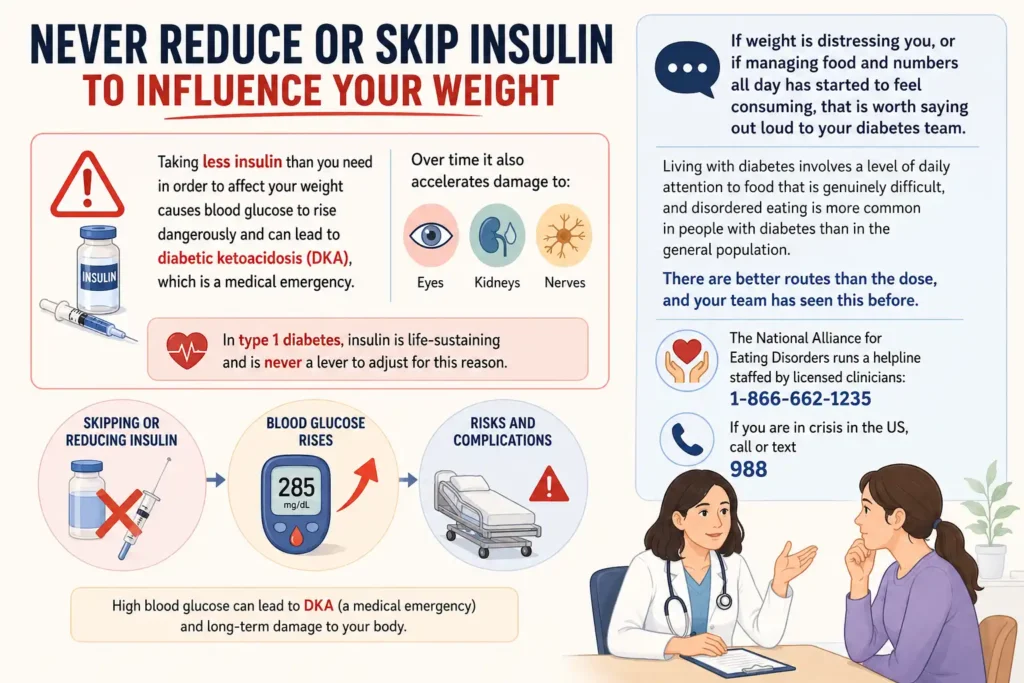
The National Alliance for Eating Disorders runs a helpline staffed by licensed clinicians: 1-866-662-1235. If you are in crisis in the US, call or text 988.
What Is Worth Raising
- How often you are having hypos. Frequent lows drive unplanned eating and may mean the regimen needs adjusting.
- Whether your regimen still matches current guidance. Combinations set up years ago may predate options that would suit you better now.
- Whether an SGLT2 inhibitor or GLP-1 receptor agonist could be added. Both can reduce insulin requirements and offset weight gain, where appropriate and available.
- What the weight actually is. Fluid retention from a thiazolidinedione is a different problem from fat gain see our guide to the causes of weight gain for how the patterns differ.
- Everything else you take. Several other drug classes affect weight and are commonly prescribed alongside diabetes medication, including beta blockers and corticosteroids.
Does INSULIN cause WEIGHT gain? Doctor makes it easy to understand.
Frequently Asked Questions
Two main reasons. Before treatment, uncontrolled high blood glucose spills into the urine, so calories are lost from the body which is why unexplained weight loss is a classic symptom of undiagnosed diabetes. Once insulin restores control, that leak stops and some of the weight that returns is weight illness had taken off. Insulin is also an anabolic hormone that promotes fat storage directly, and treating hypoglycaemia means extra unplanned eating.
Insulin, sulfonylureas such as gliclazide and glimepiride, thiazolidinediones such as pioglitazone, and meglitinides such as repaglinide are the classes associated with gain. Guideline summaries put this at roughly 1.5 to 5 kg when added to metformin.
GLP-1 receptor agonists and SGLT2 inhibitors, with metformin producing a more modest effect and DPP-4 inhibitors being broadly neutral. One study of 22,601 patients in routine care estimated average 24-month changes of about −5.15 kg for GLP-1 receptor agonists and −6.71 kg for SGLT2 inhibitors.
Often the regimen matters more than anything else. Frequent hypoglycaemia drives unplanned eating, so reducing hypos can reduce weight gain. Current guidance also supports keeping metformin, SGLT2 inhibitors and GLP-1 receptor agonists alongside insulin, and both of the latter can reduce the insulin dose needed and offset weight gain. These are conversations for your diabetes team.
On weight, yes. Metformin is neutral to modestly weight-reducing while sulfonylureas are associated with gain and carry the highest hypoglycaemia risk among the common oral options. Current guidance limits the use of sulfonylureas when insulin therapy is intensified, partly for this reason.
No. Taking less insulin than you need causes blood glucose to rise dangerously, can lead to diabetic ketoacidosis, which is a medical emergency, and accelerates long-term damage to the eyes, kidneys and nerves. In type 1 diabetes insulin is life-sustaining. If weight is distressing you, tell your diabetes team there are guideline-backed options that do not involve the dose.
Sources
- American Diabetes Association – Pharmacologic Approaches to Glycemic Treatment: Standards of Care in Diabetes 2026
- Maruthur NM, Tseng E, Hutfless S, et al. Diabetes medications as monotherapy or metformin-based combination therapy for type 2 diabetes: a systematic review and meta-analysis. Annals of Internal Medicine, 2016.
- Comparative weight change with initiation and adherence to common medications for type 2 diabetes. Obesity.
- Diabetes Canada – Pharmacologic Glycemic Management of Type 2 Diabetes
- National Institute of Diabetes and Digestive and Kidney Diseases – Diabetes
Related reading: Weight Gain Guide: causes, medications and when to see a doctor | Do beta blockers cause weight gain? | Does prednisone cause weight gain?
Written and fact-checked by the HealthCoachJP editorial team. No clinician has reviewed this article. It is general information about prescription medicines, not medical advice and not a dosing guide. Never change, reduce or skip insulin or any diabetes medication without your diabetes team. Drug availability, cost and guideline recommendations vary by country. Last updated: August 2026. See our sourcing policy.