
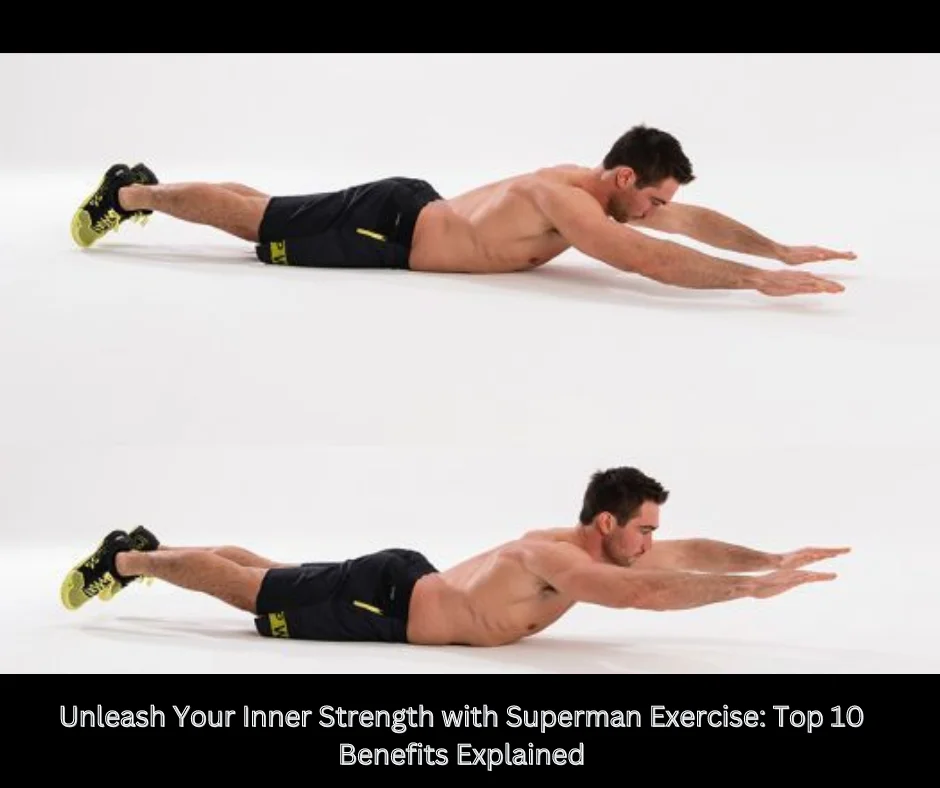
The Superman exercise is a simple, no-equipment bodyweight movement that strengthens the lower back, glutes, hamstrings, and core all at once. It’s a good option if heavier compound lifts like deadlifts aren’t accessible to you yet, or if you want a low-risk way to build lower-back strength and support better posture.
How to Do the Superman Exercise
Standard Version
Lie face down with arms extended overhead, roughly shoulder-width apart, and legs extended, slightly narrower than the arms. Simultaneously lift your arms, chest, and legs off the ground, keeping your face pointed toward the floor to protect your neck. You’ll feel the contraction through your lower back and glutes. A reasonable starting point is 3-4 sets of 10-15 reps.

Hold Variation
Lift into the same position, but instead of lowering right away, hold the contracted position for 5-10 seconds before returning to the floor. This isometric hold variation builds more sustained lower-back and glute endurance than the standard repeated-lift version.
Benefits of the Superman Exercise
- Strengthens the lower back: Directly targets the erector spinae, the muscles running along your spine, which supports better spinal alignment and can help reduce discomfort linked to weak lower-back muscles.
- Improves posture: Strengthening the back, shoulders and neck muscles supports better posture over time, and the exercise stretches the chest and shoulders — helpful for anyone who spends long hours hunched over a desk.
- Builds spinal stability and core strength: Lifting the arms, chest and legs simultaneously trains the core and spine to work together, which supports better stability during other exercises and daily movement.
- Targets glutes, hamstrings and calves: These muscles engage to lift the legs during the movement, contributing to lower-body strength alongside the back-focused benefit.
- Accessible and equipment-free: Can be done anywhere with just bodyweight, and is easy to scale up or down for different fitness levels.
Who Should Be Cautious
The Superman exercise is generally low-risk, but if you have a herniated disc, spinal stenosis, or another diagnosed back condition, this movement involves spinal extension that may not be appropriate for you — check with a doctor or physiotherapist first. If you feel sharp pain (rather than normal muscular effort) at any point, stop.
The Bottom Line
The Superman exercise is a simple, effective way to build lower-back and posterior-chain strength without equipment or the technical demands of heavier compound lifts. Start with a few controlled reps, focus on form over speed, and increase gradually as your strength builds.
Frequently Asked Questions
What is the Superman exercise?
A bodyweight exercise targeting the lower back, glutes, hamstrings, and core. You lie face down and lift your arms, legs, and chest off the floor simultaneously.
What are the benefits of the Superman exercise?
It strengthens the lower back and core, supports better posture, builds spinal stability, and works the glutes and hamstrings, all without any equipment.
Can the Superman exercise be modified for different fitness levels?
Yes. To make it easier, use smaller movements or lift one arm and the opposite leg at a time. To make it harder, hold the top position longer or add light ankle weights.
How many reps and sets should I do?
A reasonable starting point is 2-3 sets of 8-12 reps, increasing gradually as your strength improves.
Is the Superman exercise safe for everyone?
It’s generally safe for most people, but it involves spinal extension that may not suit those with a herniated disc, spinal stenosis, or another diagnosed back condition. Check with a doctor or physiotherapist first if you have a relevant back condition.
This article is for general information and is not a substitute for medical advice.

