

Quick Answer
A 12oz can of Mountain Dew is 170 calories, 46g sugar, 65mg sodium and about 54mg caffeine. It no longer contains brominated vegetable oil (BVO), the additive it was long known for: PepsiCo removed it by 2020, and the FDA banned the ingredient from all US food in 2024.
- 46g of sugar is 92% of the Daily Value in one can, and nearly double the AHA’s daily limit for women.
- The 20oz bottle is the real serving for most people: roughly 290 calories and 77g of sugar.
- More caffeine than cola at about 54mg per can, versus roughly 34mg for Coca-Cola.
- If a label still lists BVO, it is old stock or an outdated panel.
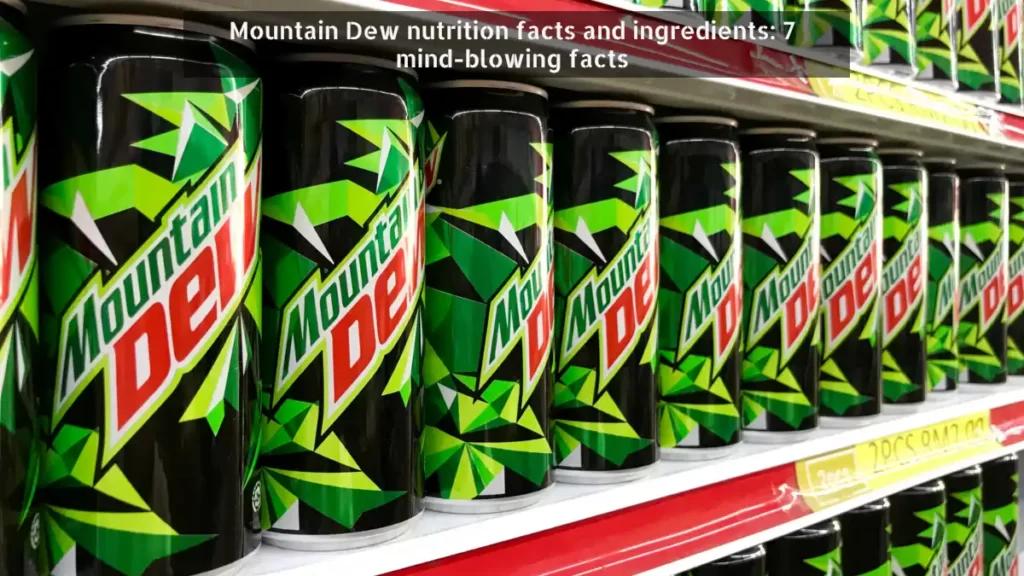
Mountain Dew Nutrition Facts (12 fl oz can)
| Nutrient | Amount | % DV |
|---|---|---|
| Calories | 170 | — |
| Total Fat | 0 g | 0% |
| Cholesterol | 0 mg | 0% |
| Sodium | 65 mg | 3% |
| Total Carbohydrate | 46 g | 17% |
| Sugars (all added) | 46 g | 92% |
| Protein | 0 g | — |
| Caffeine | ~54 mg | — |
A 20oz bottle scales up to roughly 290 calories and 77g of sugar — worth knowing since the bottle is what most people actually grab, not the 12oz can these standard label figures are based on.
How It Compares to Other Sodas (per 12 fl oz)
| Drink | Calories | Sugar | Caffeine |
|---|---|---|---|
| Mountain Dew | 170 | 46 g | ~54 mg |
| Coca-Cola | 140 | 39 g | ~34 mg |
| Sprite | 140 | 38 g | 0 mg |
Mountain Dew is the highest of the three on both sugar and caffeine. That 46g is roughly 20% more sugar than a can of Sprite, which is already at a full day’s added-sugar allowance for many people.
Current Ingredients
Carbonated water, high fructose corn syrup, concentrated orange juice, citric acid, natural flavors, sodium benzoate (preserves freshness), caffeine, sodium citrate, erythorbic acid (preserves freshness), gum arabic, calcium disodium EDTA (to protect flavor), Yellow 5.
What changed: older ingredient lists (and some outdated packaging still in circulation) show brominated vegetable oil (BVO), an emulsifier that kept the citrus flavoring suspended in the liquid. PepsiCo phased BVO out of Mountain Dew by 2020 amid health concerns over bromine buildup, replacing it with alternatives such as sucrose acetate isobutyrate or gum arabic depending on the product line. The FDA formally revoked BVO’s approval for use in food in 2024. If you see BVO listed on an ingredient panel today, it is either very old stock or an outdated label — current US Mountain Dew does not contain it.
Where the Calories Come From
All 170 calories come from carbohydrates, specifically 46g of added sugar from high fructose corn syrup. There is no fat, protein, fiber or meaningful micronutrient content. Mountain Dew has zero saturated fat, trans fat and cholesterol, which is sometimes framed as a health positive, but that is true of almost every soda — it is not a distinguishing feature.
Sugar and Caffeine, in Context
46g of sugar in one can is close to double the American Heart Association’s daily added-sugar limit for women (25g) and above the limit for men (36g). At roughly 54mg of caffeine per 12oz can, Mountain Dew has more caffeine than most colas (Coca-Cola runs about 34mg per 12oz) but well under half of a typical 8oz cup of coffee (about 95mg), and far below the FDA’s 400mg daily guidance for healthy adults. A 20oz bottle carries around 90mg, which is closer to coffee territory and worth noting if you are tracking caffeine.
A Bit of History
Mountain Dew was created in Tennessee by brothers Barney and Ally Hartman, originally as a mixer for whiskey — “mountain dew” was slang for moonshine at the time, and the earliest version had no caffeine at all. PepsiCo acquired the brand in 1964 and reformulated it into the caffeinated, citrus-flavored soda sold today, later marketing it heavily toward younger, extreme-sports-adjacent audiences.
Frequently Asked Questions
A 12oz can is 170 calories, all of it from 46g of added sugar. A 20oz bottle, which is what most people buy, runs roughly 290 calories and 77g of sugar.
46g per 12oz can, all of it added sugar from high fructose corn syrup. That alone exceeds the American Heart Association’s daily added-sugar recommendation for women and comes close to the limit for men. It is 92% of the FDA Daily Value for added sugars.
No. PepsiCo removed brominated vegetable oil from Mountain Dew by 2020, and the FDA banned the ingredient from all US food and beverages in 2024. Current ingredient lists do not include it. A panel showing BVO today is old stock or an outdated label.
About 54mg per 12oz can, which is more than most colas (Coca-Cola is around 34mg) but well under half a typical 8oz cup of coffee at roughly 95mg. A 20oz bottle carries around 90mg.
Frequent consumption can contribute to cavities. The combination of high sugar content and acidity from citric acid is a known risk factor for tooth decay, which is why some public health campaigns have specifically targeted heavy soda consumption in children.
Related Reading
- Sprite Nutrition Facts — the lower-sugar, caffeine-free comparison.
- Bang Energy Nutrition Facts — where caffeine goes from soda levels to energy-drink levels.
- Vitamin Water Zero Nutrition Facts — a zero-sugar alternative examined.
- Fast Food & Brand Nutrition Facts: The Complete Guide — every brand we have broken down.
Sources
- PepsiCo and Mountain Dew published product and ingredient information (US formulation).
- US FDA — revocation of the regulation authorizing brominated vegetable oil in food (2024). fda.gov
- American Heart Association — Added Sugars (about 25g a day for women, 36g for men). heart.org
- US FDA — Spilling the Beans: How Much Caffeine is Too Much, for the 400mg daily guidance. fda.gov
- US FDA — Daily Value on the Nutrition and Supplement Facts Labels (basis for all % DV figures). fda.gov
Formulations differ between countries, so check the label where you are. Written and fact-checked by the HealthCoachJP editorial team, following our editorial process. No clinician has reviewed this article. This page is general nutrition information, not medical advice. Last updated: August 2026.

