

Anti-inflammatory foods are mostly the foods in a Mediterranean-style pattern: fruit, vegetables, legumes, whole grains, nuts, olive oil and fatty fish. Harvard Health links this pattern with lower rates of inflammatory disease. No food lowers inflammation within days, and no single food or supplement has been shown to do so reliably.
Anti-inflammatory foods get promised as quick fixes. The evidence supports slower, pattern-level change. This guide covers which foods are linked with lower inflammation, why “fast” is the wrong question, and what to check before taking turmeric or fish oil supplements.
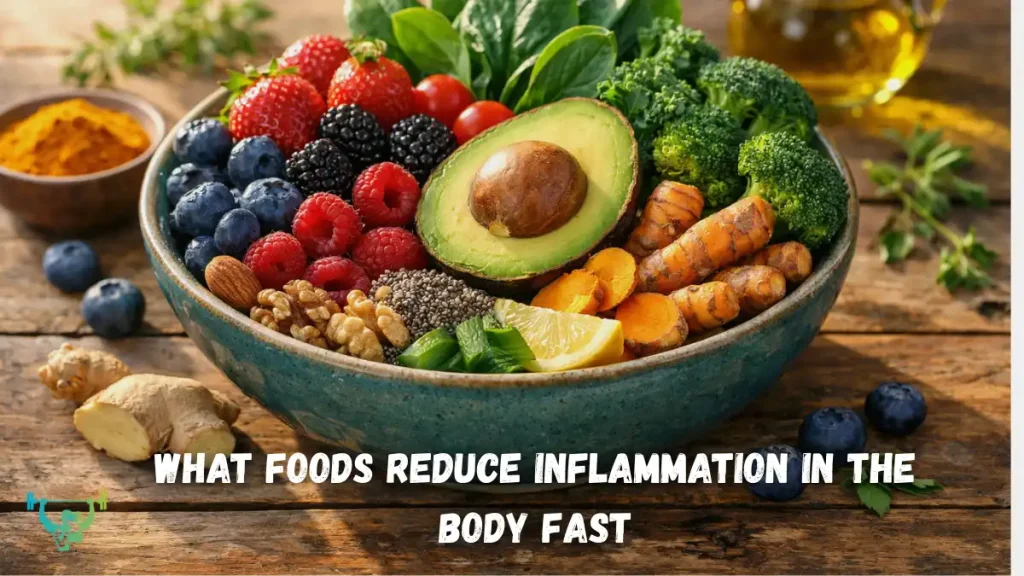
Anti-Inflammatory Foods Linked With Lower Inflammation
Harvard Health (October 2025) names several food groups. It uses association language, not proof. The table below follows its list.
| Food group | Examples named by Harvard Health | What it is linked with |
|---|---|---|
| Mediterranean-style pattern | Vegetables, fruit, legumes, whole grains, nuts, olive oil, fish | Lower rates of inflammatory diseases |
| Fruit and vegetables | Citrus, broccoli, bell peppers, spinach, strawberries, tomatoes, carrots, pumpkin | Vitamin C and carotenoids, which may help limit damage from inflammation |
| Fibre-rich foods | Fruit, vegetables, legumes, whole grains | Lower levels of inflammation |
| Polyphenol sources | Olive oil, avocados, nuts, berries, tea, coffee, dark chocolate | Antioxidant plant compounds |
| Omega-3 foods | Salmon, sardines, walnuts, flax, chia and hemp seeds | Described as “proven inflammation-fighters” |
Source: Harvard Health, “Top Anti-Inflammatory Foods,” published 30 October 2025. The article cites no trials or effect sizes.
Why “Fast” Is the Wrong Question
Many guides promise that foods reduce inflammation in days or weeks. We found no source that backs a specific timeline. Harvard Health gives none. So this page does not give one either.
The best pooled evidence we could read is about patterns, not single foods. A 2020 meta-analysis in Advances in Nutrition covered older adults. It found a significant inverse association between a Mediterranean pattern and C-reactive protein (CRP), a common inflammation marker. The pooled effect was a standardised mean difference of -0.26 (95% CI -0.41 to -0.11). That pooling used 5 cross-sectional studies, so it shows association, not cause. Other markers gave mixed results, and the authors say more long-term trials are needed.
This explains why sources disagree. A food can look powerful in a lab or in one small trial. Whole diets are harder to test, and people who eat well differ in many ways. Treat any single “superfood” claim with caution.
Turmeric and Curcumin: Promising, Not Proven
The US National Center for Complementary and Integrative Health (NCCIH) says: “We don’t know enough to definitively conclude if turmeric or curcumin is beneficial for any health purposes.” For knee osteoarthritis, it says the initial evidence is positive but higher-quality evidence is needed.
NCCIH notes that piperine from black pepper can improve curcumin absorption in supplements. It also warns that liver damage has been reported with highly bioavailable formulations. Stop using the product and speak to a health care provider if you develop fatigue, nausea, poor appetite, dark urine or jaundice. NCCIH says turmeric supplements during pregnancy may be unsafe. Cooking with turmeric is different from taking concentrated supplements.
For a deeper look, see our curcumin evidence review.
Fatty Fish and Omega-3s
The NIH Office of Dietary Supplements lists cold-water fatty fish such as salmon, mackerel, tuna, herring and sardines as omega-3 sources. Walnuts, flaxseed and chia seeds provide ALA, a plant omega-3. The body converts ALA to EPA and DHA only in very small amounts.
The same page says the American Heart Association recommends one to two servings of seafood per week for heart health. For rheumatoid arthritis, it says some trials show omega-3 supplements may help when taken with standard medicines, but it is not clear they reduce joint pain, swelling or stiffness.
Safety points from the same source: the FDA recommends no more than 5 g per day of EPA and DHA combined from supplements. High doses may cause bleeding problems with warfarin or other anticoagulants. In pregnancy, choose fish higher in EPA and DHA and lower in mercury, such as salmon, herring, sardines and trout.
Anti-Inflammatory Foods: What the Evidence Supports
| Common claim | Where it stands |
|---|---|
| Foods reduce inflammation in a few days | Not supported. No verified source gives a timeline. |
| CRP falls 20 to 30 percent in 2 to 4 weeks on an anti-inflammatory diet | Not supported. We could not verify the figure. |
| Curcumin works as well as ibuprofen | Not supported. NCCIH says evidence is not definitive. |
| Ginger blocks inflammation like ibuprofen without side effects | Not supported. We found no verified source. |
| Omega-3 supplements treat arthritis | Overstated. Some trials suggest a role alongside medicines; effect on pain is unclear. |
| A Mediterranean-style pattern is linked with lower inflammation | Supported as an association, with long-term trials still needed. |
| Ultra-processed foods, added sugar and red or processed meat promote inflammation | Supported as a Harvard Health association. Limiting them is sensible. |
Safety: Before You Change Your Diet or Add Supplements
Do not stop or replace prescribed medicine for arthritis, an autoimmune condition or heart disease with food or supplements. Talk to your doctor or pharmacist before starting turmeric, curcumin or fish oil, especially if you take warfarin or other blood thinners, are pregnant or breastfeeding, or have liver problems.
Seek urgent medical care for chest pain, sudden swelling or severe joint pain with fever. Product quality and strength vary between supplements, so check labels and ask a pharmacist.
Video
The embedded video below was added earlier and has not been verified by our editors. Treat it as general viewing, not as medical advice.
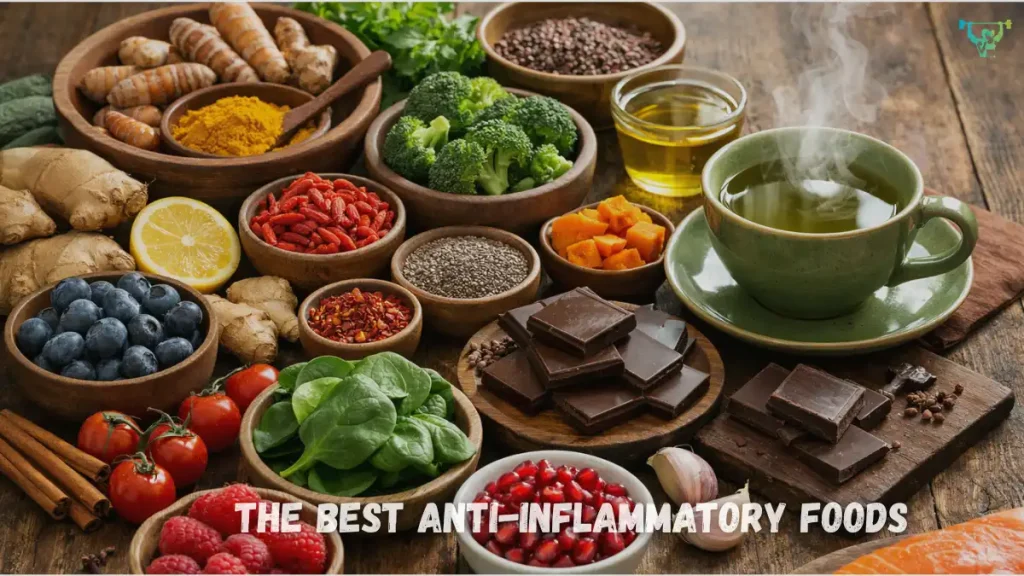
Frequently Asked Questions
Harvard Health links fruit, vegetables, legumes, whole grains, nuts, olive oil and fatty fish with lower inflammation. It describes this as an association. The pattern matters more than any single food.
We found no verified timeline. Harvard Health gives none, and the best pooled evidence we read concerns long-term dietary patterns. Be wary of claims of results in days.
No single food has been proven to be the most anti-inflammatory. Harvard Health names omega-3 sources such as salmon and walnuts, but overall diet matters more than any one food.
NCCIH says we do not know enough to conclude that turmeric or curcumin is beneficial for any health purpose. Early knee osteoarthritis results are positive but need better studies. Supplements can harm the liver in some people.
The NIH says some trials show omega-3 supplements may help rheumatoid arthritis alongside medicines. It is not clear they reduce pain, swelling or stiffness. High doses may cause bleeding problems with blood thinners.
The American Heart Association recommends one to two servings of seafood per week, according to the NIH. In pregnancy, choose fish higher in omega-3s and lower in mercury, such as salmon, herring, sardines and trout.
Harvard Health names red and processed meats, foods high in added sugar, and ultra-processed foods such as fast food and packaged snacks. These are associations, not proof of cause.
No. Do not stop prescribed medicine because of a food plan. Speak to your doctor about how diet can fit alongside treatment.
Related Reading
- Ultra-Processed Foods and Inflammation: What the Evidence Shows
- Turmeric and Curcumin Benefits: An Evidence Review
- 5 Foods to Avoid on the Mediterranean Diet
- Cholesterol Lowering Foods: 12 Choices With Evidence
Sources
- Harvard Health: Top Anti-Inflammatory Foods (30 October 2025)
- Wu PY, Chen KM, Tsai WC. The Mediterranean Dietary Pattern and Inflammation in Older Adults. Advances in Nutrition, 2020
- NCCIH: Turmeric, Usefulness and Safety (April 2025)
- NIH Office of Dietary Supplements: Omega-3 Fatty Acids (consumer fact sheet)
This article is general information, not medical advice. Speak to a doctor or registered dietitian about your own health. It is written by the HealthCoachJP editorial team and has not been reviewed by a named clinician. See our sourcing policy.
Last reviewed and rewritten November 2026.

