
Quick Answer
One cup of dry Quaker Oats (80g) is about 300 calories, 10g protein, 8g fiber and 0mg sodium, with no added sugar. One cup of cooked oatmeal is roughly half that — about 150 calories — because oats absorb water and roughly double in volume.
- Dry vs cooked is the single biggest source of confusion. Same food, double the number, depending on when it was measured.
- Plain oats have one ingredient: 100% whole-grain oats. Flavored instant packets are a different product.
- The cholesterol benefit is real and comes from beta-glucan, one of the better-evidenced claims in nutrition.
- Toppings usually dominate the calories. A tablespoon of peanut butter can rival the oats themselves.
When it comes to healthy breakfasts, few foods are as classic and versatile as Quaker Oats. From traditional old-fashioned oats to convenient instant oatmeal packets, Quaker Oats has been a pantry staple for generations. But beyond being affordable and filling, what makes oats worth eating is their nutritional profile.
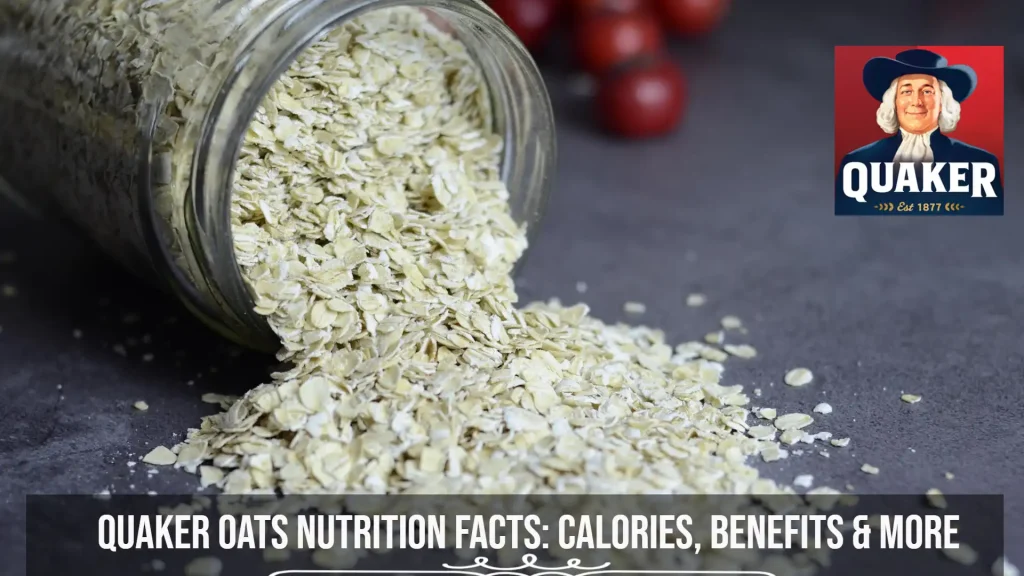
In this guide we break down Quaker Oats nutrition facts, explain the dry-versus-cooked measurement that trips most people up, compare the varieties, and cover the health benefits.
Why Choose Quaker Oats?
Quaker Oats has been around since 1877 and is one of the most widely available brands of whole-grain oats. Their products are affordable and easy to prepare.
Nutritionally, oats offer:
- Fiber (including beta-glucan, the soluble fiber linked to cholesterol reduction)
- Plant-based protein
- Minerals including iron, magnesium, phosphorus and potassium
- No added sugar in plain varieties, and no cholesterol
Dry vs Cooked: The Measurement That Confuses Everyone
This is where most oat nutrition figures online go wrong, and it is worth getting straight before looking at any table.
Oats absorb water as they cook, roughly doubling in volume. So:
- 1 cup dry oats (about 80 g) cooks up into roughly two cups of porridge and carries around 300 calories.
- 1 cup of cooked oatmeal comes from about half a cup of dry oats (40 g) and carries around 150 calories.
Same food, double the number, purely because of when it was measured. If you are logging oats in a tracking app, check whether the entry you picked is dry or cooked — this single mix-up is the most common reason oat calories look wrong.
Quaker Oats Nutrition Facts (Per 1 Cup Dry, 80 g)
Approximate values for plain rolled oats, measured dry:
| Nutrient | Amount | Daily Value (%DV) |
|---|---|---|
| Calories | 300 | – |
| Total Fat | 6 g | 8% |
| Saturated Fat | 1 g | 5% |
| Trans Fat | 0 g | 0% |
| Cholesterol | 0 mg | 0% |
| Sodium | 0 mg | 0% |
| Total Carbohydrates | 54 g | 20% |
| Dietary Fiber | 8 g | 29% |
| Sugars | 2 g | – |
| Protein | 10 g | – |
| Vitamin D | 0 mcg | 0% |
| Calcium | 39 mg | 3% |
| Iron | 3 mg | 17% |
| Potassium | 403 mg | 9% |
Halve every figure for a one-cup cooked serving. Figures vary slightly by variety and by package — check the label on the box you actually bought. Note that some sites still publish oat %DV figures calculated against the pre-2016 Daily Values, which makes fiber and fat look like a larger share of a day than they are; the percentages above use the current values.
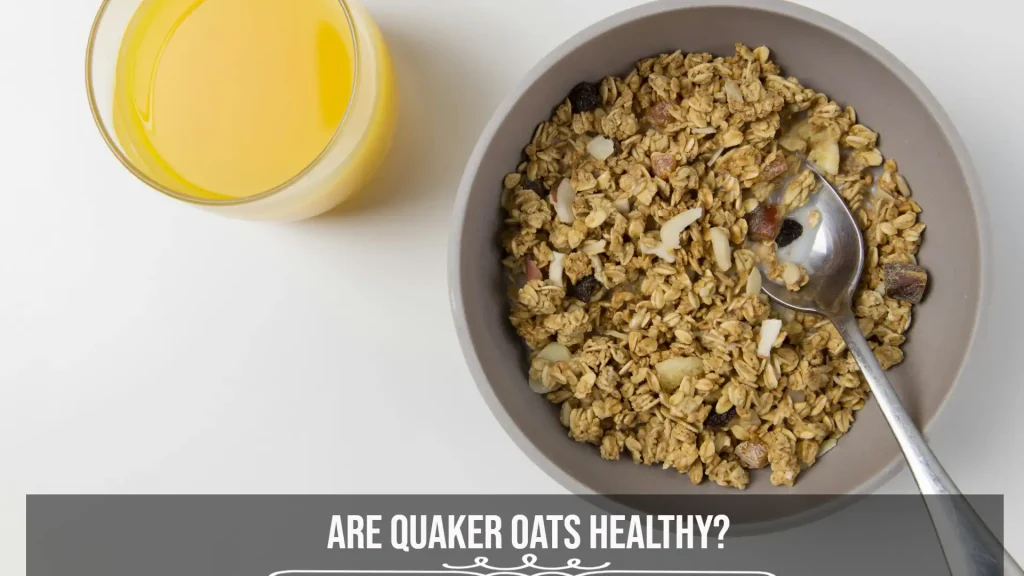
Are Quaker Oats Healthy?
Plain oats are a genuinely strong breakfast choice. Here is what is well supported:
- Heart Health – Beta-glucan, the soluble fiber in oats, is associated with reduced LDL cholesterol. This is one of the better-evidenced claims in nutrition, and carries an FDA-authorized health claim (21 CFR 101.81) based on about 3g of soluble fiber a day from whole grain oat foods.
- Digestive Health – The fiber content supports regular bowel movements.
- Satiety – Oats are filling for their calorie count, which can help with appetite across the morning.
- Steadier Blood Sugar – Plain oats have a relatively low glycemic index, and the more intact the oat, the gentler the response. Instant oats digest faster than steel-cut.
- Sustained Energy – The carbs in oats digest slowly compared with refined breakfast cereals.
Quaker Oats Varieties and Their Nutrition
The dry nutrition of plain oats is broadly similar across varieties — what changes is processing, texture, cooking time, and how fast they digest.
| Variety | Processing | Cook time | Digests |
|---|---|---|---|
| Steel-Cut | Groats chopped, not rolled (least processed) | 20–30 min | Slowest |
| Old-Fashioned | Steamed and rolled flat | ~5 min | Moderate |
| Quick | Rolled thinner, cut smaller | 1–2 min | Faster |
| Instant (plain) | Pre-cooked, dried, rolled thinnest | ~1 min | Fastest |
1. Quaker Old-Fashioned Oats
- Whole oat groats steamed and rolled flat
- Cook in about 5 minutes
- About 150 calories, 5 g protein and 4 g fiber per half-cup dry (one cup cooked)
2. Quaker Instant Oatmeal
- Pre-cooked, dried and rolled thinner for fast preparation
- Convenient, but flavored packets carry added sugar and sodium
- Plain instant oats are nutritionally close to rolled oats; flavored versions are a different product — check the added sugars line
3. Quaker Steel-Cut Oats
- Oat groats chopped rather than rolled — the least processed option
- Chewier texture, 20–30 minutes cooking time
- Similar nutrition to rolled oats by weight, but digest more slowly
4. Quaker Quick Oats
- Rolled thinner and cut smaller than old-fashioned
- Cook in 1–2 minutes, softer result
- Nutritionally near-identical to rolled oats
Calories in Quaker Oats
- 1 cup dry oats (80 g): ~300 calories
- 1 cup cooked oatmeal (from ~40 g dry): ~150 calories
- Flavored instant oatmeal packet: typically 130–160 calories, including added sugars
Toppings are usually where the calories actually come from. A tablespoon of peanut butter or a generous drizzle of honey can add as much as the oats themselves.
Protein in Quaker Oats
Oats are a reasonable plant protein source for a grain, though not a high-protein food in absolute terms:
- 1 cup dry oats: ~10 g protein
- 1 cup cooked oatmeal: ~5 g protein
For a protein boost, pair oats with:
- Greek yogurt
- Peanut butter or almond butter
- Chia seeds or flaxseeds
- Milk instead of water, which adds protein at no effort
Fiber in Quaker Oats
- 1 cup dry oats: ~8 g fiber
- 1 cup cooked oatmeal: ~4 g fiber
Part of that is beta-glucan, a soluble fiber associated with lower LDL cholesterol and with slower digestion, which contributes to feeling full.
Oats vs Oat-Based Cereal
Plain oats and oat cereals start from the same grain but end up in different places. Per serving, plain oats give you more fiber and protein with no sodium and no added sugar. Fortified oat cereals add vitamins and minerals that plain oats do not supply, and need no cooking, but bring sodium and a little added sugar with them. Our Cheerios nutrition breakdown covers that comparison in full — the short version is that neither wins outright, and the right pick depends on whether you are managing sodium or looking for fortification.
Quaker Instant Oatmeal: Is It Healthy?
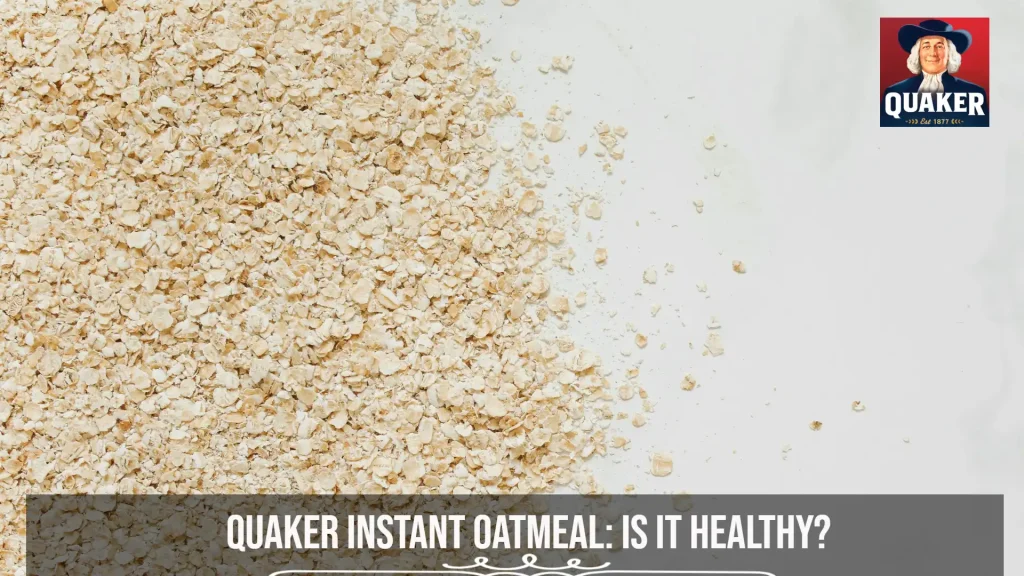
Plain instant oats are a fine choice — just oats, faster. Flavored packets are where it changes: many carry meaningful added sugar plus sodium, and the smaller packet size means less oats per serving than you might assume.
If you want convenience without the sugar, buy plain instant and add your own fruit.
Quaker Oats Ingredients
Plain Quaker Oats products list one ingredient: 100% whole-grain oats.
Flavored and instant varieties may add sugar, natural and artificial flavors, salt, and preservatives. For the simplest option, stick to plain Old-Fashioned or Steel-Cut.
Key Minerals in Quaker Oats
- Magnesium – Involved in nerve and muscle function
- Iron – Contributes to iron intake; note that plant (non-heme) iron is absorbed less efficiently than iron from meat, and pairing with vitamin C helps
- Phosphorus – A component of bone
- Potassium – Involved in fluid balance and blood pressure regulation
- Zinc – Contributes to normal immune function
7 Health Benefits Of Eating Oats
FAQs on Quaker Oats Nutrition Facts
One cup of dry plain oats (about 80 g) has roughly 300 calories, 10 g protein and 8 g fiber. One cup of cooked oatmeal is about half that, since oats absorb water as they cook.
About 300 calories per cup dry, or about 150 per cup cooked. Most confusion about oat calories comes from mixing up these two measurements.
Oats have about 10 g of protein per cup dry, which is good for a grain but modest overall. Pair with yogurt, milk, nut butter or seeds if protein is your goal.
Plain oats contain only the small amount of sugar naturally present in the grain, with no added sugar. Flavored instant packets do contain added sugar, so check the label.
Oats are naturally gluten-free, but standard oats are frequently cross-contaminated with wheat, barley or rye during growing and processing. If you have coeliac disease or gluten sensitivity, buy only oats explicitly labelled gluten-free.
Plain oats have a relatively low glycemic index and are generally considered a reasonable choice, with less processed varieties digesting more slowly. Portion size and toppings matter, and individual blood sugar responses vary, so discuss your own diet with your doctor or a dietitian.
Beta-glucan, the soluble fiber in oats, is associated with reduced LDL cholesterol as part of an overall diet, and carries an FDA-authorized health claim based on about 3g of soluble fiber a day from whole grain oat foods. Oats alone are not a treatment for high cholesterol.
All rolled and instant oats are processed to some degree, being steamed and flattened. Steel-cut are the least processed, instant the most, though plain instant oats are still a whole grain.
For most people, yes. Oats are a whole grain and daily porridge is a perfectly reasonable habit. If you are increasing fiber substantially, do it gradually and drink enough water.
Related Reading
- Cheerios Nutrition Facts — the fortified oat cereal comparison.
- Whole Milk Nutrition Facts — what cooking oats in milk adds.
- High-Fiber Foods: 10 Best Sources — how oats compare on fiber.
- Fast Food & Brand Nutrition Facts: The Complete Guide — every brand we have broken down.
Sources
- Quaker Oats — product and nutrition information
- Harvard T.H. Chan School of Public Health — Oats
- Mayo Clinic Health System — Oatmeal and cholesterol
- FDA — soluble fiber and coronary heart disease health claim (21 CFR 101.81)
- US FDA — Daily Value on the Nutrition and Supplement Facts Labels (basis for all % DV figures on this page)
- USDA — Nutritive Value of Foods
Nutrition figures are approximate and vary by variety and package — always check the label on the product you bought. Written and fact-checked by the HealthCoachJP editorial team, following our editorial process. No clinician has reviewed this article. This article is general information, not medical or dietetic advice. Last updated: August 2026.

