

Your grandmother probably made you drink haldi doodh when you had a cold, a bad knee, or couldn’t sleep. Here’s the thing: science is slowly catching up to what Indian households have known for centuries. Turmeric milk has real, documented health benefits – not miracle-cure nonsense, but actual research-backed benefits that hold up when you look at the studies.

This article covers what turmeric milk genuinely does, what the research supports, how to make it correctly so you absorb the benefits, and what to watch out for.
What Is Turmeric Milk (Haldi Doodh)?
Turmeric milk is warm milk mixed with turmeric – along with black pepper, a fat source like ghee or coconut oil, and optional spices like ginger or cinnamon. In India it’s called haldi doodh. In the Western wellness world it goes by golden milk or a golden latte.
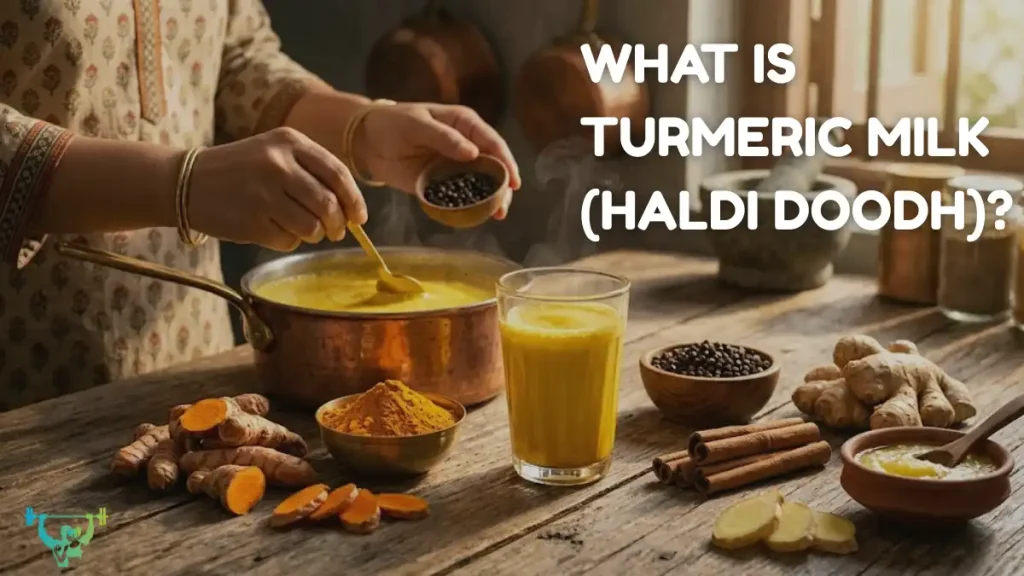
The active compound in turmeric is curcumin – the yellow pigment that stains everything it touches and the molecule researchers have studied for decades for its anti-inflammatory and antioxidant effects. The way you make turmeric milk actually matters more than most articles tell you. Black pepper contains piperine, which research published in Planta Medica found increases curcumin bioavailability by up to 2,000 percent. That is not a typo.
7 Evidence-Based Benefits of Drinking Turmeric Milk Before Bed
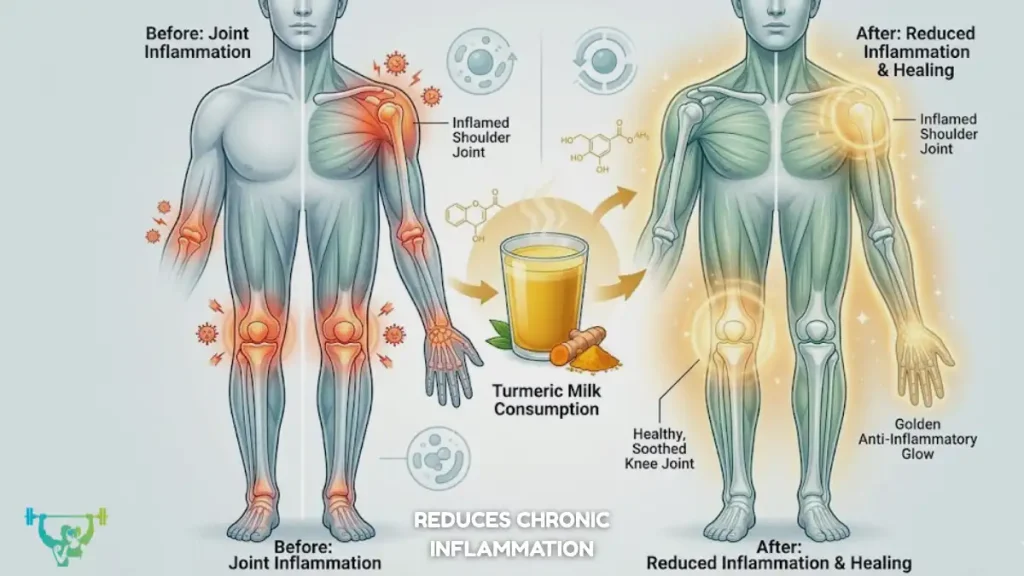
1. Reduces Chronic Inflammation
Curcumin blocks NF-kB, a molecule that activates genes related to inflammation. A 2017 review in Foods journal found its effects comparable to certain anti-inflammatory drugs – without the side effects of long-term NSAID use. For people dealing with knee osteoarthritis or joint pain, this is particularly relevant.
2. Supports Better Sleep Quality
Milk contains tryptophan, which your body converts into melatonin – the hormone that regulates your sleep-wake cycle. Curcumin adds to this by reducing inflammation in the nervous system, which interferes with sleep. A 2019 study in Molecular Neurobiology found curcumin increased brain-derived neurotrophic factor (BDNF), which plays a role in sleep regulation. Research on curcumin and neuroprotection from the NIH further supports these neurological benefits.

3. Strengthens Immune System
A 2020 review in the Journal of Clinical Medicine found curcumin modulates the immune system by enhancing T-cells, B-cells, and natural killer cells. Milk contributes vitamins D and K, calcium, and proteins that further support immune function. The Mayo Clinic notes turmeric’s long history in traditional medicine for immune support.

4. Helps Manage Blood Sugar Levels
A 2013 randomised controlled trial in Diabetes Care found curcumin supplementation in people with prediabetes significantly reduced progression to full type 2 diabetes. The curcumin group showed improved insulin sensitivity and better pancreatic beta-cell function. Highly relevant for the millions of Indians managing diabetes risk. See also our guide on best Indian breakfast for type 2 diabetics.
5. Supports Heart Health
Heart disease is responsible for roughly 28 percent of all deaths in India (ICMR data). Research shows curcumin reduces LDL cholesterol and improves endothelial function – the lining of blood vessels that regulates blood pressure. A study in Nutrition Research found curcumin improved vascular function markers significantly over 8 weeks. The American Heart Association supports anti-inflammatory dietary approaches for cardiovascular protection.

6. Strengthens Bones and Joints
Milk provides roughly 300mg of calcium per 250ml glass plus vitamin D – both essential for bone density. A 2016 meta-analysis in the Journal of Medicinal Food reviewed eight randomised trials and found curcumin supplementation significantly reduced arthritis symptoms. Pair this with our daily tips for living with knee osteoarthritis.

7. Improves Skin Health from the Inside
Curcumin’s antioxidant properties neutralise free radicals that damage skin cells and accelerate ageing. A review in Phytotherapy Research found curcumin reduced oxidative stress markers in skin tissue and helped modulate inflammatory pathways involved in acne, eczema, and psoriasis.

Quick Reference: Turmeric Milk Benefits at a Glance
- Inflammation: Blocks NF-kB pathways – effects comparable to NSAIDs
- Sleep: Tryptophan → melatonin conversion + BDNF boost
- Immunity: Enhances T-cells, B-cells, natural killer cells
- Blood sugar: Improves insulin sensitivity, reduces prediabetes progression
- Heart: Reduces LDL, improves endothelial function
- Bones: 300mg calcium + anti-inflammatory joint support
- Skin: Antioxidant + antibacterial for acne and eczema
How to Make Turmeric Milk That Actually Works
Classic Haldi Doodh Recipe (Indian Method)

Ingredients (1 serving):
- 250ml full-fat milk (or oat/coconut milk for dairy-free)
- ½ teaspoon turmeric powder (or 1 inch fresh turmeric, grated)
- ¼ teaspoon black pepper – non-negotiable, activates curcumin absorption
- ½ teaspoon ghee or coconut oil – fat improves absorption significantly
- A pinch of cinnamon – optional, helps with blood sugar regulation
- Fresh ginger – optional, adds additional anti-inflammatory benefit
- Honey or jaggery to taste
Method: Warm the milk on low heat – do not boil it. Add turmeric, pepper, and ghee. Stir well. Add honey or jaggery after removing from heat. Drink warm, ideally 30 to 45 minutes before bed.
How Much Turmeric Do You Actually Need?
Most research studies use curcumin doses between 500mg and 2,000mg per day. A teaspoon of turmeric powder contains roughly 200mg of curcumin. Your nightly half-to-one teaspoon provides 100 to 200mg – meaningful as a maintenance habit. For therapeutic use (arthritis, blood sugar), discuss curcumin supplements with your doctor.
Who Should Be Careful with Turmeric Milk?
- Blood thinners (warfarin, aspirin): Curcumin has mild anticoagulant properties – may enhance effect
- Gallstones: Curcumin stimulates bile production – can trigger contractions
- Pregnancy: Dietary amounts safe; therapeutic supplement doses less studied
- Iron deficiency/anaemia: Curcumin can bind iron – avoid with iron-rich foods or supplements
- Lactose intolerance: Swap to oat, almond, or coconut milk – curcumin benefits unaffected
The Bottom Line
Haldi doodh works. Not in the magical, cure-everything way some corners of the internet claim but in a real, measurable, consistent way that science increasingly supports. The anti-inflammatory effects are well-documented. The sleep benefits are real. The immune support is genuine. The joint health benefits have clinical evidence behind them.
Make it properly – with black pepper and a fat source. Be consistent. Give it at least four weeks before judging. And enjoy it. The fact that it is also good for you is a bonus your grandmother already knew.
MAKE GOLDEN MILK BEFORE BED FOR SLEEP, JOINT COMFORT & IMMUNITY
Frequently Asked Questions about Turmeric Milk
Yes, turmeric milk is safe for daily consumption in typical amounts – half to one teaspoon of turmeric powder per cup. Start with smaller amounts if you have a sensitive stomach. Daily intake over 4–8 weeks is when most research studies observe meaningful anti-inflammatory benefits.
Turmeric milk alone will not cause weight loss, but it may support it indirectly. Curcumin has been shown in some studies to reduce fat tissue inflammation and improve metabolic markers. It works best as part of a broader approach – see our guide on sustainable weight loss tips for a complete picture.
Before bed is ideal – it aligns with the anti-inflammatory goals, sleep benefits, and the ritual of winding down. Some people also drink it first thing in the morning on an empty stomach. The benefits apply at any time, but the tryptophan-to-melatonin pathway works best in the evening.
Yes, it provides meaningful support when you’re unwell. Curcumin has documented antibacterial and antiviral properties, and the warmth soothes the throat. It is not a cure, but a well-evidenced comfort measure backed by more than tradition – especially when you add fresh ginger and honey.
Yes. Haldi doodh is the traditional Indian term for turmeric milk. Golden milk and golden latte are Western names for essentially the same drink – though Western café versions often skip black pepper, which reduces curcumin absorption by up to 20 times compared to the traditional Indian preparation.
For sleep improvement, many people notice a difference within the first week. For anti-inflammatory and joint benefits, research studies typically see significant changes at 4–8 weeks of daily consumption. Blood sugar and cholesterol effects tend to show at 8–12 weeks in clinical trials.
Yes, haldi doodh is a traditional Indian remedy given to children for centuries. Use a smaller pinch of turmeric (¼ teaspoon) and skip the pepper for very young children. It is particularly useful for children with colds, poor sleep, or recurrent infections.
Yes, this is one of its best-evidenced benefits. Multiple randomised controlled trials show curcumin reduces joint pain and stiffness in osteoarthritis at a level comparable to ibuprofen – without gastrointestinal side effects. The key is making it with black pepper and a fat source for proper absorption.
References
- Shoba G, et al. “Influence of piperine on the pharmacokinetics of curcumin in animals and human volunteers.” Planta Medica, 1998.
- Chuengsamarn S, et al. “Curcumin extract for prevention of type 2 diabetes.” Diabetes Care, 2012.
- Hewlings SJ, Kalman DS. “Curcumin: A Review of Its Effects on Human Health.” Foods, 2017.
- Chin KY. “The spice for joint inflammation: anti-inflammatory role of curcumin in treating osteoarthritis.” Drug Design, Development and Therapy, 2016.
- National Institute of Nutrition, India. “Nutrient Composition of Indian Foods.” 2017.
- Wikipedia contributors. “Turmeric.” Wikipedia, The Free Encyclopedia.
- Mayo Clinic – Golden Milk (Turmeric Milk): Is it beneficial?
- NIH/PubMed – Curcumin: A Review of Its Effects on Human Health (Hewlings & Kalman, 2017)
- Healthline – 10 Evidence-Based Health Benefits of Turmeric and Curcumin

