
होम ब्लॉग पेज 24

Mountain Dew nutrition facts and ingredients: 7 facts

0

Everyone should pay attention to the nutrition facts label of the product that they are about to consume. Before discussing the nutrition facts and ingredients of our favorite soft drink, Mountain Dew. 

Let’s see why paying attention to Mountain Dew nutrition facts is essential: Everyone should pay attention to the nutrition facts label of the product that they are about to consume. Before discussing the nutrition facts and ingredients of our favorite soft drink, Mountain Dew. Let’s understand the importance of nutrition facts.

Mountain Dew nutrition facts and ingredients_ 7 mind-blowing facts

By keeping an eye on the number of calories the product has to offer, we can maintain a balanced energy level in our body. We all know that most of our favorite food or beverage has high fat content which equals a high energy level. Although, Mountain Dew has 0% fat content in it. We will get into the details later on. With the help of nutrition facts, we can choose between products that will provide us with balanced nutrients with better taste. Thus, the main importance of nutrition facts is to help us choose products that complement our pattern of energy intake. 

Now that we have cleared up the importance of nutrition facts, let’s focus on the Mountain Dew nutrition facts.

Mountain Dew Nutrition Facts

Serving Size1 can (12oz)
Amount Per ServingCalories170
% Daily Values*
Total Fat 0.00g0%
Saturated Fat 0.000g
Trans Fat 0.000g
Polyunsaturated Fat 0.000g
Monounsaturated Fat 0.000g
Cholesterol 0%0%
Sodium 65mg3%
Total Carbohydrate 46.00g17%
Dietary Fiber 0.0g0%
Sugars 46.00g
Includes 46.00g Added Sugars92%
Protein 0.00g
Vitamin D –
Calcium –
Iron –
Potassium –
*Mountain Dew Nutrition Facts

INGREDIENTS: Mountain Dew (CARBONATED WATER, HIGH FRUCTOSE CORN SYRUP, CONCENTRATED ORANGE JUICE, CITRIC ACID, NATURAL FLAVOURS, SODIUM BENZOATE (PRESERVES FRESHNESS), CAFFEINE, SODIUM CITRATE, ERYTHORBIC ACID (PRESERVES FRESHNESS), GUM ARABIC, CALCIUM DISODIUM EDTA (TO PROTECT FLAVOR), BROMINATED VEGETABLE OIL, YELLOW 5).

Mountain Dew nutrition facts and ingredients

In the above table, we can see the nutrients and ingredients used in the making process of Mountain Dew. With the help of this, we can discuss the effects of these nutrients on our body in depth. So, let’s get started.

Mountain Dew nutrition fact Serving Size and calorie content : 

One of the most important things in a nutrition facts label is the serving size of that particular packet. With the help of serving size, we can easily get detailed information about the nutritional content per serving. This can help us know the number of calories a person will consume per serving, thus helping maintain a balanced intake of calories. When it comes to Mountain Dew nutrition facts, we can see that it has a serving size of one can which is equivalent to 12oz, and calorie intake per serving is 170 calories.

Mountain Dew nutrition fact Calorie :

In simple words, we can say that calorie is nothing but a means of measurement through which the energy content of foods and beverages is measured. With the help of this energy, you can move your body, think, and grow. It also helps in the breaking down of food molecules. Keeping an eye on your calorie intake can help people maintain their body weight because excess calories result in weight gain. As we can see from Mountain Dew nutrition facts, the amount of calories per serving that this soft drink offers is 170 calories. 

Mountain Dew nutrition fact Source of the calorie :

Checking the source of the calorie is crucial for some people because everyone has their nutrient requirements. Some people prefer calories from protein and not from fat or carbohydrates and vice-versa. While looking at Mountain Dew nutrition facts we can see that the main source of calories is carbohydrates and sugar.

Mountain Dew nutrition fact Added Sugar Content :

In Mountain Dew the amount of sugar content is 46g and from ingredients, we can see that added sugar is high fructose corn syrup which has a content of 46g. High sugar content means a high-calorie level which results in high energy content. So, if someone needs a boost of energy they can easily opt for Mountain Dew. 

Mountain Dew nutrition fact Type of fat present :

We all have heard that saturated fats, trans fats, and cholesterol are unhealthy for our body and it is true, that these types of fats are not good for us they increase the chances of heart disease. Food items that have 20% or more content of these kinds of fats are considered to be high-fat-containing food. In Mountain Dew, the contribution of saturated fats, trans fats, and cholesterol is zero which is good news for people who love to drink Mountain Dew.

Mountain Dew nutrition fact low sodium content :

Looking at the Mountain Dew nutrition facts we can see that the sodium content of this delicious fluorescent-colored soft drink is 65mg which is low. So people can enjoy this soft drink and can get a boost of energy as well.

A tad bit of background information on Mountain Dew

We all know that Mountain Dew was not an original product of the Pepsi-Cola company. Before the Pepsi-Cola company bought Mountain Dew in 1964, this tasty soft drink belonged to two scientists named Barney and Ally Hartman. These two scientists were experimenting with ingredients to make a cure for diseases when they accidentally made Mountain Dew. These two scientists thought their experiment had failed but then they discovered Mountain Dew nutrition facts and benefits

A tad bit of background information on Mountain Dew

They decided to give a taste of this drink to their friends and soon more and more people wanted to try Barney and Ally’s sweet drug. However, not everyone believed that it was a drug so Barney and Ally decided to market their drug as a soft drink. In this way, these two scientists got into the business of marketing beverages.

7 mind-blowing facts about Mountain Dew that you didn’t know:

1. This neon green colored tasty soft drink initially had more caffeine than it has now:

If PepsiCo producers had stuck with their initial formula of Mountain Dew, we would have noticed an increased amount of caffeine than we today see in the Mountain Dew nutrition facts. This was done because of the crystallization of the drink within the glass which could have caused the glass bottle to burst.  

2. This citric-tasting soft drink was initially developed as a mixer for whiskey: 

As shocking as it sounds, it is true that Mountain Dew was initially developed as a mixer for whiskey. Barney and Ally wanted to create a mixer that would enhance the taste of whiskey. Their version of ”Mountain Dew” which was a nickname for moonshine didn’t have any caffeine in it. 

3. The Great Depression had a big role in the development of fluorescent-colored drinks: 

Barney and Ally had originally planned that they would be an orange soda manufacturer. Initially, Barney and Ally were included in the group that began the bottling of Orange Crush in the city of Augusta, Georgia. In those days, Orange Crush was a big hit in the industry of soda but during the Great Depression, their plant in Augusta was gravely affected by it and this led the business to be declared bankrupt in 1932. After this, the two brothers moved to Knoxville which is a city in Tennessee and there they joined the other branch of Orange Crush. If they had worked according to their original plan, we would have never witnessed the birth of fluorescent-colored Mountain Dew.           

4. The taste of the original Mountain Dew was way different than what we drink today: 

Imagine mixing Mountain Dew with your favorite brand of whiskey. If this combination grosses you out, then you would be thrilled to know that Mountain Dew’s original taste is somewhat similar to today’s Sprite. This taste of Mountain Dew never really found its place in the area of the beverage market. Later it was revealed by Ally Hartman’s son that the reason behind the selling of the Mountain Dew brand to Tip Corporation was that when he was 19 years old, he turned the buying deal of the brand which was priced at $1500.  

5. After Mountain Dew was bought by PepsiCo, it became way different than it originally was: 

Today when we look at Mountain Dew, we relate it to teenagers. This association of Mountain Dew with teenagers is the work of PepsiCo. When PepsiCo bought Mountain Dew they changed their marketing strategy and aimed their main focus on our younger generation. If we glance at the Mountain Dew nutrition facts we would see it has 290 calories which gives a boost of energy that our younger generation requires. 

6. When it comes to caffeine, Mountain Dew has a lot of it when compared to other sodas: 

Looking at today’s Mountain Dew nutrition facts we can verify that the amount of caffeine has been increased and this addition of caffeine in Mountain Dew took place during its transition from being a whiskey mixer to a stand-alone soda. When compared to Pepsi and Coca-Cola, Mountain Dew has way more caffeine in it. 

7. It is true that drinking too much Mountain Dew can cause cavities: 

PepsiCo asked the dentists in Eastern Kentucky to help them and make an effort to stop cavities in children. If we look at the Mountain Dew nutrition fact then we can see it contains too much sugar and this was the reason why children were getting cavities. Despite this cavity problem we still love it.

A review of comparison studies of Yoga and Exercise

0

Both yoga and exercise involve body movements, so it is common for most people to see yoga as a form of exercise. And also…

Yoga and exercise are the two important words you always heard. Let us know here: Health benefits of yoga and exercise: a review of comparison studies. “Yoga” means “which brings you to reality”. Union means it brings you to the extreme reality of the world, where the individual explanation of life is surface balloons in the process of creation. Right now, a coconut tree and a mango tree have grown up from the same earth. The same earth, the human body, and so many creatures have grown up. It is all the same earth.

Health benefits of yoga and exercise_ a review of comparison studies

Yoga means moving and facing an experimental reality where everyone knows the ultimate nature of existence and the way it was made. Doesn’t matter if you are young or old, healthy or not, overweight or fit, yoga has the power to calm your mind and relax your body. Regular practice of yoga can increase your endurance, strength, calmness, flexibility, and well-being.

Difference between yoga and exercise

These both involve body movements, which is why it is common for most people to see yoga as a form of exercise. 

But, there are important differences between the two:

GOAL OF PHYSICAL EXERCISE AND YOGA:

EXERCISE

People exercise for two main reasons, to have better physical health or to achieve weight loss or fat loss. Of course, there are also other reasons, such as improving blood circulation, developing athletic skills, enhancing strength and stamina, and others. In other words, the goal of a person who exercises is to improve his or her physical personality or physical health.

health benefits of physical exercise

YOGA

Most people who do yoga can also improve their physical personality and health, the goal of yoga is to reach a higher state of alertness. To achieve this, they eliminate yoga postures (asana), practice proper breathing (pranayama), perform reserve body gestures (mudra), and also do internal cleansing (shatkarma) by getting rid of emotional barricade on a person’s energy centers (chakras).

health benefits of yoga

PART OF THE NERVOUS SYSTEM INVOLVED IN YOGA AND PHYSICAL EXERCISES

EXERCISE

Physical exercise involves the sympathetic nervous system, which is responsible for reducing the digestive secretions, contracting the blood vessels, and speeding the heart rate. As a result, physical exercises produce a feeling of tiredness.

YOGA

Whereas, yoga involves the parasympathetic nervous system, which prevents the physiological effects of the sympathetic nervous system. It is responsible for stimulating digestive secretions, dilating blood vessels, and slowing the heart rate. In other words, doing yoga gives a feeling of relaxation.

EQUIPMENT REQUIRED FOR PHYSICAL EXERCISE AND YOGA

EXERCISE

Physical exercises require equipment, which is limiting in terms of how many physical activities one can do. It is also limiting in terms of where one can perform those exercises. Some of the exercises even require a partner.

YOGA

This is generally self-sufficient. Which means it doesn’t need any equipment to be performed. Even a yoga mat is not so compulsorily required. All a person needs is enough amount of space for the poses to be performed.

CALORIC CONSUMPTION FOR PHYSICAL EXERCISE AND YOGA

EXERCISE

The majority of exercises result in moderate to high caloric consumption, which is usually why most people are usually empty after exercising.

YOGA

On the other hand, yoga results in relatively low caloric consumption, which is why yogis use to consume less food than people who do physical exercises.

3 MENTAL HEALTH BENEFITS OF YOGA

1. Relief from depression and anxiety

By targeting your stress response system, clearing your thoughts of the mind, and calming down the nervous system, yoga can reduce your heart rate, respiration rate, and blood pressure, by relaxing you and easing your anxiety and nervousness without having to use any types of harmful drugs.

2. Boost concentration and focus

Yes, yoga can boost concentration and memory because you have to focus during your yoga practice. By listening to your body so you don’t go too far and injure yourself, yoga wants you to find a focal point during balancing postures. When you clear the noise from your mind, you’ll find yourself calmed and focused.

3. Keep your brain young

Studies have shown that those who practice yoga daily and meditate have stronger brains, as well as improved brain function, mostly in older participants. So if you also want to keep your brain young, and calm, yoga is absolutely a tool you should use to stay vital in your body and mind.

4 BENEFITS OF YOGA EXERCISES

1. YOGA IMPROVES BALANCE, STRENGTH, AND FLEXIBILITY

Doing slow movements and deep breathing increases your blood flow and warms up muscles while holding a pose can build strength, balance, and flexibility.

2. YOGA HELPS WITH BACK PAIN RELIEF

Yoga is also a nice stretching exercise for easing pain and improving mobility in people with lower back pain. Some of the Physicians recommend yoga as a first-line treatment for lower back pain.

3. YOGA BENEFITS HEART HEALTH

Practicing yoga regularly may reduce levels of stress and body-wide soreness, contributing to healthier hearts. Most of the factors contributing to heart disease, which include high blood pressure and excess weight, can also be treated through yoga.

4. YOGA CONNECTS YOU WITH A GOOD AND SUPPORTIVE COMMUNITY

By participating in yoga classes you can ease your loneliness and provide an environment for group healing and support. Even during one-on-one sessions loneliness is decreased as one is acknowledged as a rare individual, participating in the creation of a personalized yoga plan.

13 RESEARCH ON YOGA

The research on yoga has shown that there are a total of 13 types of yoga:

  1. Kundalini yoga
  2. Vinyasa yoga
  3. Hatha yoga
  4. Ashtanga yoga
  5. Yin yoga
  6. Iyengar yoga
  7. Bikram yoga
  8. Power Yoga
  9. Sivananda yoga
  10. Restorative yoga
  11. Prenatal yoga
  12. Aerial yoga
  13. Acro yoga

Research says that yoga may help to improve your general well-being by relieving your stress, promoting good health habits, and improving mental or emotional health, sleep, and balance. It can also help get rid of lower back pain and neck pain. Soothe menopause symptoms. Doing yoga daily can help your mind become more focused, stress-relieved, and strong, and it can also help you sleep calmly. So, bring yoga into your daily life routine and make your life healthier and happier.

So, what are your thoughts about Yoga and exercise? Which one do you prefer? Let me know in the comments!

Depression, Anxiety, and Heart Disease!

0

Depression, anxiety, and heart disease are problems that can occur in any age group, and with proper treatment, they can be cured. Take a look at the serious indications you miss of anxiety and depression, which heart-related diseased people should notice.

Depression, Anxiety, and Heart Disease!

If you’re having little worry and stress that’s totally okay and very normal; but persistent stress will lead to anxiety and depression and may be a risk factor for heart disease.

Let’s know in detail about depression, anxiety, and heart disease below:

First, we will talk all about anxiety, its causes, its symptoms, treatments, etc.

What does anxiety mean?

Anxiety comes when you have stress. It is a feeling of fear or if you’re afraid about what’s about to come. People can get anxious about simple things like school performances, and interviews; some people have stage fear and so on. 

But if the feeling of anxiety is utmost, for more than 4-5 months, and your life is getting disturbed because of it, then you may have an anxiety disorder. 

anxiety
anxiety

6 Symptoms you may have if you have anxiety:

Many people suffer from anxiety and some people may feel different from others while experiencing it. You may get a feeling like your heart’s racing. You can also feel out of control like your mind and body are reacting differently. Some common symptoms

and signs involve:

  1. Increased heart rate
  2. Sweating
  3. Weakness or tiredness
  4. Insomnia 
  5. Rapid breathing
  6. Difficulty in concentrating

You may experience other symptoms also. Not every person has to get the same feelings. If the problem arises, then you should consult a psychologist. 

Why does a person get anxious?

There is no such research about anxiety or what is the main cause behind it. You become anxious because of your overthinking. Genetic environmental factors may become a cause of anxiety. 

The main cause is not controlling your brain and just thinking about things so it affects your body, mind, and overall health

What is an anxiety attack?

An anxiety attack is a feeling of enormous nervousness, worry, tension, or panic. This attack reacts to a person slowly and the situation can be poor as some stressful event occurs. 

7 Signs of an anxiety attack can be:

  1. Sweating
  2. Rapid breathing
  3. Fast heartbeats
  4. Panic
  5. Dry mouth
  6. Dizziness
  7. Frozen or hot flame

Some remedies to use for anxiety:

The best way to overcome the anxiety is to make changes in your lifestyle. Your lifestyle and your life happening are related to your anxiety. You should not be so harsh on your body and your mind. Here are some natural remedies you can try and should add to your daily life: 

  • Take enough sleep 
  • Do some meditation
  • Wake up early
  • healthy diet 
  • Avoid alcohol and other drugs
  • Be active 
  • Do some exercising and workouts

These activities will surely help you out with your anxiety as these activities will help you to stay active and positive. So, try and learn which of the activities will work for you. 

Now let’s talk about depression- Its causes, symptoms, remedies, and more. 

What does depression mean?

Depression is a feeling where a person feels sad, loses interest, or delights from daily life activities. Your life happenings, like losing a loved one, maybe losing a great job, can lead to depression. Mainly, the feeling of sorrow can be considered depression. 

depression
depression

It is an ongoing process that can be for some weeks, or months or may go on for years. So, if anyone has depression, they should consult a doctor, or the condition will get worse. Proper treatment is necessary.

What are the symptoms?

Depression is mainly a state where a person feels sadness all around. In this, people can lose interest in things or their moods can change fast. So, here are some signs which people can experience:

  • Mood, like anger, frustration, anxiousness, aggression, restlessness
  • Loss in appetite
  • Interest will decrease in activities used to enjoy 
  • Change in sleeping habits
  • Lesser sexual desires 
  • Inactiveness
  • Thoughts of suicide or an attempt 
  • Emotional feelings like sadness, hopeless

These symptoms

can vary. Females have different symptoms, males have different, and children can have different.

What causes Depression?

The doctors and medical consultants don’t understand the main causes which cause depression. There are many causes and factors which can lead to it. 

Some causes which can cause are:

  • Genetic factors: You may have a chance of getting depression if anybody in your family has a depression history or any other mood or stress disorders. 
  • Disorders in the body, like if you’re suffering from any illness, can take it to a serious level like long-term illness, pain, or insomnia.
  • Consumption of alcohol or any other drug use 
  • Environmental factors 
  • Changes in brain structure 

Treatments to get out of depression:

Living with depression can be difficult, it is important to get treatment so it can make your life easy. 

We will help you, and you can pick out the one suitable to you and work for you or you can mix them up and try them:

Medications:

Your doctor will prescribe you some:

  • SSRIs
  • antidepressants
  • anxiolytics

Psychotherapy:

You can talk to a therapist, and they will help you in the treatment of your behavioral disorders and stress, or you can talk to a person in your family, which will be beneficial.

Meditation or exercise:

You should do some meditation in fresh air daily for about 30 minutes so that your mind will become positive and you can think about things positively. Also, add some exercises to your schedule which can help you to feel better.

Avoid drugs:

Drinking alcohol and doing drugs may give you a good feeling but it is not permanent and not a good option as it affects your body and health. Quit smoking and alcohol consumption as it can make your condition worse. 

Lastly, you should take care of yourself, try to speak, and share your feelings with someone you trust and love. As this sadness will eat you from inside.

So, here you all are aware of the anxiety and depression now and how it affects your life.

Can Anxiety be a factor in heart disease?

Heart diseases can arise due to genetics or maybe lifestyle. Anxiety can be a factor in heart disease

, but this hasn’t been proven yet. 

If there is connectivity between anxiety and heart disease, then the effect will be seen as it is a long path. Our hearts are created in a way that we can take on some stressful activities that occur occasionally. If anxiety stays for a longer period, then it may lead to heart disease. 

heart disease
heart disease

As we’ve talked about before, anxiety causes rapid heartbeats. It can also cause high blood pressure, which is bad for your heart. It causes tension in your heart as you’re facing continuous anxiousness which can be worse for people who have heart-related problems. 

The cure to recover from heart disease is to recover your anxiety, or it will take more time to recover from it. 

Can depression be a factor in heart disease?

Depression and heart problems are the most common problems that most people usually face and can occur at the same time. 

People who don’t have any depression history may face depression due to heart disease

or after a heart attack, whereas people with no heart disease tend to have depression due to some reasons that can lead to a heart problem. 

Although, it is not proven that depression can cause heart-related problems because some people who have depression have no signs related to heart issues. 

Lastly, anxiety, depression, and heart disease can develop in anyone. It would be best if you did not overthink and enjoy your life. Share your feelings and sorrows with people you trust and love. They will help you out, and it will help you to stop putting stress on your mind, which will lead to a happy and healthy life.

6 Health Benefits of Eating Almonds With Nutrition Facts

0

Almonds are one of people’s favorite nuts in the world and have been consumed by humans since early times. While they can be eaten raw, almonds are often consumed after being roasted or processed into almond butter or other almond-based spreads that add to their nutritional value and flavor. This health article will give insights into almond nutrition facts and the health benefits that accompany this type of food.

What are almonds good for?

Almonds are known as a good source of healthy fats, protein, fiber, vitamins, and minerals. They can help you lose weight, lower cholesterol levels, and control your blood sugar. Additionally, almonds have been linked to a reduced risk of heart disease and cancer.

Are almonds good for you?

Almonds are nutritious snacks with healthy fats, fiber, protein, vitamins, and minerals. Studies show almonds can help improve cholesterol levels, blood sugar control, and weight management.

Are almonds good for you

Additionally, almonds have been linked to a reduced risk of heart disease and other chronic conditions like diabetes and cancer. So if you’re looking for a healthy snack to help you reach your fitness goals, look no further than almonds! This is why almonds are good for you.

Are almonds bad for you?

On the contrary, almonds are actually quite good for you! They are nutrient-rich food, providing a good source of vitamins, minerals, healthy fats, and protein. Only those who are allergic to nuts should not intake almonds. Otherwise, you can go ahead and enjoy a handful of almonds each day – your body will thank you for it!

Are almonds bad for you

Keep reading to learn more about the nutrition facts and health benefits of almonds!

Raw Almonds Nutrition Facts

Raw almonds are a good source of several vitamins and minerals, including vitamin E, magnesium, and potassium. Almonds also contain a type of fiber called prebiotic fiber, which helps promote a healthy gut. Additionally, raw almonds are a low-glycemic food, meaning they don’t cause spikes in blood sugar levels.

So have a look at raw almonds nutrition facts.

1 Oz Almonds Serving Size Nutrition Facts

NutritionAmountDaily Values (%)
Calories170
Calories from fat134
Total fat15 g23%
Saturated Fat1.2 g6%
Trans Fat0 g
Polyunsaturated Fat3.7 g
Monounsaturated Fat9.4 g
Cholesterol0 mg0%
Sodium141 mg6%
Potassium202 mg6%
Total Carbs6 g2%
Dietary Fiber3.1 g12%
Sugars1.4 g
Protein5.9 g
Vitamin A0%
Vitamin C0%
Calcium5.8%
Iron5.9%
*Almonds Nutrition Facts

Almond Nutrition Facts 100g

NutritionAmount
Calories579
Total fat49.93 g
Potassium733 mg
Total Carbs21.55 g
Dietary Fiber12.50 g
Sugars4.35 g
Protein21.15 g
Vitamin E25.63 mg
Magnesium270 mg
Calcium269 mg
Iron3.71 mg
*Almonds Nutrition Facts

Do almonds have fiber?

Yes, almonds have fiber! In fact, 1 ounce serving of almonds contains 3.5 grams of fiber. That’s 14% of the Daily Value (DV) for fiber. Fiber is vital for keeping you regular, helping to lower cholesterol levels, and maintaining a healthy weight.

Calories in Almonds

1 almond calorie is 6.94; however, calories in almonds depend on almond serving size and weight.

Are almonds good for muscle building?

Almonds are not only a good source of protein, but they also contain healthy fats, fiber, vitamins, and minerals. All these nutrients are vital for muscle building.

Also, almonds are a low-glycemic food, so they won’t cause spikes in blood sugar levels. This is important because stable blood sugar levels are necessary for optimal muscle growth.

Are almonds nuts?

Almonds are actually not true nuts, but they are classified as drupes. A drupe is a fruit with a stone or pit inside, surrounded by flesh. Along with being a source of protein, almonds are packed with healthy fats, fiber, vitamins, and minerals.

Are almonds healthy?

Almonds are a nutritional powerhouse and are considered one of the healthiest nuts. They are packed with vitamins, minerals, protein, and fiber, and have been linked to a host of health benefits, that include reduced risk of heart disease, diabetes, and cancer.

Moreover, these are also known as the best food items for optimal muscle building.

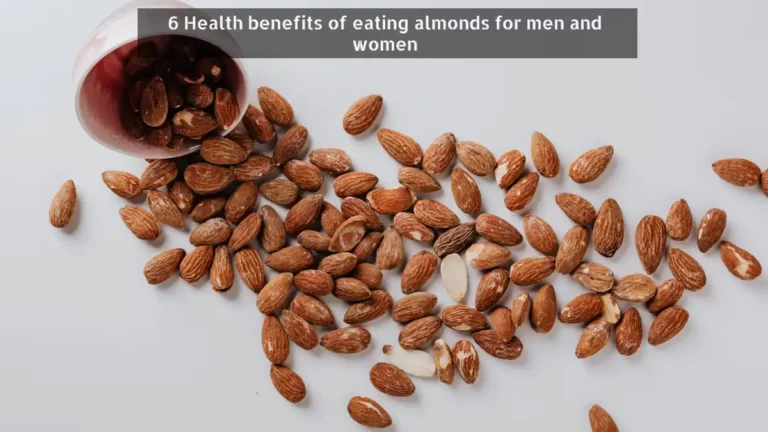
6 Health benefits of eating almonds for men and women

Many people eat almonds as snacks or put them in salads or oatmeal, but did you know almonds have actual health benefits? Many people are unaware of how good they are for you! Here are some of the most significant health benefits of eating almonds for both men and women.

6 Health benefits of eating almonds for men and women

1. Skin, hair and nails

Almonds are great for your skin, hair, and nails due to their high levels of vitamin E. This essential vitamin protects your cells from damage and keeps your skin looking young and healthy.

Vitamin E is also beneficial for your hair, as it can help to prevent split ends and promote hair growth. Furthermore, almonds are a good source of biotin, which is essential for strong and healthy nails.

2. Blood sugar control

Almonds can properly regulate blood sugar levels by providing a slow and steady release of energy. This is due to their high magnesium levels, which have been shown to help improve insulin sensitivity. Additionally, the fiber in almonds can also help slow down sugar absorption into the bloodstream.

3. Brain health

Almonds contain riboflavin and L-carnitine, which are nutrients that have been shown to improve brain function and prevent cognitive decline. Additionally, almond flavonoids can help protect the brain from damage caused by free radicals.

4. Weight loss/ Weight management

Almonds are a low-calorie nut, making them an excellent snack for those looking to lose or manage their weight. Additionally, they’re high in protein and fiber, which can help keep you feeling full throughout the day.

And because they’re a good source of healthy fats, they can also help promote satiety.

5. Bone health

Almonds are generally the best source of calcium and vitamin E, two essential nutrients for bone health. Consuming almonds may help prevent osteoporosis and reduce the risk of fractures. Additionally, the magnesium in almonds can also help keep bones strong.

6. Anti-inflammatory properties

Almonds contain a natural antioxidant called quercetin, which has been shown to have anti-inflammatory properties. Additionally, the flavonoids present in almonds can help to reduce inflammation throughout the body.

This is beneficial for those who suffer from conditions like arthritis or Crohn’s disease. Furthermore, eating almonds has been shown to decrease levels of LDL (bad) cholesterol and increase levels of HDL (good) cholesterol, which reduces the risk of heart disease.

How many almonds to eat per day?

According to the USDA, the recommended daily intake of almonds is 1 ounce or about 23 almonds. This amounts to approximately 160 calories, 6 grams of protein, and 14 grams of fat.

Almonds are a good source of vitamins E and B2 and minerals such as magnesium, copper, and manganese. They also contain phytochemicals that have health-promoting properties.

Some research suggests that eating almonds may help reduce the risk of heart disease, diabetes, and cancer. Additionally, almonds have been shown to promote weight loss and help improve cholesterol levels.

So how many almonds should you eat per day? While there is no definitive answer, the USDA’s recommended amount is a good place to start.

Are almonds fattening?

Though almonds have fat, still almonds are still not fattening. In fact, they can help you lose extra weight. Almonds are a good source of fiber, protein, and healthy fats. They also contain vitamins, minerals, and antioxidants.

All these vital nutrients work together to boost your metabolism and keep you feeling full longer. So if you’re finding a way to shed a few pounds, include almonds in your diet.

Frequently Asked Questions (FAQs)

Q.1. How much almonds should a person eat a day?

Ans. A person should eat around 23 almonds a day. This amount provides the body with essential nutrients, such as magnesium, which is necessary for over 300 biochemical reactions, that include muscle and nerve function, blood sugar control, and blood pressure regulation. Almonds also contain vitamin E, which is a powerful antioxidant that helps protect cells from damage. Additionally, almonds are known as the best source of fiber, protein, and healthy fats. These major nutrients work together to keep the body functioning properly.

Q.2. What is unhealthy about almonds?

Ans. Almonds are a healthy snack, but like all things, they should be consumed in moderation. If you eat too many almonds, they will become toxic to your body. Symptoms of almond toxicity include gastrointestinal distress, headaches, and dizziness. In severe cases, almond toxicity can lead to death.
Almonds have hydrocyanic acid that can create health issues like choking, nervous breakdown, and breathing problems.

Q.3. Is it good to eat almonds every day?

Ans. While there are many benefits to incorporating almonds into your diet, eating them in moderation is key. Almonds are the best source of healthy fats, fiber, protein, vitamins, and minerals, but they are the factors that increase toxicity in the body. Eating too many almonds can lead to severe medical issues.

Q.4. What is the best time to eat almonds?

Ans. When it comes to the best time to eat almonds, it is advised to eat them in the morning. This is because the body can better absorb the nutrients from almonds when they are consumed in the morning, along with breakfast, and help boost metabolism.

Do you need a license to sell Skin care products from home?

0

Running an online skin care business is stressful, isn’t it? Or is it easy to start? Various questions also wander in your mind, like what about a skincare license for selling skincare products? So, in this article, “Do you need a license to sell skin care products?” you’ll find the best answers to all your questions. 

Do you need a license to sell Skin care products from home_

Looking flawless does not happen overnight; it requires dedicated skin routines according to your skin type. Good skincare products help you alleviate various skin woes, like dark circles and aging, and leave behind a confident and radiant you. On the other hand, the usage of some cosmetic products sometimes leads to serious side effects like loss of hair, rashes, and even severe cases that may lead to cancer.

Do you need a license to sell homemade beauty products?

Do you need a license to sell homemade beauty products

Know more about Sell skin care products to sell from home

In this post, we will also cover skin care products to sell from home or how you can sell skin care products from home. 

With a wide array of skin care products readily available on the market, it becomes important to keep a close eye on the credibility and side effects of the products. The Food and Drug Administration is the federal agency that regulates cosmetics or skincare products under the FD&C Act. In order to understand the control of the FDA over the manufacturing and marketing of cosmetics products, we will discuss some major rules and regulations of the FDA and their possible implications.

Skincare products to sell from home
  • According to the FD&C act, a product is labeled as cosmetics if it is meant for cleansing, improving appearances, or for external beautification. But if the product is meant for disease cure or prevention, or for altering the anatomy and functioning of the body it is labeled as a drug.
  • This act prohibits the manufacturing and marketing of adulterated and wrongly labeled products. The product should not have any damaging side effects, and the labeling should be true to the actual effect of the product. The ingredients of the product should be mentioned in accordance with the Fair Packaging and Labelling Act.
  • The act does not require the FDA to approve cosmetic products or ingredients except color additives. Other than color additives and FDA-prohibited ingredients, manufacturers can use any safe ingredient that maintains the unadulterated quality of the product.
  • The FDA holds all the people involved in the interstate commerce of the product, such as the manufacturers, distributors, and retailers, accountable for ensuring that the product they are doing business with is not adulterated and correctly labeled. 
  • According to the FD&C Act, cosmetics are not subjected to any test approvals. However, the FDA does collect samples for inspection and research in cases of complaints or suspected non-compliance with safety standards.
  • FDA does not have the power to recall any cosmetics from the market. Only the manufacturer has the authority to recall a product but the FDA can request a recall if the product is found to be harmful or adulterated.
  • The FDA is capable of taking strict action against people involved in manufacturing or marketing any product that is not in compliance with the law. The FDA might completely remove the product from the market or seize it. In extreme cases, the FDA can file criminal charges against the person responsible.

  • FDA also controls the quality of imported products to the USA, working with the U.S Customs and Border Protection (CBP). Imported products can be refused entry if they fail to follow the standards in an examination by the CBP.
  • It is not required of any cosmetic company to register, share their product formulation, or get an FDA license for selling their products. Although, it is advisable to voluntarily register under the FDA’s Voluntary Cosmetic Registration Program (VCRP). It should be noted that registering under VCRP by no means depicts FDA approval.

By closely inspecting the above-mentioned rules imposed by the FDA regarding running skin care businesses and skin care licenses. We conclude that the FDA does not issue any specific license in regard to selling skincare products.

However, it is required by the manufacturers to use ingredients that maintain specific quality standards and to label the product in a non-deceptive way. FDA focuses on the prevention of selling any adulterated products in the market.  FDA does not provide guidelines for any specific testing but performs various quality checks like toxicological testing and microbiological testing. It would not only improve the chances of the product being unadulterated but also result in increased credibility of the product. 

Ground Beef Nutrition Facts | Is It Bad or Healthy?

0

One should know the nutritional facts of ground beef so that one can eat right without becoming vulnerable to life-threatening diseases.

Ground beef is a highly recommended food by dieticians, doctors, and trainers to get healthy nutrients into the body. Ground beef is a major source of iron, protein, minerals, and vitamins. Though ground beef is a bag full of healthy nutrients, it can still worsen your health and invite many fatal diseases if not taken in the right way. For this, you must know about ground beef nutrition facts.

Ground-Beef-Nutrition-Facts-_-Is-It-Bad-or-Healthy

One should know the nutritional facts of ground beef to eat right without getting vulnerable to life-threatening diseases.

Ground beef Nutrition facts

The following nutritional facts are based on 85g of cooked ground beef (85% lean). Moreover, these don’t have any added fat and sodium.

Calories 218
Sodium 76mg
Fat 13g
Fiber 0g
Sugars  0g
Carbohydrates 0g
Protein 24g
*nutritional facts are based on 85g of cooked ground beef (85% lean)
Ground beef Nutrition facts

Lean Ground Beef Nutrition Facts

The following table will tell you about lean ground beef nutrition facts. This data is based on 100g of broiled ground beef with only 10 percent of fat. These data are based on the nutrition facts provided by USDA.

Calories 217
Water 61%
Fat 11.8g
Fiber 0g
Sugars 0g
Carbohydrates 0g
Protein 26.1g
*Data is based on 100g of broiled ground beef with only 10 percent of fat.

Ground Beef 80 Lean 20 Fat Nutrition Facts

The nutritional facts of ground beef 80 lean 20 fat are given here in the following table. The serving size of the following data is 4oz or 113 grams.

Total Calories 287
Total Fat 23g
Saturated Fat  8.6g
Trans Fat  1.3g
Cholesterol  80mg
Sodium  75mg
Potassium  305mg
Total Carbohydrates  0g
dietary fiber 0g
Sugars  0g
Protein  19g
* nutritional facts of ground beef 80 lean 20 fat 

Kroger Ground Beef Patties Nutrition Facts

Below we have furnished the Kroger ground beef patties nutrition facts. Data is based on one patty of 136 grams.

Calories 350
Total Fat 27g
Saturated Fat 10g
Cholesterol 95mg
Sodium 90mg
Protein 23g
Carbohydrate 0g
* Data is based on one patty of 136 grams 

Walmart Ground Beef 73/27 Nutrition Facts 

Let’s check out the Walmart ground beef 73/ 27 nutrition facts from the table below. The serving size of this Walmart ground beef is 112 grams.

Calories 340
Total Fat 30g
Saturated Fat 11g
Cholesterol 85mg
Sodium 75mg
Protein 17g
Carbohydrate 0g
* Walmart ground beef 73/ 27 nutrition facts

Source: Youtube

What is the risk of having their excess in your diet? 

Having too much quantity of ground beef in your diet will develop some serious health issues over time. Many researchers have found that it increases the chances of heart attack, diabetes, and diseases causing liver problems.

However, many doctors still claimed the allegations wrong, which tells that ground beef is bad for health. Processed ground beef is not beneficial and is risky for health.

What is the risk of having their excess in your diet_

So, if you want to add protein and vitamins to your body without any risk, then choose grass-fed ground beef. Moreover, one can also go for 100% organic ground beef as it is free from harmful pesticides and added fat.

If you have allergies or health issues, then you must seek your health professional or dietician before including ground beef in your diet.

Frequently Asked Questions (FAQs)

Q. How bad is ground beef for you?

Ans. Ground beef isn’t that bad for you if you have it appropriately. However, ground beef is always considered nutritious and healthy. Ground beef consists of healthy nutrients like iron, minerals, protein, vitamin B3, antioxidants, and more.
However, a few observational studies claim that it causes cancer, diabetes, and cardiovascular diseases. The prime reason is that they do studies on processed meat, not organic meat. Processed meat is made from overheating, which can surely cause some serious diseases.
Ground beef becomes bad for you when eaten in high quantities as it is a high source of iron that becomes toxic to the body. A high amount of iron affects the brain, heart, and liver.

Q. What is the healthiest ground meat?

Ans. The healthiest ground meat to intake is grass-fed, grass-finished beef. As it is the best source of Omega 3, Omega 6 fatty acids indeed fulfill vitamin A and E requirements in the body.
Moreover, the cholesterol and fat level of this meat is pretty low. That is why it is considered as healthiest of ground meat.

Q. Is lean ground beef healthy?

Ans. Yes, as per most of the studies, lean ground beef is found to be healthy. They deliver a good amount of minerals and vitamins to the body. Moreover, they also give iron and zinc.
Lean ground beef has 95% protein and 5% fat, which are healthy sources of nutrients and less saturated fat.

Q. How many calories does 80/20 ground beef have?

Ans. The 80/20 ground beef has a total number of 231 calories. This information is for 3oz of ground beef.

How can I lose an lb a day & the best way to lose one pound?

0

It is possible to lose an lb a day, but the procedure has several health repercussions. Moderate to high-intensity workouts assist.

Although the idea of losing a pound in a day seems thrilling, the process can deteriorate one’s health. For athletes, burning 3500 calories daily is like a piece of cake, while commoners may face several side effects. Health adversities such as kidney failure, cardiac problems, hormonal imbalance, and several life-threatening ailments emerge as repercussions.

Lose 1 pound a day

You would need to exhaust your body and soul to burn 3500 calories on a regular basis. Your calorie consumption should not exceed 2500 Calories, as this will gradually lead you to starvation.

To slash away fat, intake of a high-protein meal is a must if you undertake high-intensity workouts. In addition to losing a Pound in the period of 24 hours, adequate water consumption becomes the need of the hour.

What is the best way to lose one pound?

Several sites and YouTube videos bait innocent beginners by claiming to help them shed pounds daily. Low-calorie diets provided by such platforms bludgeon the viewers to starve.

Furthermore, the concept of shredding that one pound of fat may not be as effective as losing water weight. Edema (a condition to possess surplus water internally) occurs in case of less consumption of Aqua, taking great quantities of salt, fully-fledged carb meal, or disruptive hormones during the cycle of periods of cardiac-related issues. For the reversal of such conditions,  you need to drink water profusely to flush out sodium molecules from your body.

lose an lb a day
What is the best way to lose one pound_

Moreover, you can cut down the carbs from the sustenance or may take up the hefty cardio training on a treadmill but the procedure should be stepwise.

How much fat can I lose in a week?

Ideally, an individual should lose 1-2 pounds in the span of 7 days. But this general advice does not satisfy the impatient curvy humans. Maximally, people have lost 11 pounds in 11 days too, so there is no boundation to such individuals.

Medical professionals never suggest walking on the ‘quick weight loss’ path as it may lead to chronic disorders in the future.

Although plus-size humans can bear a larger calorie deficit with no serious adversities. But if we talk about individuals having lean structure, they may not be as fortunate as their overweight pals.

How much fat can I lose in a week_

Now the ball is in your court, whether you starve yourself to look slim and trim or prioritize fine fettle above all.

How to lose a pound a day by walking?

On a serious note, there is no such thing as losing a pound a day by just walking. Although walking can complement low-impact exercises along with profuse fluid consumption and low-carb meals to achieve a far-fetching goal.

In order to lose 0.5kg in 7 days, one would have to walk five miles. Hence, shredding one pound in just 24 hours is no less than a herculean task.

If you really think of yourself so high, go ahead and stroll until you complete 10,000 steps in a day to shed some weight.

How much weight can you lose in one day without eating?

Intermittent fasting can be synonymous with a day without eating. In this fasting, an individual does not eat anything for 24 hours and can repeat the procedure after a certain interval.

From the results of various research and studies, experts have out that fasting incorporates numerous positive effects.

How much weight can you lose in one day without eating

Fewer intake of calories in a week due to this fact, there is a significant weight loss. However, fasting for a day may lead you to shred half a pound due to metabolic shifts. If you continue with intermittent fasting, you will observe the modification in your metabolism and reduction in risks associated with health.

Endnotes

Dreaming to shed stubborn fat is of no worries but to lose weight in an instant comes up with bodily adversities. One can surely lose a pound in a day but the water retention capacity of the kidney, pumping strength of the heart, and regulation of hormones get affected.

A high-intensity workout and calorie-deficit diet slows down the metabolism and leads to constipation, nausea, or indigestion.

It is medically advisable to lose 1-2 pounds weekly so consider the comments of experts. In the end, no figure like a Runway model will protect you from suffering from severe health atrocities.

Frequently Asked Questions (FAQs) on lose an lb a day

Ques.1. Is it possible to lose an lb a Day?

Ans. Yes, it is possible to lose an lb in a day but the procedure consists of several health repercussions. Generally, a person consumes 2000-2500 cal regularly so in order to shred a pound he needs to burn 3500 cal. Moderate to high-intensity workout assists the calorie deficit step to achieve the target.

Ques.2. What exercises can I do to lose a pound a day?

Ans. High-intensity or low-impact workout is the prime necessity to lose weight quickly. The individual would have to opt for aerobics or dancing to accelerate the metabolic rate. Cardio training like running on the treadmill or gradually advancing the inclination and speed on the treadmill would meet your training requirements. Lifting weights and high endurance can ease the worries of the weight loss process.

Ques.3. How can I lose a pound a day without exercise?

Ans. To lose a pound a day without exercise is like pigs having wings. This appears as a near to impossible task but still, you can make some efforts to change your eating habits. Cut down on carbs, consume protein-rich food, drink water profusely, and eat fiber-rich meals for slashing away a pound. Hydrating the body means the elimination of bountiful Na molecules to reduce water weight.

Ques.4. How can I lose an lb fast?

Ans. Choose a calorie-deficit diet along with low-impact exercises in order to lose an Ib fast. Reduce the intake of carbohydrates, consume leafy veggies, bolster the body with protein, and hydrate yourself to lose weight quickly. Though quick weight loss comes with health adversities, one needs to check one’s health.

Isotonic exercise examples: Definition, isotonic workouts

0

Are you experiencing rigidness in your body? Then the most natural and fit way to recover your body flexibility is through exercises. Exercises of all sorts are beneficial for our health, but some exercises in a more intricate way train your body. It is with some isometric exercise that you stay fit and gradually start gaining confidence in your physique. So, don’t miss knowing, what is isotonic exercise. It’s benefits and some additional much-required tips. 

What are Isotonic Exercises?

Isotonic exercises involve muscle contractions where the length of the muscle changes, causing movement in the joints. These dynamic exercises are characterized by constant tension and variable resistance. Let’s delve deeper into the world of isotonic workouts.

What is the isotonic exercise definition? 

Those who are not much into the gymming and fitness world will confuse themselves with the isotonic exercises definition. To start from the terminology itself, it’s a Greek word that means the same tone. So, while arranging the meaning, isotonic exercises are those workouts that maintain the same tension all over the body.

isotonic exercise
isotonic exercise

In this type of exercise, the muscle usually contracts and shortens against the steady weight during activities like lifting some loads. So, when you mean isotonic exercises it refers to the program which enhances muscle strength and overall endurance depending on lifting constant weight at variable speeds based on ranges of motion. 

Isotonic Exercise Meaning

The meaning of isotonic exercise lies in its ability to engage muscles throughout the entire range of motion, promoting strength, flexibility, and endurance.

Isotonic exercise examples

The isotonic exercise examples can further be divided into two types. The first category includes workouts or exercises you practice to stay fit. The second category consists of those activities which are not in a direct way called exercises. Those include all the daily chores that indirectly contribute towards historic stretches. 

  • Isotonic exercise examples. Some of the direct isotonic exercises include aerobic workouts (the exercises use oxygen to support your muscles). Those are:
  • Walking (both slowly as well as fast walking).
  • Sprinting or running. 
  • Swimming. 
  • Gymnastics and dancing. 

The second form of exercise or workout you should consider in the isotonic exercises is resistance training exercises. The movement examples involved in resistance training are-

  • Pushups. 
  • Pullups.
  • Bench Press. 
  • Bicep curls. 
  • Deadlifts etc. 

The second type of isotonic exercise is nothing but everyday household stuff like home cleaning, gardening as well and car washing. So, as opposed to the common assumptions, isotonic exercises are always not exhaustive but it does happen in a fun manner.

4 Tips before practicing isotonic stretching exercises. 

Some of them, particularly the isotonic stretching exercises, exhaust a lot of energy. So, as a precaution, you can make the exercises smooth for you by following the below tips. 

4 Tips before practicing isotonic stretching exercises
  1. Maintain consistency throughout the week. It is when you set goals and fulfill them each day, that your workout is less hurtful.  That is each day try to set a target of at least twenty to one hour depending on your body’s capacity. Follow the same exercise five to seven times a week. 
  2. Easy stretching before aerobic isotonic exercise. The muscles get flexible from the rigidity when you practice the stretching exercises. The soreness from your daily stipulated routine also lessens with the stretching.
  3. Consider low-impact exercises at the beginning. Your body can’t sustain heavy jerks or can’t supply excessive energy at the first go itself. So, decide on low-impact exercises like walking, swimming, and pilates, which help in lessening the joint strains. 
  4. Upgrade your targets. Since, when you are a starter you begin with easy workouts. So, with time your body becomes more flexible and can take on more physical activities. And now it’s time for you to set new targets and challenge yourself with heavy exercises. For example, if earlier you were jogging then upgrade yourself by practicing running for a particular period. 

Isotonic Exercise Examples for Beginners

If you’re new to isotonic exercises, start with simple yet effective movements like bodyweight squats, lunges, and bicep curls.

isotonic workouts

Embarking on a fitness journey often leads us to explore various workout routines, and one term that frequently surfaces is “isotonic workouts.” These dynamic exercises involve muscle contractions where the length of the muscle changes. Picture the energizing rhythm of a bicep curl or a power-packed squat – both quintessential examples of isotonic exercises.

isotonic workouts
isotonic workouts

Not only do these movements make your workouts more engaging, but they also play a pivotal role in enhancing strength and endurance. Incorporating isotonic exercises into your fitness regimen can effectively target multiple muscle groups, promoting overall fitness and flexibility. As you delve into the world of isotonic workouts, remember that the key lies in finding the right balance and incorporating a variety of movements to keep your body challenged and motivated.

Whether you’re a fitness enthusiast or a beginner looking to revitalize your routine, isotonic workouts offer a dynamic approach to achieving your health and wellness goals.

Checkpoints before doing isotonic resistance exercise

The resistance training exercises require more body persistence to endure and complete them. So, some must checkpoint about isotonic resistance exercises. 

Checkpoints before doing isotonic resistance exercise

1. Use safety equipment

There are chances that the faculty instruments would prove risky and this can cause injury to your body. So, before initiating the training, make sure that the equipment is not subject to any serious injuries to your muscles, ligaments, or bones. 

2. Stop holding onto your breath

In popular weight-lifting exercises, there is a misconception that holding on to your breath will show greater outcomes. But that’s not true. While weight lifting it’s suggested by the gym trainers and physiotherapist to breathe normally. When you are having a Relaxation point at your exercise, try to inhale, and at exertion times, exhale your breath. 

3. Knowing the proper technique is crucial

A sudden move without any prior experience can bring muscle strain. Therefore, it’s always preferable to go with a gym instructor or fitness professional, because they know the correct technique to practice an exercise. 

4. Practice slowly

When you start for example a weight lifting exercise, you can only lift a few kgs. But that’s fine. It’s after daily practice that you are capable of lifting a maximum of kgs. Daily weightlifting habituates your ligaments and tendons to a regular workout. But when you do the contrary, then you can experience ache and muscle pain. 

5. Train with the full motion range

With high-resisting exercises, the energy must travel throughout the range of motion to the body. This grows the strength of the body muscle for all points. Other than that, the probabilities of injury by overstretching are also reduced. 

6. Other checkpoints

Some of the obvious precautions you suggest for this type of isotonic exercise are: don’t overwork your body through workouts. Secondly, when you are injured or ill don’t take a break from exercise.  And lastly, the maintenance of correct posture is also necessary for all types of exercises. 

How does isotonic exercise differ from isometric exercise?

The isotonic strengthening exercises which maintain an equal tone are opposed to what isometric exercise contributes to the body. The isometric exercise mainly does contractions of a specific or a group of muscles. The latter exercises are known as static strength training. They differ from isotonic exercises because they don’t move the muscle in a range. The isometric exercises like a chair and tree yoga pose mainly hold a position for a particular point in time. And unlike them, the isometric exercises involved the movement of a specific kind, like walking. 

isotonic exercise differ from isometric exercise

isotonic exercise benefits

As shared earlier, isotonic exercises involve a lot of aerobic exercises. So, these types of exercises are good for your heart as they strengthen the cardiovascular system. Those are an outcome of increased oxygen consumption, muscular endurance, cardiac output, and increased heart rate. Below are some of the practical benefits of isotonic strengthening exercises-

7 Benefits from Isotonic exercise
  1. It contributes to assisting you in leading a quality life. A range of motion muscles is built that supports daily activities. 
  2. You won’t require any specialized instruments or equipment. 
  3. The suspected risk of osteoporosis is reduced and gradually helps in improving bone density. 
  4. In totality boosts cardiovascular health. 
  5. Assists you in building stronger and bigger muscles and in totality rescues you from any kind of injury, fracture, or sprain. 
  6. The blood sugar level and cholesterol control become possible with some of the isotonic exercises. 
  7. Stronger bone prevents any kind of broken bone. 

Precaution for isotonic exercises

Though isotonic exercises are helpful for your health and also bring fitness to your body. In some exceptions, you should take a break or discontinue from such exercises. Like when you have an injury or the doctor is asking you to avoid isotonic workouts then you should not practice such training. Other than that, freshers who don’t know how to do isotonic exercises should take the advice of professionals. 

Start working out now! 

Therefore, from this article, the concept of what isotonic exercise should be clear to you. To sum up, these are those exercises that maintain the same tension throughout the body during movement. Other than that, these kinds of exercises strengthen the cardiovascular system. The cholesterol and blood sugar levels are also kept in check with isometric exercises. But while practicing those exercises, do remember that if you are new to gyming don’t try out for the first time for yourself. Contact a professional instructor and learn from them the proper posture and technique to avoid any kind of fatigue. 

Frequently Asked Questions (FAQs)

Q.1. What are the two forms of isotonic exercises? 

Answer- Isotonic exercises are mainly aerobic exercises like those that are practiced with the presence of oxygen for the muscles. Examples of that kind of exercise are walking, running, dancing, and swimming exercises. The second form of exercise is resistance training exercises which require maximum body strength. Examples included for those types are push-ups, pull-ups, bench presses, etc. Home cleaning and daily activities like gardening are also included in isotonic activities. 

Q.2. What is an isometric exercise example? 

Answer- Isometric exercises are those which mainly do contractions of a specific or a group of muscles. They are known for static strength training. Examples of isometric exercises are plank, low squats, wall sits, calf raises hold, etc. 

Q.3. Who invented isotonic exercises?

Answer- Theodor Hettinger published a book called Physiology of Strength mentioning isometric and isotonic contraction. 

Q.4. What are 4 isotonic exercises? 

Answer- Isotonic exercises can be both aerobic and resistive training exercises. In them, the examples include squats, swimming, pull-ups, push-ups, weight lifting, etc. 

Best Skincare Routine for Your Skin Type – 5 Expert Tips

0

Have you ever asked yourself why taking care of your skin is essential? Definitely yes! You’re here to read this article, “Best skincare routine according to your skin types.” Let’s start; as we already know, skin plays a vital role in everyone’s life. But did you know that our skin is your body’s largest organ? Our skin is also the first layer of defense against harmful foreign bodies. Whenever we go out of our homes, it is exposed to a barrage of germs and bacteria.

Best Skincare Routine for Your Skin Type

So, taking good care of your skin routine is more important than your physical appearance, and if you take care of your skin, it is absolutely worth the time and energy you spend on it on a daily basis.

People normally think that eating healthy food and drinking plenty of water will make the skin healthy. Yes, there is no doubt that these play an important role in making healthy skin, but we should also take care of our daily skin routine habits.

Is it necessary to follow a skincare routine or not?

Of course, it is necessary to follow a skincare routine. Usually, when we start a skincare routine, we get maximum vitamins and nutrition to make our skin healthy. Moreover, it can easily fight chemicals. Also, it is more important to understand what exactly your skin needs because every skin is different, and the problem areas are also different for everyone.

How do you identify what exactly your skin type is?

Take a sheet of blotting paper and gently put it on your face. Hold it against a bright light. If you see little to no oil, you likely have dry skin. And, If the sheet picks up some oil from the T-zone, you have a combination of normal skin. You likely have oily skin if it picks up oil from all parts of your face. The last one is sensitive skin. Actually, sensitive skin type is easy to identify because it can easily react when using any product. For instance, pimples, redness, open pores, and pigmentation can easily be seen on sensitive skin.

How to identify what exactly your skin type is

 How many types of skin do we have?

Alright! Now you’re thinking about how many skin types there are. Usually, we have seen that there are 5 types of skin. Below, we covered five types of skin in detail. Let’s know what they are-

How many types of skin do we have

1. Dry skin:

This type of skin feels tight and itchy, especially after washing, you have dry skin. It feels patchy and itchy. It is also prone to premature aging.

2. Oily skin:

This type of skin has a shiny and greasy T-zone and may have oily skin. Oily skin tends to have larger sebaceous glands that produce excess oil. It is also acne-prone.

3. Normal skin:

This skin type feels balanced. It is neither too oily nor too dry. Also, it is not excessively sensitive and does not react to anything applied to it.

4. Sensitive skin:

If this type of skin reacts to any product and gets irritated easily (especially after sun exposure), it is sensitive skin.

5. Combination skin: 

This type of skin has a T-zone which is oily and the cheeks and rest of the face are dry, you have combination skin.

Methods follow in Daily Skin Care Routine for all types of skin 

Methods you need to follow according to your skin type are listed below. We discussed this two times: in the morning and at night. These two times are important for your best skincare routine.

Methods follow in Daily Skin Care Routine for all types of skin

1. Skin care routine for Dry skin: 

For morning 

  • Cleansing

It is gentle on your skin and removes dirt without stripping it of moisture.

  • Toning

 Toners with cucumber and aloe Vera help clean your face while keeping it hydrated.

  • Serum

An antioxidant serum will help reinforce your skin’s defense.

  • Moisturizing

A moisturizer gives your skin the hydration it needs. Choose one with a thick consistency and hydrating ingredients such as dimethicone, mermaids, and glycerine.

  • Sunscreen

Pick a sunscreen with a serum-like formula and an SPF 30 and PA+ rating, as this will protect your skin from harmful ultravirus rays.

For Night

  • Cleansing

Use the same cleanser that you use in the morning.

  • Toning

Tone your face with the same toner you use for your morning routine.

  • Moisturising

Buy a good night cream with a high hydrating value. Moisturizers that contain evening primrose oil, sweet almond oil, and jojoba oil act as your skin’s natural lipids and reinforce its moisture barrier.

2. Skin care routine for Oily skin:

For Morning

  • Cleansing

If you have oily skin, it is important to invest in a cleansing face wash. I prefer sulfate-free products, as these will control oiliness while cutting the risk of drying out your skin.

  • Scrubbing

You can use a very mild scrub to cleanse the skin pores occasionally. However, avoid using a harsh scrubber. You can also use gentle exfoliates thrice a week.

  • Toning

Alcohol-free toner with ingredients like sodium PCA, and witch hazel is the way to go when dealing with oily skin. These astringent ingredients help clean your skin and refine skin pores without damaging or dehydrating your skin.

  • Moisturising

Water-based lotions are usually a good option for oily skin. These feel light on your skin, keep it hydrated, and leave it with a matte finish.

For Night

  • Cleansing

Use the same cleanser that you use in the morning.

  • Toning

Tone your face with the same toner you use for your morning routine.

  • Serum

Oily skin usually has large pores; serums help minimize the appearance of skin pores. If you have acne-prone skin, look for tea tree oil and salicylic acid ingredients.

  • Night Cream

 A water-based moisturizer night cream is ideal for oily skin as it feels light.

3. Skin care routine for Normal skin 

For morning 

  • Cleansing

Cleanse your skin with a gentle, sulfate-free cleanser, as this helps get rid of any excess oil or grime that may have settled into your pores.

  • Toning

Avoid toners that contain alcohol. Use toners with natural ingredients, such as rosewater and other hydrating ingredients.

  • Moisturizing

A moisturizer with an SPF of 30++ more will help hydrate your skin while protecting it from the sun.

  • Sunscreen

Though your moisturizer contains SPF, do not forget to apply sunscreen. Go for a sunscreen with at least SPF 30 and a PA + rating. This ensures your skin is protected from both UVA and UVB rays.

For Night

  • Cleansing

Use the same cleanser that you use in the morning.

  • Toning

Tone your face with the same toner you use for your morning routine.

  • Serum

Use an antioxidant-rich serum to provide additional nourishment to your skin.

  • Moisturizing

Go for a moisturizer with a creamy formula to nourish your skin.

4. Skin care routine for Combination skin 

For Morning 

  • Cleansing

Follow the instructions given for oily skin. If this is too drying for your skin, switch to a cleansing lotion that does not foam or lather.

  • Toning

Follow the instructions given for oily skin. You may also use a toner that contains witch hazel.

  • Serum

A hydrating serum is the best pick for combination skin. Pick a serum that contains hyaluronic acid.

  • Moisturising

A lightweight mortifying moisturizer that will control oiliness while keeping your skin hydrated.

  • Sunscreen

Choose a sunscreen that has SPF 30 and PA+ rating and gives a matte finish.

For Night

  • Cleansing

Use the same cleanser that you use in the morning.

  • Toning

Tone your face with the same toner you use for your morning routine.

  • AHA/BHA Serum

Pick an AHA/BHA serum for your skin. AHA is extremely gentle on your skin and BHA (such as salicylic acid) exfoliates your skin and prevents acne.

  • Moisturising

Moisturize your face with the same product that you use in the morning.

5. Skin care routine for Sensitive skin

For Morning

  • Cleansing

Wash your face in the morning with a gentle, sulfate-free cleansing lotion that does not lather or foam. This will help remove dirt without irritating your skin.

  • Toning

Avoid toners that contain alcohol. Invest in ingredients like green tea, white tea, chamomile, and beta-glean, as they are anti-inflammatory and help reinforce your skin’s immune system.

  • Facial Mist

You may spray a hydrating and gentle facial mist. This helps to calm your skin. Pick a mist with a hydrating formula.

  • Moisturizing

When shopping for a moisturizer for sensitive skin, look for one that is fragrance-free and hypoallergenic. This will keep your skin hydrated without irritating it.

  • Sunscreen

Pick a sunscreen that contains zinc oxide. This ingredient is less likely to irritate your skin.

For Night

  • Cleansing

Use the same cleanser that you use in the morning.

  • Toning

Use the same toner that you use in the morning.

  • Serum

Pick a serum that has hydrating and calming ingredients.

  • Night Gel

When choosing a night gel, go for a non-irritating, fragrance-free, and hypoallergenic product.

Conclusion 

Our skin’s needs can change over time, and taking steps to identify them is essential for it to function and look its best. Keeping the health of your skin in mind, you should have to follow daily care of your skin routine. Moreover, If you want to sell online cosmetics products. 

Am I Dating a Narcissist? Take the Test & Uncover the Truth

0

“Am I Dating A Narcissist?”: Check Out About the Traits of a Narcissist Personality 

It is said that behind every fragile relationship, there must be some reason hidden. The particular problem we will try to address today is what many denote as an I-centric disorder. 

Am I Dating a Narcissist

To begin with, let us tell you we all inherit some level of narcissist trait with our persona. I mean, who doesn’t like to talk about themselves? But you should ask Am I dating a narcissist question where the trait continuum stands high and somewhere or the other; you are finding it odd about your partner! Let’s explore more about this topic. 

A True Narcissist Meaning 

A narcissist individual is someone who has a stronger sense of self-importance, even at the cost of their loved ones. They hold the zest of speaking about themselves for hours, and whether the next person is interested in knowing about the same does not bother them. 

Other than that, they consider themselves gifted and often link themselves with someone of higher status or class. The true narcissist meaning gets even clearer when you observe someone distracted with the fictionary plot of holding unlimited power and success. 

The problem with narcissistic people is that they don’t realize that they are being arrogant and hurting others’ sentiments. 

What is a Narcissistic Personality? 9 Criteria 

The famous nine criteria by the Diagnostic and Statistical Manual of Mental Disorders (DSM-5) have charted out the essential standards to confirm whether I am a narcissist or not! As per DSM-5, you only need to have five of the 9 criteria to confirm the test clinically. Those are: 

What is a Narcissistic Personality
  • The self-importance in a grand sense. 
  • Already occupied with the fantasies of holding extraordinary power, brilliance, success order, love, or beauty. 
  • They have a strong belief in the idea that they are special as well as unique. Therefore, they can imagine associating themselves with high-status institutions or people. 
  • The urge for extra admiration. 
  • A strong sense of entitlement. 
  • They lack empathy.
  • The IEB or Interpersonally Exploitative Behaviour.
  • They either have a fallout conception of others being envious of them or also feel envy of others. 
  • Often manifests haughty or arrogant behaviors, hurting others’ sentiments.

To confirm your apprehension, ‘Am I dating a narcissist or not?’ check out the abovementioned qualities. 

Causes of Narcissistic Behavior (NB)

An NB’s victims have their own grievance story and, if not, can inherit from genetics. Physiologists are still trying to figure out the exact causes of developing narcissistic behavior. 

While such a disorder can occur in the process of personality development and as a continuum to other mental health disorders. Whatever, be the case, some of the anticipatory reasons behind the narcissistic disorder are as follows- 

● Past Experience. The victims of narcissism often have bitter pasts when they receive criticisms and unlikely comments from their peer group, teachers, or outsiders. Therefore, such a narcissistic attitude comes from insecurity to prove themselves and eventually becomes a habit. 

● Family Environment. Constant clashes between parents and kids can generate a discouraging environment. Even excess adoration can be harmful and be the reason behind NB. 

● Family Inheritance. Some traits, such as Narcissistic Disorder, are passed on through genetics. So, such arrogant behavior can be caused by inherited characteristics.

● Neurobiological cause. Individuals may develop narcissistic personality disorder when their brains stop functioning efficiently and coordinating with the nervous system.

When parents admire their kids excessively without exposing them to reality and train them with constructive criticism, they develop such characteristics of extra self-importance. 

(NPD) Narcissistic Personality Disorder Symptoms

You can’t conclude the ‘Am I dating a narcissist’ question unless you are well aware of the NPD symptoms. Signs of Narcissistic Personality Disorder symptoms vary from person to person. Check out below 

  • They have more than an obvious sense of self-worth. 
  • Often tries to seek attention and requires excessive admiration. 
  • Tries to showcase a superiority complex even if they haven’t achieved much. 
  • Every time, they try to take control of a conversation and turn the dialect in their favor. 
  • Ultimately, they try to take advantage of others to get what they want.

Other than the given symptoms, those nine signs charted out by the Diagnostic and Statistical Manual of Mental Disorders (DSM-5) are also important indicators to identify a Marxist personality. 

Traits of a Narcissist Partner

If you are in a narcissistic relationship, it’s truly hard, but that does help in giving your bond some context. You can correct your partner only when you know what they are going through. Checklist on the important traits of your narcissistic boyfriend or girlfriend. 

Comes out as too strong even at the beginning of the relationship. As shared earlier, narcissistic behavior has a special inclination towards grandiosity. They try to relate with those people they feel of superior class, beauty, or talents. For the sake of it, they will over-compliment you and make you feel special even during the initial few takeouts. They will put effort into framing superficial bonds, which is too early in a relationship. 

Manipulating the conversation about their greatness. All or most of their conversations start and end with their accomplishments. They exaggerate things and accept praise from others also. They are more engaged in speaking about themselves and often turn out as a poor listener. So, test this narcissistic quality when you talk with your partner. 

Traits of a Narcissist Partner

Depends on others to boost confidence. In contrast to how they behave in reality, they have lower self-confidence. They often rely on others to boost their confidence levels. 

Rude or less empathetic. They are apathetic to how you feel because of their behavior. They even feel least bothered to ask for an apology and are intolerant to view from others’ perspectives. So, you can check out the personality trait by noticing if your partner cares about your long, strenuous day. Or cares when they hurt you or not! 

Lacks many friends. They come in conflict with other perspectives. So, they commonly lack more friends as they are also inconsiderate about their feelings. They have limited friends because of their insecurity and the hypersensitive traits of a narcissist. 

Manipulating you at a toxic stage. The extreme form of manipulation in any healthy relationship takes the form of gaslighting. They won’t hesitate to tell open lies or have a habit of distorting reality. As a side effect, some of the changes, like lesser confidence, hypersensitivity, and lesser self-worth, grab the personality of their partners.

Quick Narcissist Personality Disorder Test 

Even if you are unsure and often question, am I a narcissist? Then, try out the quick NPD test. Below, we have laid out ten questions, and among them, if six answers are yes, then you have minor NPD; 7-8 answers with a yes response are moderate NPD behavior. 

Those with an extreme Narcissist personality disorder will get 9 or all 10 questions answered as yes. 

  • Are you good at influencing your friends or not? 
  • Do you think that everything surrounding you will run as per you? 
  • Do you like to lead a conversation every time? 
  • Is it okay for you to lose an argument? 
  • Do you feel sorry when you hurt others’ sentiments / do you think they deserve what they are feeling? (yes for the first option, no for choosing the second option) 
  • Do you find it pleasing when you manipulate others? 
  • Do you find it appealing to constantly gaze at your face in the mirror? 
  • Do you enjoy being the center of attention every time? 
  • Ever realized being arrogant in any conversation unless someone else makes you realize it? 
  • Do you feel envious of others or think others envy you?

However, note that the above narcissism test should not be taken as a professional diagnostic tool. It’s a simple behavior test that gives a general idea about your partner’s personality. 

The Treatment for Your Narcissistic Partner

When you get confirmed over whether you are dating a narcissist, it’s time to make your partner realize the same through treatments and counseling. Often, the disorder victims realize their problems from the tender age of 7-8 and still lack knowledge of how to cure such problems. 

That’s the issue with mental or cognitive issues where there are no precise solutions to problems. However, you can start treating such behavior of your partner by following the below measures- 

  • Help your partner develop realistic goals for their life. 
  • Make them realize it’s okay to get criticism every time you criticize them. 
  • Make them recognize both their strength and weaknesses of theirs. 
  • Engage your partner in maintaining cordial relationships with co-workers and people. 
  • Encourage them to make more friends.
  • Convince them to attend talk therapy, where behavioral patterns such as relating with others through talking are taught. 
  • Make them a compliment to acknowledge others’ accomplishments, too. 

Your partner, above all, has to learn more about their driving emotions and why they despise others and have to control their competitive nature from the initial stage of NPD itself. 

How Does Dating a Narcissist Change You? 

Two sides tell the story of the after-effects of being in a narcissistic relationship. The immediate negative impact is emotionally traumatic, and you face issues of lower self-esteem anxiety, become a loner, and suffer from insecurity. 

How Does Dating a Narcissist Change You_
How Does Dating a Narcissist Change You?

The only good side is that as a survivor of an abusive relationship, you may start developing compassion for others. As a sufferer, there builds more respect for others in your heart. 

The Final Call 

From an outsider’s perspective, it’s difficult even to imagine the position of being in a relationship with a narcissist. Moreover, am I dating a narcissist? The question gets trickier because there are several stages of narcissism disorders. 

If your partner is in the initial or moderate stage of the problem and you think you can handle him or her, then you may sustain the relationship. Otherwise, it’s always better to come out of an abusive relationship when it does not work! 

FAQs about Am I Dating A Narcissist

Q. What does dating a narcissist feel like?

Answer- Dating a narcissist is not easy as the other partner constantly has to adjust to their irritating and disgusting self-important attitude. If your lover is a narcissist, then he lacks empathy towards you, always diverts a topic in their favor, has a stronger sense of entitlement, and is envious of others. 

Q. What does a narcissist act like in a relationship?

Answer- Being in a narcissistic relationship is about constant adjustments. A narcissistic individual would gaslight his partner’s thoughts and try to convert every topic of discussion to speaking about his accomplishments. They care less about others’ sentiments and turn out arrogant. 

Raised White Spots: Causes & Solutions for Skin and Legs

0

Sometimes or the other, we notice some white spots on our skin. But do we take it seriously? No! Most of the time, we ignore such spots, thinking they are some sort of ordinary skin condition & will go away on their own. But we can guarantee you that after reading this article, you will not repeat this mistake again. 

Why-Do-I-Have-Raised-White-Spots-On-My-Skin-and-Legs

You will stop guessing these spots to be something ordinary & will run to see the doctor. Curious to know why? Come! Read the article yourself & know everything about white spots on the skin.

What Do White Patches On Skin Look Like?

The white patches or spots on your skin will appear lighter than the rest normal area of your skin. They never affect your skin’s hair follicles or their pigment. Women mostly have these white spots on their skin at younger ages than men. If your skin’s white spots are due to sun exposure, you will see the following:

What-Do-White-Patches-On-Skin-Look-Like
  • Small white spots on your skin that appear lighter than the remaining surrounding areas of your regular skin
  • Spots whose shapes are round or oval
  • Spots with irregular shapes
  • Naturally smooth spots
  • White spots on legs, upper back, arms, or other areas that get easily exposed to the sun
  • Spots whose size is between 2-6 mm
  • White spots expand slowly & take many years to grow before they fully develop
  • Patternless spots having no grouping as well

However, sometimes, some people also develop white spots due to sun exposure without specific signs or symptoms. The white spots on the skin are generally neither itchy nor inflamed. Though apparently harmless, these spots and their frequency increase as you age. 

Also, not every white bump on the skin is due to sun exposure. Various other factors or conditions result in white patches on the skin. And, it is really dangerous if you leave these white spots untreated. So, it is very vital to know the actual reason behind the white spots on your skin. 

Should You Visit The Doctor On Seeing White Spot On Your Skin?

White spots on your skin can happen from improper sun protection & most of the time, and it is harmless. However, if your mind tells you that you have some other skin condition, it is better to visit the doctor. This will help you to ensure that you are not having any serious issues in your body. Some of the symptoms you must notice before visiting the doctor are:

  • Discomfort in the region
  • Itching in the area & dry white spots on the skin
  • Redness or inflammation of the skin in that area
  • The white spot appears like flaky patches & you will see something oozing out of that area
  • You remain upset or sad about your appearance 

Discuss with your doctor if you see white dots on the skin and any of the above symptoms, especially if you have an autoimmune disease. By doing so, your doctor will take the necessary steps so that you don’t develop an autoimmune skin condition such as Vitiligo or eczema. 

Individuals suffering from any allergy or asthma usually develop eczema very quickly, resulting in parched & itchy white patches on the skin. So, individuals undergoing any kind of allergy or asthma must visit the doctor’s chamber immediately if they see any white spots on their skin. 

What Causes White Spots On Your Skin?

Now, you must be thinking, how and why do I get white spots on my skin? Your skin’s white spots may be due to any of the following reasons. Readout:

What-Cause-White-Spots-On-Your-Skin

Guttate Hypomelanosis: 

This is a term used for sunspots. These are the white spots resulting from the loss of skin pigment from prolonged exposure to the sun. The size of these spots is nearly 1 to 3 mm & the spots come with no other symptoms. 

They first develop in one’s legs & then progress to the face, upper back & arms. It has not been found out till now – what causes sunspots? However, it is believed that the spots result from a missing skin pigment, melanin. 

These types of spots are hereditary. People see them mainly after they are forty years of age. Sunspots are generally harmless and can be left untreated. However, you can treat them if you have any cosmetic issues.

Also, remember, don’t overexpose yourself or your skin to the sun. Otherwise, it will lead to skin cancer & you will have cancer white spots on the skin. 

Treatment

  • Wear sunscreen
  • Avoid overexposing your skin to the sun
  • Ask your doctor if you can have calcineurin inhibitors or go for laser treatment. 

Pityriasis Versicolor / Tinea Versicolor:

This happens due to the spread of fungus over your skin quickly. The Tinea Versicolor fungus usually lives on people’s skin surfaces. But, when this yeast rises out of control, fungus white patches on the skin occur. Not only that, the area of your skin on which the yeasts grow out becomes dry, scaly, or itchy. The fungal spots become lighter/darker than the skin surrounding them. 

The patches develop slowly on your skin & you will often see them in clusters. Many people notice these white spots only after they have a suntan. These fungal patches never stop or stay still. They keep on spreading over your skin if you don’t apply proper fungal medication to those areas. 

After continuing the medications, these fungus white patches on the skin will sometimes heal, leaving behind some faint white spots. Children aged between 3 to 16 years have a chance of developing Tinea Versicolor on their face, neck, shoulders, or arms. 

According to the researchers, there is no sure-shot reason for what causes Tinea Versicolor. However, they believe that TV or PA is a benign kind of eczema/atopic dermatitis and can come from excessive sweating, humid or warm conditions, a subsided immune system, or oily skin. 

There is also another kind of PA, known as pigmenting pityriasis alba, which though rare, causes bluish-white scaly spots on your skin, usually outlined by an extremely light skin patch. Pigmenting pityriasis alba also largely develops in one’s face. Children are more prone to this fungal skin condition. 

Treatment-

  • It clears up gradually on its own (however, there are chances of recurrence )
  • Moisturizing creams 
  • Topical steroids 
  • Nonsteroidal creams
  • Anti-Fungal Creams

Milia 

Have you ever seen any raised white spots on the skin that are firm or 1 to 4 millimeters wide? Then it’s none other than Milia, a skin condition that occurs on one’s skin surface. Though the Milia-affected areas of your skin possess white fluid-filled sacs that seem to be painful, they are actually painless. 

The reason for Primary Milia, a randomly-occurring skin condition, is the trapping of skin keratin protein under one’s skin, which creates fluid-filled sacs within the skin. And, if you face any trauma from certain circumstances like dermabrasion, blistering, skin inflammation & tissue damage, you will develop Secondary Milia. Besides, it also happens because of any side effects of medicine

Also, Milia en plaque is a very rare skin disease in which the surrounding areas of the skin regions affected by this disease become raised, itchy, red & scaly. This randomly develops in one’s healthy skin without any ascertained reason. 

However, Scientists believe that this disease points out an underlying discoid lupus erythematosus, another long-term skin issue with inflamed sores & face, scalp, or ear blemishes. People suffering from guttate hypomelanosis possess fair skin & are the result of prolonged exposure to the sun. 

Treatment-

  • The doctor prescribed retinoid creams or ointments (having 0.1 percent tretinoin)
  • Steroid creams

Lichen sclerosis

Have you ever suffered from white patches in the thin-skinned areas surrounding your anus or vulva (in case you are a woman) or on your penis’ foreskin? Then, you have got a rare but severe skin disorder named Lichen sclerosus. Both younger & older people are affected by this skin condition in any part of their body. 

You will not see any symptoms of this disorder until it becomes a severe case from a mild one. The symptoms that usually arise from this disorder are blistering, bruised skin, severe itching, bleeding, urinating problems & painful intercourse. 

Though no known cause has been detected for this skin disorder, it is believed that the disease occurs from a hormonal imbalance. Besides, someone’s overactive immune system may also be the reason for this disease. 

Treatment-

  • Try to itch or scar less. In this way, you can eliminate any further skin thinning.
  • The doctor prescribed topical corticosteroid creams/lotions

Vitiligo

Have you ever heard that an individual’s melanocytes have stopped producing melanin? No, right? But it happens for some people, resulting in Vitiligo. Due to the non-production of melanin in people with this disease, their skin doesn’t get the required pigment, resulting in white patches over their skin, hair, or eyes. They have these white patches in particular areas or all over their bodies. 

Vitiligo is symmetric and usually affects any particular side of one’s body. Areas of the body that are particularly affected by this disease are hair, knees, genitals, and hands. Other than these parts, various areas of the body with mucous membranes, such as our mouth and nose, are also affected. 

Vitiligo may attack a person at any age, especially when he/she is in his/her 20s. Though the reason for its occurrence is not familiar, researchers suspect that it is either genetic or an autoimmune disease, like hyperthyroidism

Treatment-

  • Cosmetic treatment
  • Various therapies in trial & error
  • The doctor prescribed steroids, immunomodulators, or ultraviolet light therapy.

 Deficiency Of Certain Vitamins Or Minerals:

Sometimes, white spots on the skin are not as serious as they look. They are harmless. This is the case when such spots occur due to certain vitamins like Vitamin D and E or Calcium deficiency. These spots caused by the deficiency of these vitamins or minerals denote that you are mandated to consume a diet that is both healthy & balanced. 

Treatment-

  • A healthy & balanced nutritional diet
  • Vitamin D, Vitamin E, or Calcium supplements (whichever you need in your body)
  • The Vitamins D & E or Calcium supplements will fill up the scarcity of the same in your body & normalize the whitened spots of your skin. 

Wrapping Up

So, the next time you find any white spot on your skin, don’t take the risk. Just visit a reliable doctor & he will tell you what to do & what not after predicting the cause of such skin spots. He will give you the necessary medicines or tell you the remedy to this skin condition based on the cause of the spots. Remember, it’s always better to do a checkup by the doctor, however small the spot may be. Because a small spot can lead to many serious consequences that you may have never ever reckoned with in your dream.

FAQs about white spots on the skin

Q. Are white spots on the skin normal?

Answer: White spots on your skin mean your skin is having an issue. They occur due to the trapping of skin proteins & dead cells under the surface of your skin. Besides, white skin patches are an outcome of depigmentation. Most of the time, white skin patches are not much concerning if they do not show any significant symptoms.

Q. What causes white spots on your skin?

Answer: White spots on the skin are affected by Guttate Hypomelanosis, Pityriasis Versicolor / Tinea Versicolor, Milia, Lichen sclerosus, Vitiligo, or Deficiency of certain Vitamins and minerals.

Q. What deficiency causes white spots on the skin?

Answer: White patches on the skin generally arise due to the deficiency of certain vitamins like Vitamin D and vitamin E or Calcium

Q. How do you properly treat white spots on your skin?

Answer: Guttate Hypomelanosis:

Treatment-

1. Wear sunscreen
2. Avoid overexposing your skin to the sun
3. Ask your doctor if you can have calcineurin inhibitors or go for laser treatment.

Pityriasis Versicolor / Tinea Versicolor:

Treatment-

1. It clears up gradually on its own (however, there are chances of recurrence )
2. Moisturizing creams 
3. Topical steroids 
4. Nonsteroidal creams
5. Anti-Fungal Creams

Kidney Failure: Causes, Types, Symptoms, and Treatment

0

Are you recently going through some situations like a decline in urine output, swelling of legs and feet, weakness in the body, shortness of breath, etc? Then, a red warning sign for you! You may have fallen prey to kidney failure because these are all kidney failure symptoms. Acute kidney failure, a serious medical condition related to your kidneys, may happen anytime and anywhere to any person, especially if the person is already hospitalized for some other illnesses and is in an ICU for his/her intensive care by the doctors.

Recognizing the signs of kidney failure of a person in time and giving him/her proper medical treatment is the only way to keep him alive or recover him from the disease. For that, the patient has to confide the kidney damage symptoms that he/she is facing clearly to the doctor. 

kidney failure
kidney failure

Acute kidney injury develops very quickly within a few days and can be disastrous if not attended properly. The ailment requires intensive care treatment by medical specialists. Without necessary treatment, the disease may turn chronic, declining the chance of the survival of the patient.

Craving to get more info about kidney failure? Wondering, what is kidney failure? How common is kidney failure? What happens when kidney failure starts? What are the first warning signs of kidney failure? And, how to cure kidney problems? Keep reading to know details about this condition. 

What Is Kidney Failure?

Kidney failure, also identified as renal failure, is the ultimate stage of kidney disorder in which either one or both kidneys of one’s body stops operating properly by themselves. It may be either acute or chronic, banking on the stringency of the disease. In acute kidney failure, the individual catches the disease promptly and encounters some kidney issue symptoms due to it. But, he/she still retains the chance of getting on back to his/her normal life with the assistance of proper medical treatment. However, for that, the recognition of the disorder through the kidney damage symptoms that he/she is confronting is very important. 

Acute kidney failure is a temporary issue. However, chronic kidney failure issue is a serious issue as it gets worse with time gradually. The person suffering from it is destined to carry the illness for a long term and has to be kept in intensive care under the supervision of a group of doctors. This is because this most terrible phase of kidney disorder is fatal without proper treatment and the negligence of the kidney issue symptoms may lead the patient to death within a few days/weeks. 

What Do The Kidneys Do?

Don’t have detailed knowledge about kidneys? Wondering, what the kidneys do? Well! Kidneys, the bean-shaped organs, that are situated under your ribcage in the backward direction, are two vital components of your body whose size resembles your fist’s size. They do numerous jobs and the most significant among them is enabling our body to eradicate toxins. Filtering your blood, they transmit the waste products outside your body through urine.

You can also live with one properly working kidney in your body. However, if both kidneys fail to work, the waste products of your body start building up within your blood, leading to your eventual death (if proper treatment is not done). Identifying the kidney issue symptoms early and confiding them to your doctors may still give you the chance to survive through proper treatment (like dialysis, kidney transplant, etc). 

what do kidney do
what do kidneys do

Wondering, what causes kidney failure? Acute kidney failure occurs when one’s kidneys suddenly lose their capacity to seep waste products from his/her blood. Due to the loss of the filtering abilities of the kidneys, a high quantity of wastes (toxins) gets accumulated in the blood of the person, because of which his/her blood’s chemical composition loses its balance. Acute kidney failure depends on many factors for its occurrence. They are-

  • Some distinct acute or chronic diseases
  • The extreme scarcity of water in your body
  • Any sudden Injury to your kidney
  • Improper (low than usual) flow of blood to your kidneys
  • Intake of certain medications
  • Inhaling certain deadly environmental pollutants

5 Types Of Kidney Failure

In general, kidney failure is either acute (that happens suddenly) or chronic (that happens over time). However, if described in detail, Kidney failure can be classified into 5 types. They are-

1. Acute Prerenal Kidney Failure

In this condition, your kidneys lack sufficient blood because of inadequate blood flow into them. Because of it, the kidneys lose their capabilities to filter toxin materials present in your blood, resulting in kidney failure symptoms. This disease is curable if the kidney specialist determines the reason for your body’s decreased blood flow to the kidneys after hearing the kidney issue symptoms from you that you’re experiencing and diagnosing the same through various tests. 

2. Acute Intrinsic Kidney Failure

It’s a condition where your kidneys get traumatized because of any direct laceration over them. The cause of the injury may be an accident or any other physical attack on the kidneys. The disorder may also occur as a reaction to glomerulonephritis (inflammation of your diminutive renal blood vessels), intense bleeding, panic attack, or kidneys’ blood vessels’ blockage. With this disease, you will experience either all or a few of the signs of kidney failure. 

3. Chronic Intrinsic Kidney Failure

It’s a condition that is the outcome of intrinsic kidney disease. This intrinsic kidney disease leads to the damage of your kidneys (that occurs gradually over a long time), resulting in chronic kidney failure. This chronic renal disorder may happen due to any unrestrained injury to your kidneys. The unrestrained trauma includes serious bleeding, oxygen inadequacy, etc. 

4. Chronic Prerenal Kidney Failure

In this condition, both the kidneys of your body start shrinking and losing their functioning abilities. It happens because of inadequate renal blood flow for a lengthier duration. The situation is Serious and needs immediate treatment. 

5. Chronic Post-Renal Kidney Failure

This condition occurs when there remains a blockage in the urinary tract of your body for an extended duration. This blockage prevents the excretion of accumulated urine from your body. As a result, pressure is produced in the kidneys due to which they ultimately get damaged, resulting in kidney failure. 

What Are The Symptoms Of Kidney Failure Or Kidney Damage?

When the condition of kidney failure is in its early phase, you will hardly notice any kidney failure symptoms. About 90 percent of individuals with chronic kidney disorder are unaware of it (as per a report by CDC or Centers for Disease Control and Prevention). However, with the progression of the disease, the following signs of kidney failure start occurring :

What Are The Symptoms Of Kidney Failure Or Kidney Damage
  • Your urine output quantity gets decreased 
  • Excessive drowsy feeling and tiredness/feeling of exhaustion 
  • Your hands, legs, face, feet, or ankles swell out due to fluid retention (edema) resulting from the kidneys’ incapability to throw away wastewater  
  • Chest pain
  • Sudden shortness of breath
  • Confusion 
  • Coma
  • Dry skin that itches 
  • Metallic taste for foods or disliking consumption of foods
  • Muscle cramps
  • Feeling nauseous/puking 
  • Concentration issue

What are the symptoms of kidney failure in the early Stages?

kidney failure symptoms that give you warning in its early stage are hard to specify because no such kidney damage symptoms occur initially. If they at all occur, they are mild and can’t be recognized easily. However, staying alert and watching the following signs of kidney problem will help you identify the disease-  

  • Sudden decline in your urine output quantity and peeing frequently 
  • Troubled breathing or shortness of breath 
  • Fluid retention in your legs which results in their swelling (edema)
  • Foamy urine instead of clear/pale yellow urine

5 Most Common Causes Of Kidney Failure

Acute kidney failure, though happens all of a sudden and never arises in one day. The disease, in reality, develops within the patient over years with hidden signs and symptoms of kidney failure. Due to the lack of symptoms and knowledge of the patients about it in the early stage and the carelessness of the person, the disease keeps on progressing to the next level.

As the patient keeps wondering, “What are the symptoms of kidney failure? the disease already progresses much within his/her body. And, the patient only comes to realize his/her problem when they gather knowledge about the signs and symptoms of kidney failure and keeps on getting those symptoms in their body. Now, you may wonder, “What causes kidney failure”? Well! Here are the 5 most common causes of kidney failure:

1. Hyperglycemia Or High Sugar Levels In The Blood:

Hyperglycemia is a condition that happens in diabetic patients where the sugar levels of your blood heighten. This heightening of your blood sugar levels due to unmanaged diabetes if keeps on happening invariably, creates pressure on your kidneys and damages them, resulting in kidney failure. 

2. High Blood Pressure

Marveling, what are the symptoms of kidney failure other than Hyperglycemia? People with high blood pressure are also susceptible to kidney failure sooner or later if they don’t control their blood pressure by taking the advice of the doctor. In high blood pressure conditions, the extra force with which your blood speedily travels to your blood vessels damages your renal tissues, resulting in the damage of kidneys and kidney failure.  

3. Polycystic Kidney Disease/PKD Or Lupus Or Glomerular Disease

PKD is an inherited ailment from your parents in which some cysts or sacs filled with fluids emerge within your kidneys. They eventually lead to kidney failure. Besides, kidney failure also happens to someone who is suffering or has suffered from Lupus or glomerular disease. Lupus is a kind of autoimmune syndrome in which various organs of the patient get damaged and he/she gets joint pain in his/her body. The patient also suffers from fever and skin rashes. In glomerular disease, your kidneys fail to filter out the waste materials from your blood properly.

4. Not Treating Various Systemic Diseases (Heart Disease, Sepsis, Liver Disease, etc) In Time

Kidney failure is also the result of negligence regarding various systemic diseases and leaving them untreated for a long period. For, example, negligence or improper treatment of the heart, liver, etc may result in heart attack, various heart diseases, and liver failure/scarring. Sepsis (severe infection in any body part that spreads to the body) is also a disease that with delinquency, spreads to the entire body of the patient. These diseases, in the long run, result in inadequate blood flow to your kidneys affecting the kidneys of your body and leading to their failure. 

5. Diseases Resulting In Insufficient Urine Output

There are some diseases, with whose occurrence, your urine output decreases. Some examples of such diseases are Colon cancer, cancer in the bladder, prostate cancer, and cervical cancer. These types of cancers block the passages from which the urine comes outside the body, resulting in improper urine output. This leads to overloaded kidneys and ultimate kidney failure. Some other conditions hinder your proper urination and cause kidney failure. They are kidney stones, bladder nerve damage, enlarged prostate, and urinary tract blood clots.  

What Causes Kidney Failure? – Miscellaneous Causes

Here are a few more causes of kidney failure: 

  • Persistent dehydration 
  • Allergic reactions
  • Intaking anti-inflammatory drugs or other medications
  • Severe burns
  • Infection in your body/body part that is left untreated
  • Drinking excessive alcohol
  • Heavy metal poisoning 
  • Blood vessels’ inflammation
  • Blood clots surrounding the kidneys
  • Intestinal bacterial infection leading to the breakdown of RBC (hemolytic uremic syndrome)
  • Chemotherapy drugs or certain antibiotics
  • Imaging tests dyes
  • Thrombotic thrombocytopenic purpura (blood clots within tiny blood vessels)
  • Plasma cells cancer in bone marrow (multiple myeloma)
  • Scleroderma (a skin-related autoimmune condition) 

How Is Kidney Failure Treated?

As now you are aware of “what the kidneys do” and “what is kidney failure”, you might be curious to know, “how to cure kidney failure”, right? Well! For treating kidney failure, you need to diagnose the problem of kidney failure first, isn’t it? As soon as you notice kidney failure symptoms in your body, visit a doctor. He will write for you some tests on his prescription. A few common tests that doctors usually suggest for testing kidney failure are-

  • Imaging
  • Kidney tissue sampling
  • Blood sampling
  • Urinalysis
  • Urine volume measurements

After your doctor diagnoses kidney failure issues in your body through any of these tests, they will suggest you some treatments depending on the present phase of your kidney failure. The treatments are:

How Is Kidney Failure Treated

Dialysis: 

It’s a treatment in which the device filters or purifies the blood of your body by performing the work that the kidneys do. Your doctor will explain everything about how to cure kidney failure through dialysis. A dialysis machine ranges from a large device to a small and portable catheter bag. Dialysis must be followed up side by side with a proper diet with low potassium and sodium. Your kidneys never return to normal condition by undergoing dialysis. However, scheduled dialysis treatments will make you Live longer. 

Kidney Transplant: 

A transplanted kidney is the best option to cure kidney failure and helps you to lead a normal life like before. After a kidney transplant, no dialysis is needed. However, the process is not so easy. For a kidney transplant, you have to get a donor’s kidney that matches your body, and it’s not so easy to get such a donor. Even if you get the donor, there are certain formal procedures that you have to go through before getting the kidneys implanted into your body.

Also, every patient’s body can’t tolerate the transplant surgery. So, the failure of surgery is also possible. Thus, the Kidney transplant option is not perfect for everyone. After a Kidney transplant, the patient has to intake immunosuppressant drugs so that his/her body doesn’t reject the newly implanted kidneys, which have certain serious side effects. Your doctor will guide you best regarding the possibility of the success of kidney transplant surgery in your body. 

Leading A Healthy Lifestyle With Some Dietary Changes:

Once kidney failure occurs in a person, it’s difficult to revert to the previous condition. But, the person can stop the condition from being more severe by following a healthy routine and food habits daily. Making some lifestyle changes saves him from further complications in his kidneys or death. Such healthy lifestyle or dietary changes are-

  • Cutting down the rate of consumption of alcohol
  • Limiting foods enriched in sodium and potassium
  • Intaking protein-rich foods while maintaining doctors’ guidelines 
  • Limiting foods that comprise a lot of phosphorus 

Kidney Failure Prevention:

There are certain methods for preventing or lowering kidney failure risks. They are-

  • Taking over-the-counter drugs (especially aspirin) by following proper directions on the packets
  • Eating healthy foods and sustaining a healthy lifestyle
  • Avoiding self-medication and taking medicines prescribed by doctors only in the suggested quantity, not more than that
  • Controlling cholesterol, diabetes, heart conditions, and blood pressure by following doctor’s suggestions 

Risk Factors

There are several risk factors of kidney failure, as it may give rise to many other complications in the body. Such risk factors are: 

  • Fluid retention in your lower body parts or lungs
  • Shortage of blood in your body or Anemia
  • Hyperkalemia
  • Weakness in bones
  • Heart issues
  • Depression
  • Gout
  • Metabolic acidosis
  • Liver failure
  • Skin issues
  • Never injury

FAQs about Kidney Failure

Q1. How common is kidney failure?

Ans. Kidney failure is quite a common disease all over the world, especially in the US, where almost 750,000 plus people get attacked by it. Among them, 15 percent of people suffer from chronic kidney failure. If calculated on a global basis, almost 2 million people all around the world are suffering from kidney failures.

Q2. What happens when kidney failure starts?

Ans. When kidney failure starts, your kidneys fail to filter your blood’s waste products properly. As a result, a dangerous quantity of toxins gets deposited in your blood which makes your blood’s chemical balance imbalanced.  

Q3. What are the first warning signs of kidney failure?

Ans. The first indication of kidney failure or initial kidney failure symptoms are- 

Sudden decline in your urine output quantity and peeing frequently 
Troubled breathing or shortness of breath 
Fluid retention in your legs which results in their swelling (edema)
Foamy urine instead of clear/pale yellow urine

Q4. How to cure kidney problems?

Ans. Kidney problems can’t be cured. However, they can be controlled by making healthy lifestyle changes, eating healthy foods, controlling diabetes, cholesterol, and blood pressure, and taking proper medicines suggested by doctors. But, for that, you have to identify the signs of kidney problems that you are experiencing and confide them to your doctor. For kidney failure, doctors advise dialysis or a kidney transplant. 

Q5. How is kidney failure diagnosed?

Ans. Doctors assume Kidney failure after listening to the signs of kidney problems that their patients are experiencing. After that they advise one or all of the following tests to their patients to diagnose the condition: 
Imaging
Kidney tissue sampling
Blood sampling
Urinalysis
Urine volume measurements

Q6. What are the signs of bad liver and kidney function?

Ans. Here are the signs of bad liver and kidney function: 
Swelling of the abdominal areas due to fluid retention
Confusion and feelings of unrest
Urine is of a dark color
The sudden gain in your weight
Skin turns yellow
Nauseous feeling with vomiting
Decline in urination
Muscle jerks